 A fascinating new report from the amazing team at Texas A&M Natural Resources Institute sheds light on the changing landscape of Texas. Their sixth edition of a five-year study dives deep into population growth, land values, ownership patterns, and how land use is changing across Texas. The takeaways, reveal some significant trends that paint a picture of a state undergoing considerable transformation.
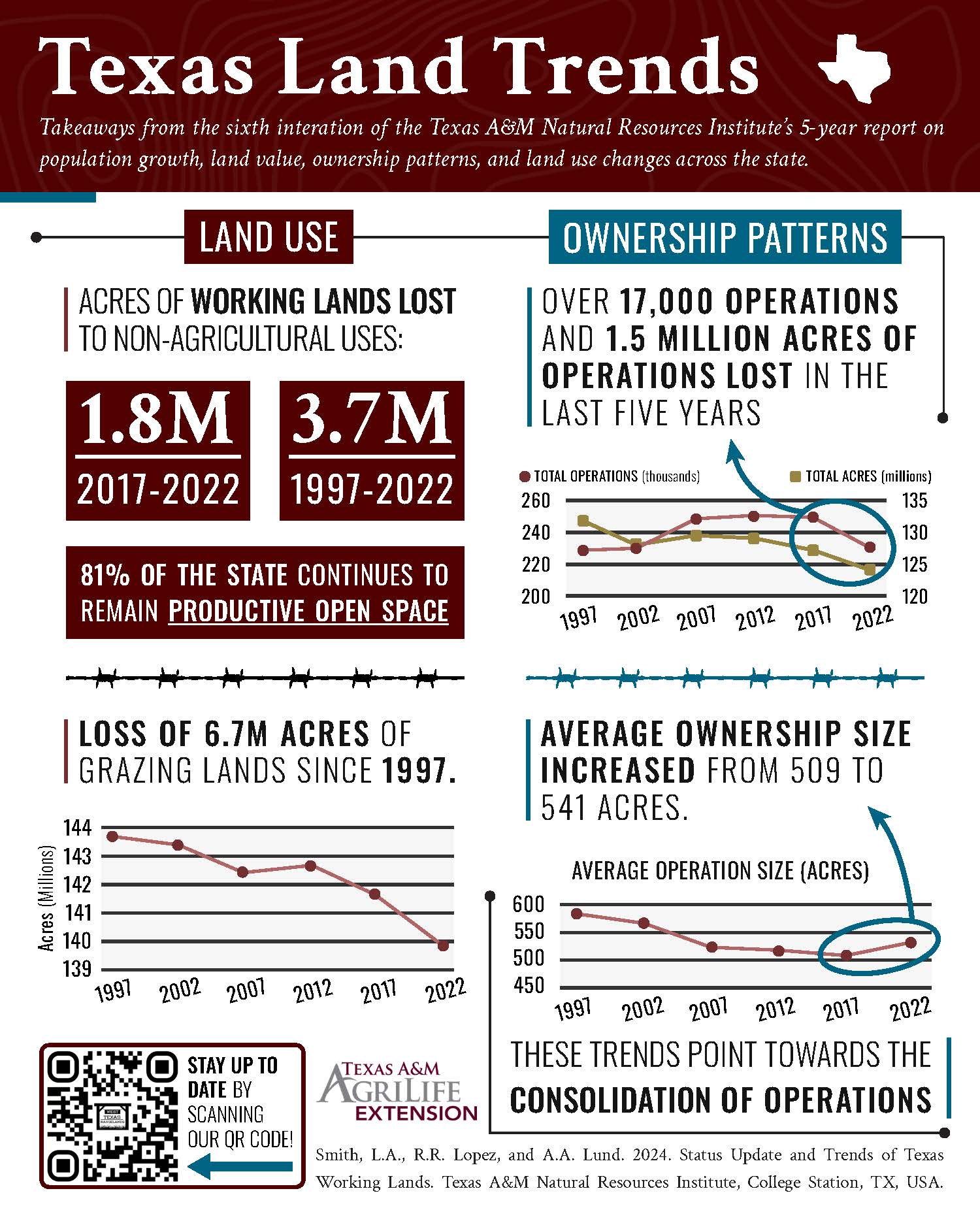
One of the most striking findings is the continued conversion of working lands to non-agricultural uses. Between 2017 and 2022 alone, a staggering 1.8 million acres transitioned away from agriculture. Looking at more long-term trends, this figure jumps to an even more substantial 3.7 million acres since 1997. This highlights the immense pressure that population growth and development are placing on our rural landscapes. Despite this shift, the good news is that 81% of the state continues to remain productive open rangeland, underscoring the enduring importance of agriculture and natural areas contributing to vast ecosystem services in Texas.
However there is a concerning trend in grazing lands, with a loss of 6.7 million acres since 1997. This decline has significant implications for ranching, wildlife habitat, and the overall character of many regions in Texas.
Looking at ownership patterns, the data indicates a notable shift towards consolidation of operations. Over the last five years, Texas has seen the loss of over 17,000 operations and 1.5 million acres in total operations. This trend is further emphasized by the increase in average ownership size, which has grown from 509 acres to 541 acres. These figures suggest a move towards larger, fewer agricultural entities.
These trends – the loss of working lands, the decline in grazing acreage, and the consolidation of operations – collectively point towards a significant reshaping of the Texas landscape. Understanding these shifts is crucial for policymakers, landowners, and all Texans who care about the future of our rangeland and its resources.
To stay up-to-date with the latest findings and explore the full report here. It’s vital that we remain informed about these evolving trends to ensure the sustainable rangeland management and conservation of our valuable Texas ecosystem services for generations to come.
As always, great work from TAMU NRI! Thank you for delivering the science!
Smith, L.A., R.R. Lopez, and A.A. Lund. 2024. Status Update and Trends of Texas Working Lands. Texas A&M Natural Resources Institute, College Station, Texas, USA.