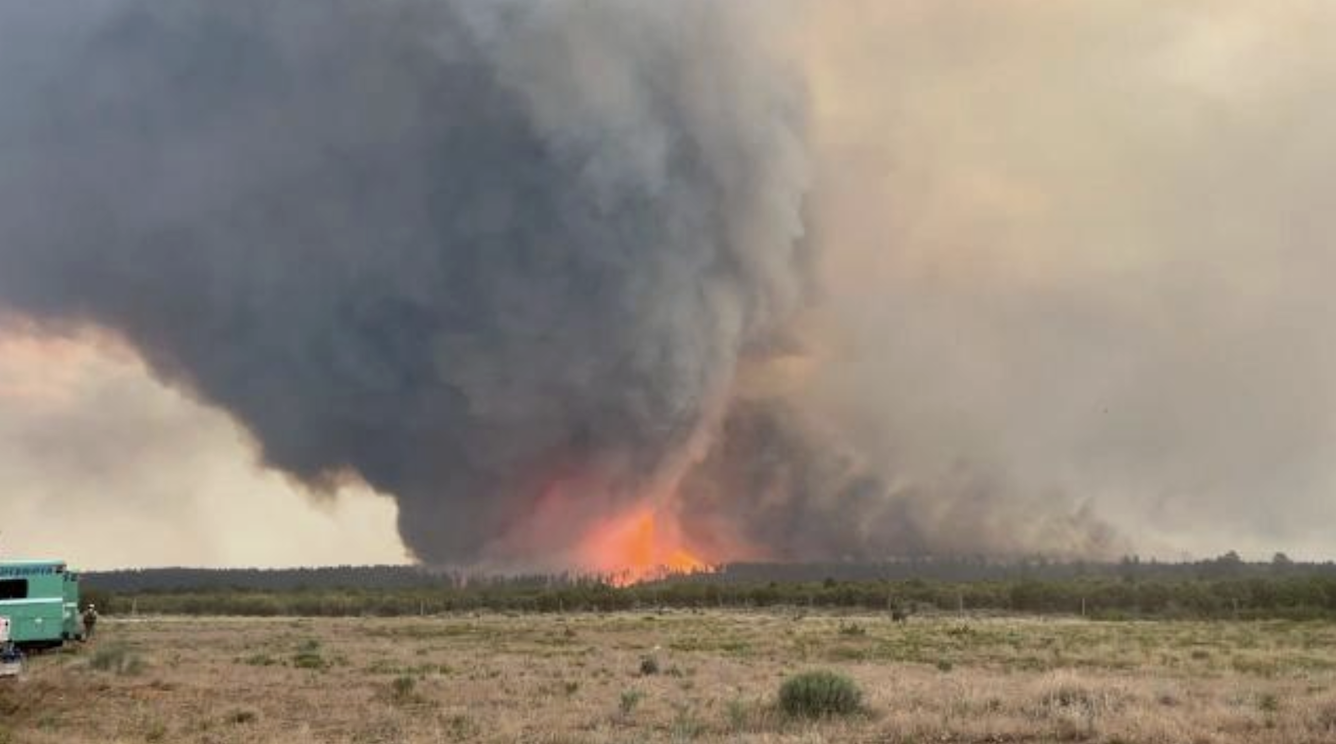
 On July 12, 2025, firefighters on the Deer Creek Fire near Moab, Utah, experienced one of the most extreme and rare weather events in wildfire history, a pyro-vortex powerful enough to be classified as an EF2 tornado. With wind speeds reaching 111–135 mph, this fire-generated vortex caused significant structural damage and created life-threatening conditions for crews on the ground.
The Deer Creek Fire had started two days earlier on July 10, spreading rapidly through rugged terrain of pinyon-juniper and ponderosa pine. By the afternoon of July 12, crews were working multiple divisions when an extreme shift in fire behavior occurred. Strong up-canyon winds collided with northerly winds from the La Sal Mountains, aligning with intense convective heat rising from the active fire. Within minutes, a rotating column formed between Hang Dog Creek and Two-Mile Creek and quickly intensified into a tornado-strength vortex.
Firefighters across the divisions immediately moved toward safety zones or into the black. One engine crew found themselves in the direct path of the vortex and took refuge at a structure site with defensible space. As the tornado passed over, embers, sheet metal, and debris swirled violently around the engine, but remarkably, the crew sustained no injuries and only minor vehicle damage.
Nearby, other crews in the designated safety zone endured near-zero visibility from blowing ash and debris as the vortex stalled overhead for several minutes. Despite the chaos, all personnel were accounted for and unharmed, a testament to situational awareness and quick decision-making in extreme conditions.
Lessons for Firefighters and Land Managers
Know the Difference
Not every spinning column is a fire whirl. True fire tornadoes, though rare, can cause tornado-level destruction. Recognizing the warning signs, strong convective heat and conflicting wind patterns, is critical.
Terrain and Wind Interaction
The La Sal Mountains and surrounding drainages funneled shifting winds, creating the perfect setup for vortex formation. Understanding how terrain influences fire behavior helps crews anticipate extreme changes.
Communication and Safety Zones
Radio traffic was overloaded during the event, delaying updates and accountability. Clear communication and preplanned tactical channels are essential in multi-agency incidents. Crews that stayed in “the black” instead of moving to the main safety zone made lifesaving calls based on real-time conditions.
Extreme Can Happen Anytime
This tornado formed just after noon, long before the typical late-afternoon fire peak, reminding us that conditions can escalate in minutes. Constant observation and reassessment are key.
This event is a striking reminder of how fire, weather, and terrain can combine in unexpected ways. Sharing these lessons strengthens firefighter preparedness and public understanding of extreme fire behavior. For more information, find the full story here, along with a video here!