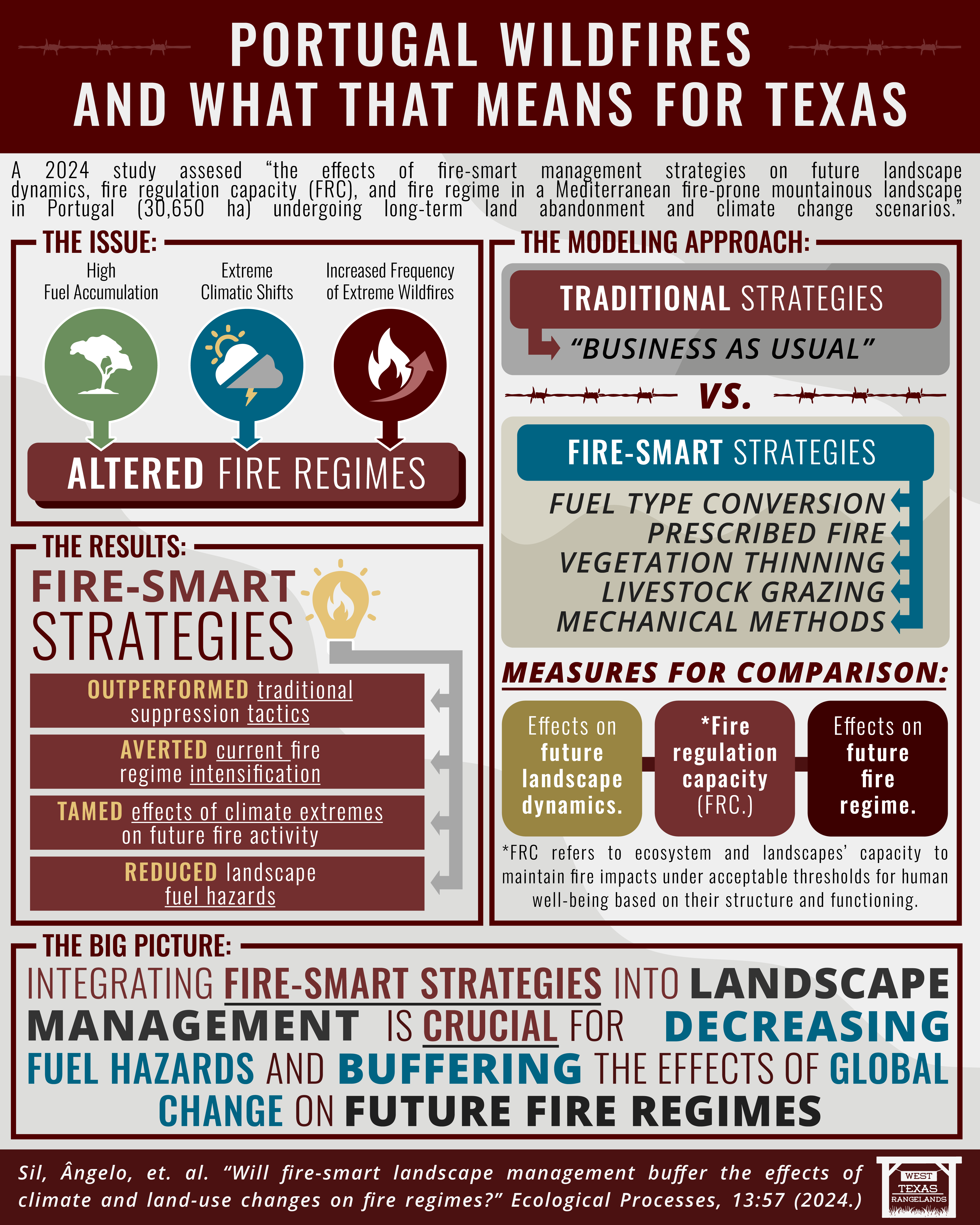
 The Euro-Mediterranean region is a high fire prone area with 48,000 fires reported annually. The fires are the result of landscape fuel build up which has been driven by absentee land ownership, wildfire suppression policies, extreme temperatures, and extended droughts that simultaneously occur. This study used the LANDIS-II forest landscape model which is considered a fire-smart management tool. Fire-smart management is based on controlling fire regimes through landscape interventions to reduce hazardous fuels and foster fire-resistant/resilient landscapes. The study included assessing how alternative fire management strategies affect future landscape dynamics, the fire regulation capacity, and fire regimes under long-term absentee land ownership and extreme climate scenarios.
The area of the study included the Sabor River upper basin which averages 35 fires a year. The current business-as-usual management strategy was compared against three fire-smart management strategies including; forest-based fire-smart (FFS), silvopasture-based fire-smart (SPFS), and forest an silvopasture based fire-smart (FFS+SPFS). These three fire-smart management strategies are broken down below
FFS = Decrease fuel loads by increasing the presence of less flammable and more fire-resilient forest types by fuel types conversion, prescribed fire, and vegetation thinning.
SPFS = Utilize livestock grazing and mechanical operations to reduce fuel load and continuity in potentially abandoned agricultural land.
FFS+SPFS = Combine both types of treatment
The following were measured throughout the study for comparison:
- Effects on future landscape dynamics
- Fire regulation capacity – (refers to ecosystem and landscapes’ capacity to maintain fire impacts under acceptable thresholds for human well-being based on their structure and functioning)
- Effects on future fire regime
The results of this study found increased success with fire-smart strategies:
Fire-Smart Strategies (FFS)
- Outperformed traditional suppression tactics
- Averted current fire regime intensification
- Tamed effects of climate extremes on future fire activity
- Reduced landscape fuel hazards
What does this mean for Texas?
Being able to integrate fire-smart strategies into landscape management is crucial for decreasing fuel hazards and buffering the effects of extreme climate shifts on future fire regimes.
As the saying goes, if you keep doing the same thing you are going to keep getting the same results. Integrating fire-smart strategies may impact landscape fuel loads (particularly woody plant species in grasslands and savannas), invest in native plant community resiliency as climate extremes accelerate future fire activity, and outperform the traditional suppression tactics that are currently applied.
For more information and the full study, be sure to read it here – Will fire smart landscape management buffer the effects…
Sil, Angelo, et. al. “Will fire-smart landscape management buffer the effects of climate and land-use changes on fire regimes?” Ecological Processes, 13:57 (2024.)