• Skip to primary navigation
  • Skip to main content
  • Skip to primary sidebar
  • Texas A&M Forest Service
  • Texas A&M Veterinary Medical Diagnostics Laboratory
  • Texas A&M AgriLife Extension Service
  • Texas A&M AgriLife Research
  • Texas A&M College of Agrculture and Life Sciences
Texas Prescribed Burn Handbook
Texas Prescribed Burn HandbookTexas A&M Agrilife Extension
  • Menu
  • About
  • Texas Plants
    • General Rules of Thumb for Juniper
    • A partial list of sprouting and non-sprouting woody plants.
  • Planning
    • Planning a Prescribed Burn
    • General Prescription
    • Firebreaks
    • Estimating Fuel Quantity and Moisture
  • Burn Boss
    • Pre-Burn Contacts and Emergency Numbers
    • Burn Boss Checklist
    • Burn Boss Role
    • Fire Crew Duties
    • Prescribed Burn Documentation
  • Safety
    • Emergency First Aid
    • Personal Gear and Safety
    • Prescribed Fire Safety
    • Prescribed Fire Orders
    • Go/No-Go Checklist
    • Handtool Safety
    • Vehicle Safety
    • Operational Leadership
    • Duty
    • Respect
    • Integrity
    • Communication Responsibilities
    • Human Factor Barriers to Situational Awareness
    • After Action Review
  • Weather & Fuel
    • Severe Fire Behavior Potential Related to Relative Humidity and Fuel Moisture Content
    • Lightning Activity Level (LAL)
    • Keetch-Byram Drought Index (KBDI)
    • Spot Weather Forecast
    • General Guidelines for Juniper Leaf Moisture
    • Outputs of the NFDRS (National Fire Danger Rating System)
    • LAL and Spot Weather Forecast
    • Calculating One Hour Fuel Moisture And Probability of Ignition (PI)
    • NFDRS Fuel Model Description
    • Fuel Model Key
    • Estimate Live Juniper % Moisture
    • Reference Fuel Moisture Adjustment Tables
    • Probability of Ignition Table
    • Fire Behavior Hauling Chart
    • Relative Humidity: 1400′-4999’ Elevation
    • Wind Speed Ranges
    • Category Day (CD) For Smoke Management
Home » Equipment » Prescribed Fire Equipment

Prescribed Fire Equipment

Drip Torch Use and Operation

Set up
Place torch on the ground and unscrew locking ring, then remove and secure flow plug from bottom of spout. Pull spout assembly out of torch body and allow excess fuel to drain back into torch. Place spout assembly in upright position on torch, with loop in spout on opposite side of handle. Place lock ring over spout and secure snugly on torch. Open air vent on top of torch by handle one turn. To store torch reverse steps once wick and spout has cooled significantly.

Operation
Grasp by the handle and tip the torch downward allowing fuel to flow over the wick. Allow a small amount of fuel to collect on the ground and ignite with match or lighter. Then place wick of torch in flames to ignite. To operate, tip downward and walk. To stop ignition, lift torch up.

Extinguishing
The flame can be extinguished by holding the torch upright and blowing or by covering the flame with the gloved hand, or a combination of both.

Safety
The person operating the drip torch should always be aware of their surroundings. Watch for other personnel and do not trap them with your fire. Do not get close to personnel with a lit torch and be careful around vehicles. A lit torch should always be carried upright when not lighting. The torch should never be taken outside the burn unit when lit. Torches should be extinguished if you stop lighting for any period of time. This helps save the wick and keeps the torch from becoming hot and not operating properly. When refueling torch, make sure to do so in an area off the active fireline and away from crowning trees and blowing embers.
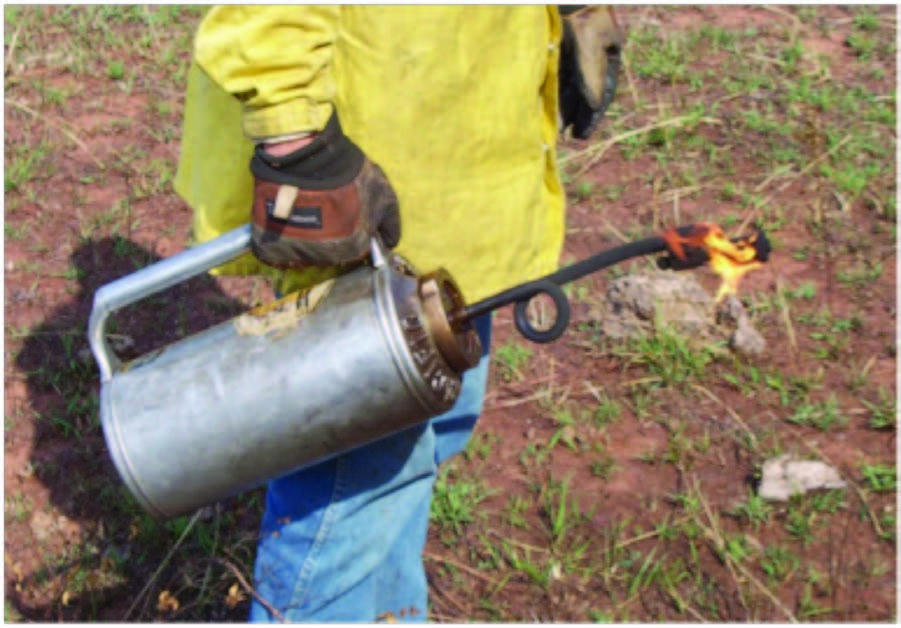
E-1010 Oklahoma Prescribed Burning Handbook - Equipment - Drip Torch

The drip torch is a safe and effective tool for igniting prescribed fires.

Fuel Mix
Winter, Fall, and Spring = 50:50 diesel:gasoline,
Summer = 60:40 or 70:30 diesel:gasoline.

Handtools for Prescribed Burning

Shovel
Used for making firebreaks, suppression of fire in light fuels, covering smoldering debris with soil, mop-up or assisting with removal of stuck vehicle.

Fire Rake or McLeod
Used for making firebreaks, suppression of fire in light fuels and post burn mop-up.

Leaf Rake
Used for making firebreaks, suppression of fire in light fuels, and post burn mop-up. Works well in areas with surface rock.

Fire Broom
Used to suppress fire in light fuels and post burn mop-up.

Swatter
Used to suppress fire in light fuels and post burn mop-up.

Backpack pump
Used to lay wetline in places a pumper truck cannot get to, suppression of fire, follow up pumper trucks on escaped fires and post burn mop-up.

Leaf blower
Creates firebreaks in leaf litter, suppression of fire in light fuels, and post burn mop-up. Caution: make sure to blow embers back into blackened area.
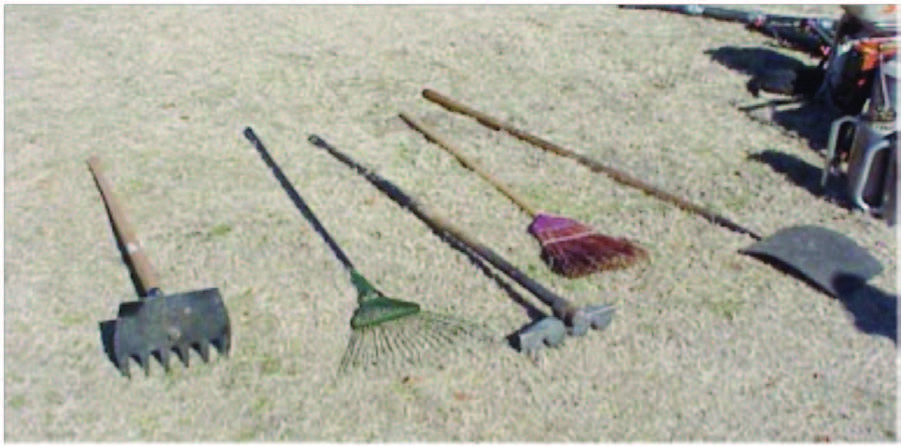
E-1010 Oklahoma Prescribed Burning Handbook - Equipment - Common Handtools

Common handtools used on prescribed burns, from left to right: McLeod, leaf rake, fire rake, broom and swatter.
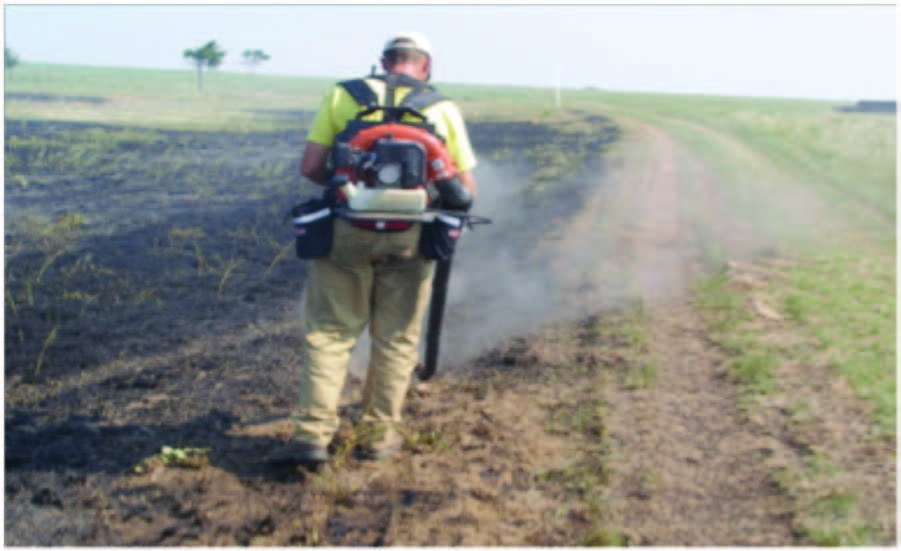
E-1010 Oklahoma Prescribed Burning Handbook - Equipment - Leaf Blower

Leaf blower being used to mop-up along the edge of the burn unit. Make sure to blow embers and debris back into the blackened area.

Menu

  • Contact
  • Laws and Regulations
    • Burning Laws and Regulations
    • Certified Prescribed Burn Manager Commercial or Private
  • Equipment
    • Prescribed Fire Equipment
    • Water Delivery Information
  • Videos
    • Living With Texas Fire
    • Ring Fire Ignition Method
    • Fire Up Your Beef
    • The Business of Burning
    • Flame and Fortune Prescribed Burn School
    • Prescribed Burn Goals and Objectives
    • Fire Equipment (series)
    • Drip Torch Point of View
    • Prescribed Burning
  • Prescribed Fire Terms
    • Fire Behavior Terminology
    • Energy Release (ERC)
    • Burning Index (BI)
    • Haines Index (HI)
  • Publications
  • Links and Information
Texas RX Burn logo
Texas A&M AgriLife Extension Service
Texas A&M University System Member
  • Compact with Texans
  • Privacy and Security
  • Accessibility Policy
  • State Link Policy
  • Statewide Search
  • Veterans Benefits
  • Military Families
  • Risk, Fraud & Misconduct Hotline
  • Texas Homeland Security
  • Texas Veteran's Portal
  • Equal Opportunity
  • Open Records/Public Information