This article was written by Allan Gray, TEPAP Faculty Member
Professor of Agribusiness, Purdue University
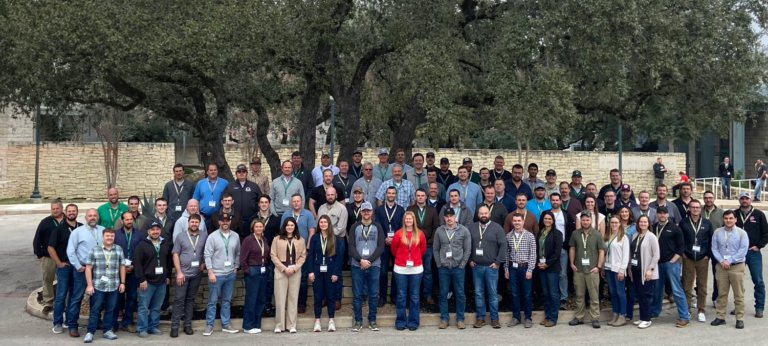
Every January for more than twenty years, I’ve spent a Friday in the Hill Country of Texas teaching business strategy to TEPAP Unit I participants. In that time, I’ve watched agriculture go through high prices and low prices, droughts, trade disputes, interest rate swings, and more new technology than any of us could have predicted. The people in the room have changed too. One thing hasn’t: the operations that do well over time are not always the biggest or the best capitalized. They are the ones run by people who keep learning.
Arie de Geus, a long-time strategist at Shell, put it well: “The ability to learn faster than your competitors may be the only sustainable competitive advantage.” I think that applies to a farm or ranch as much as to an oil company.
In agriculture, we usually think of competitive advantage in terms of assets like land, water, equipment, and genetics. Those matter. But a neighbor with a good banker can buy, rent, or copy every one of them. What can’t be copied is the judgment of the person making the decisions.
Today the Advantage is Even Greater
The decisions producers face today are bigger and less forgiving than they used to be. Margins are thin, capital is expensive, and labor is hard to find. Technology keeps changing, and markets can shift on a policy announcement. Many operations are also working through a generational transition at the same time. Being good at production is still essential, but it only gets you in the game. Business skill is increasingly what separates the operations that grow from the ones that struggle.
Learning how to Work ON the Business not just IN the Business
In my experience, good business education gives producers three practical things.
A chance to step back. Most producers spend the whole year working inside the operation. It is hard to think about where the business is headed when the cows need feeding and the planter needs fixing. Time away, with structure, lets you look at your operation the way an outside investor would.
Better questions. Frameworks don’t make decisions for you, but they show you your blind spots. Where do we actually make money? Where are we losing it without realizing? What would we do if our biggest customer, landlord, or input supplier changed the terms tomorrow? Those questions are more valuable than any single answer.
Peers. The most important lesson at TEPAP often doesn’t come from an instructor. It comes at lunch, from a producer in another state or another commodity who solved your problem three years ago. I personally watched a producer from New York learn about alternative broker relationships to enhance market opportunities in the fresh produce business from a farmer in Southern Arizona he had only met a few days before. The producer told me that was the single most valuable conversation he had all week.
Learning is like Soil Fertility
No one applies fertilizer once and expects a lifetime of yields. Knowledge works the same way. What you learned ten years ago about markets, finance, or managing people is being depleted by change, whether you notice it or not. The best producers I know build learning into their operations the same way they build in maintenance. It’s routine, it’s planned, and they don’t cut it when times get tight. Tight times are when it pays off the most.
Who’s next?
If you’re a TEPAP graduate, you already know what the program did for you. The best recommendation TEPAP will ever get is yours. Think about who in your life should be in that room. It might be a son or daughter coming back to the operation, a key manager, or a neighbor who is wrestling with the same decisions you were. Applications for TEPAP 2027 are due October 31, 2026. A week in San Antonio, Texas, might be the best investment they make in their operation this decade.