Texas A&M Soil and Crop Sciences Professor, Keerti Rathore, Ph.D. collecting cotton on Wednesday, Sep 23, 2026, in College Station, Texas. (Hannah Lang/Texas A&M AgriLife)
As farm profit margins tighten across the Southern Plains, many producers are finding that access to credit is becoming increasingly important and increasingly challenging. Rising production costs, lower commodity prices, and higher interest rates have created financial pressures felt on both sides of the lender’s desk.
Recent discussions among agricultural lenders highlight growing concern about the financial outlook for agriculture. While the industry experienced strong profitability during the years immediately following the pandemic, economic conditions have shifted considerably. Today, many producers are relying more heavily on operating loans to cover input costs and maintain cash flow.
Why Credit Conditions Matter
Credit serves as the lifeblood of many farming and ranching operations. Operating loans allow producers to purchase seed, fertilizer, feed, fuel, and other inputs before revenue from crop or livestock sales is realized.
When farm incomes decline, producers often rely more heavily on borrowed capital. At the same time, lenders may become more cautious as repayment risks increase. This combination can create challenges for producers seeking financing.
Several trends have emerged in the current lending environment:
Rising Interest Expenses
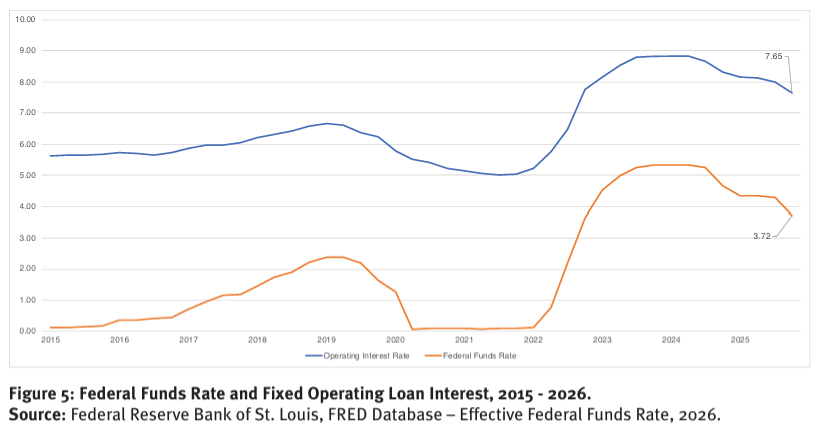
Interest rates remain significantly higher than they were just a few years ago. Higher borrowing costs mean a greater percentage of revenue must be allocated toward debt service, leaving less cash available for operations, equipment purchases, and family living expenses.
Increased Demand for Operating Capital
Many producers are utilizing operating loans to bridge the gap between rising expenses and reduced revenues. Input costs remain elevated in many sectors, while commodity prices have weakened compared to recent highs.
Greater Scrutiny from Lenders
Lenders are placing more emphasis on financial statements, cash flow projections, and repayment plans. Producers who maintain accurate records and can clearly communicate their financial position are often in a stronger position when seeking financing.
Strategies for Working with Lenders
Although current conditions may be challenging, there are steps producers can take to improve their financial position and maintain strong relationships with lending institutions.
Maintain Current Financial Records
Up-to-date balance sheets, income statements, and cash flow projections help demonstrate financial management and improve lender confidence.
Communicate Early and Often
If financial challenges arise, it is generally better to address concerns with lenders early rather than waiting until repayment becomes difficult. Open communication can help identify potential solutions before problems escalate.
Evaluate Liquidity
Strong working capital provides flexibility during periods of economic stress. Producers should review available cash reserves and evaluate opportunities to strengthen liquidity where possible.
Develop Realistic Budgets
Enterprise budgets and cash flow projections can help identify potential financial risks before the production year begins. Scenario planning can also help prepare for unexpected market or weather events.
Looking Ahead
Agricultural lending conditions often reflect broader economic realities. While the current environment presents challenges, strong financial management and proactive communication remain valuable tools for navigating uncertainty.
Producers who understand their financial position, maintain strong lender relationships, and make informed business decisions will be better positioned to weather economic downturns and capitalize on future opportunities.
Bottom Line: Credit remains a critical resource for agricultural operations. In today’s environment, careful planning, accurate financial records, and proactive communication with lenders may be more important than ever.
Reference Document: Surviving the Economic Downturn: 2026 Update
https://afpc.tamu.edu/research/publications/735