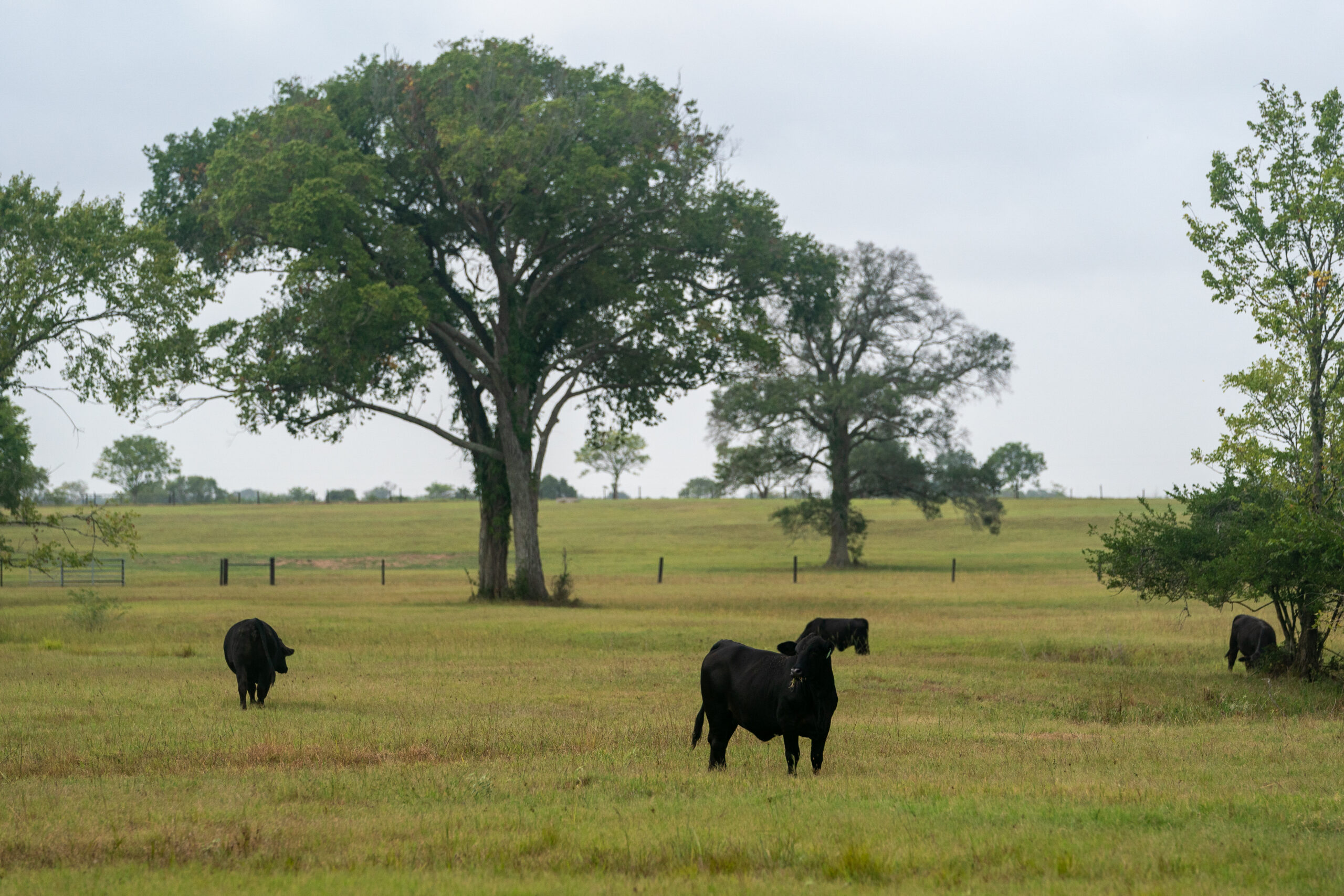
Diamond K Ranch on July 18, 2022 in Hempstead, Texas. (Courtney Sacco/Texas A&M AgriLife Marketing and Communications)
Texas agricultural land continued to gain value in 2026, according to new data released in the USDA’s annual Land Values Summary. For Texas landowners, producers, investors, and rural real estate professionals, the report offers a valuable snapshot of how farm and ranch land values have changed over the past year.
According to the USDA’s latest data, Texas agricultural land values continued their upward trend in 2026, with increases reported across farm real estate, cropland, and pastureland.
Texas Farm Real Estate Values
The USDA reports that the average value of Texas farm real estate, which includes both land and buildings on farms, reached $3,100 per acre in 2026. This represents a 4.4% average land appreciation from 2025, reflecting continued strength in the state’s agricultural real estate market.
While land values can vary significantly across Texas due to differences in location, water availability, development pressure, and agricultural productivity, the statewide average highlights the ongoing demand for rural property.
Texas Cropland Values
Texas cropland values also increased during the past year. The average cropland value for 2026 was reported at $2,790 per acre, a 3.0% appreciation from 2025.
The report further breaks cropland into two categories:
- Irrigated cropland: $3,500 per acre
- Non-irrigated cropland: $2,700 per acre
These figures demonstrate the premium often associated with access to reliable water resources and irrigation infrastructure, particularly in a state where water availability remains a key factor influencing agricultural productivity and land value.
Texas Pastureland Values
Pastureland experienced the largest percentage appreciation among the major land categories in Texas. The average value of pastureland reached $2,420 per acre in 2026, an increase of 5.2% from the previous year.
Strong demand for ranchland, recreational properties, and rural acreage continues to influence pastureland values across many areas of the state.
What These Trends Mean for Texas Landowners
The continued appreciation in Texas agricultural land values reflects several factors that have supported the rural land market in recent years, including agricultural production, recreational land demand, population growth, and interest in rural properties.
As always, land values can differ substantially by region, county, and individual property characteristics. Statewide averages provide a useful benchmark, but local market conditions remain critical when evaluating specific properties.
Learn More
To view the complete USDA Land Values Summary for 2026, click here.
For additional information and a deeper look at Texas-specific land market trends, be sure to review the Texas Chapter of the American Society of Farm Managers and Rural Appraisers’ Texas Rural Land Value Trends report, available here.