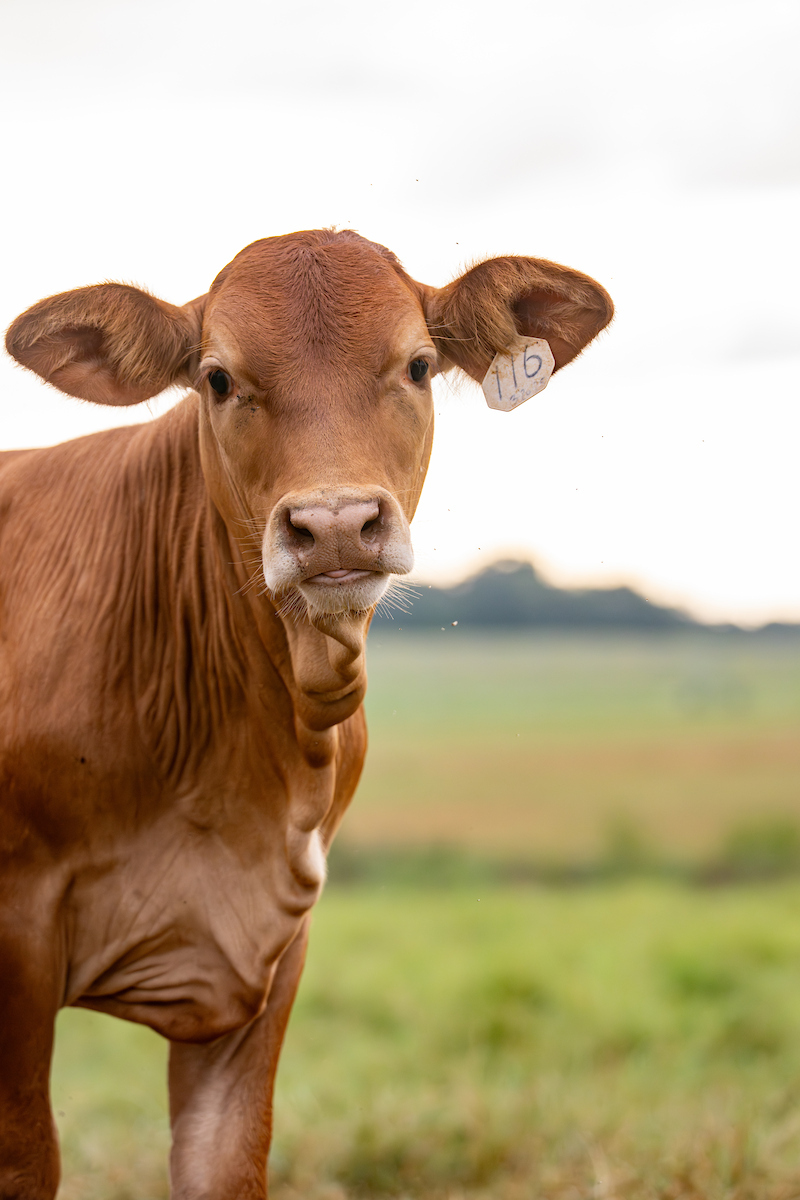
The O. D. Butler, Jr. Animal Science Complex on Thursday, Aug 21, 2025 in College Station, Texas. (Hannah Harrison/Texas A&M AgriLife)
Producers can monitor weekly market activity on the Cattle Auction Prices page in Ag Economics on the Plains. The page summarizes sales data from four key livestock auctions serving the Texas Panhandle and Rolling Plains: Tulia Livestock (Tulia), Cattlemen’s Livestock (Dalhart), Lonestar Stockyards (Wildorado), and Beaver Livestock Auction (Beaver, Oklahoma).
Last month, we added Beef Cattle Price Trends charts to the Cattle Auction Prices page. In addition to weekly auction data, these charts offer a longer-term view of steer and heifer prices. Weekly prices may fluctuate due to factors such as cattle quality, weather, buyer participation, and the number of cattle offered. Reviewing several months of data helps filter out short-term volatility and highlight overall market trends.
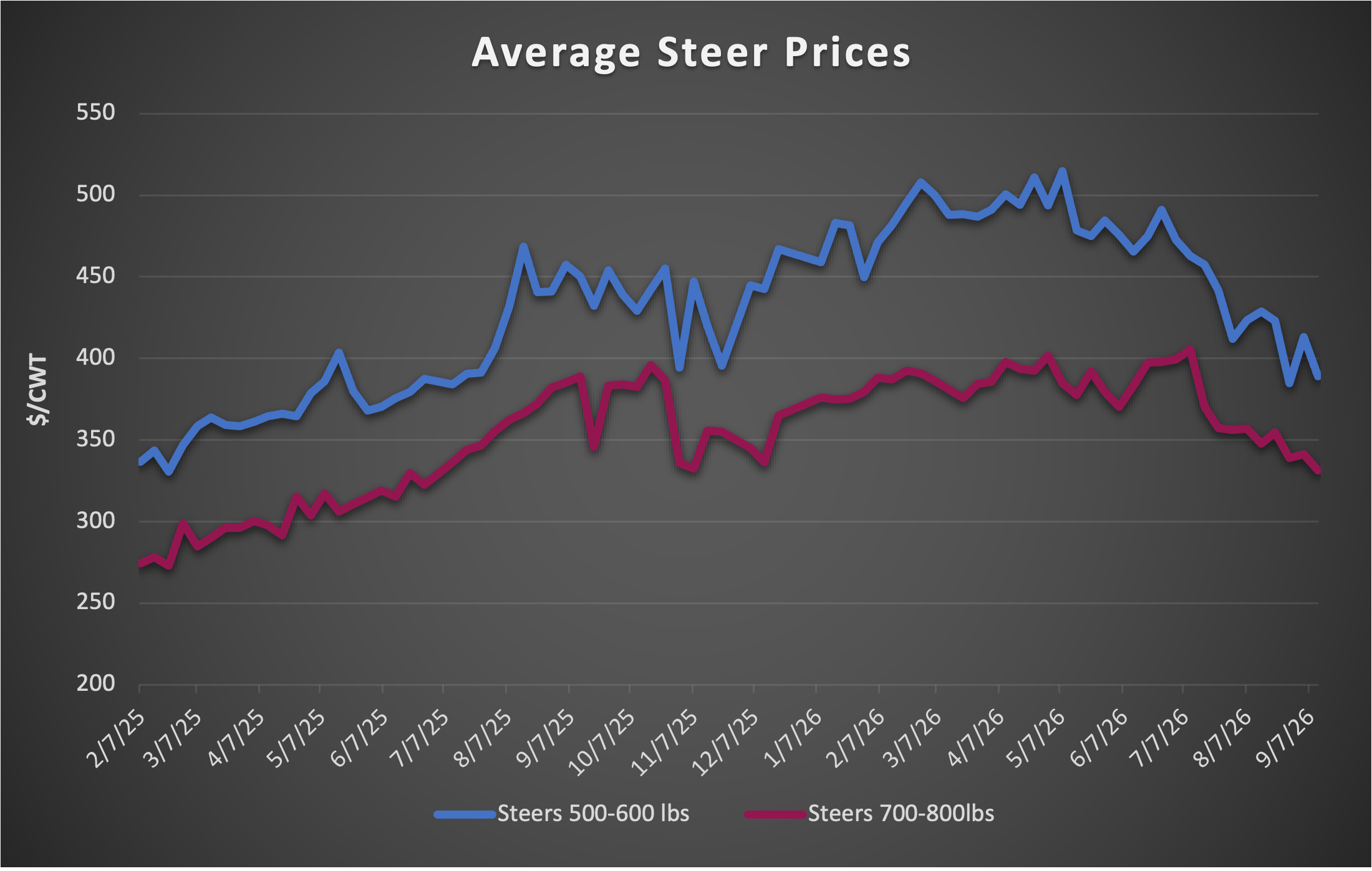
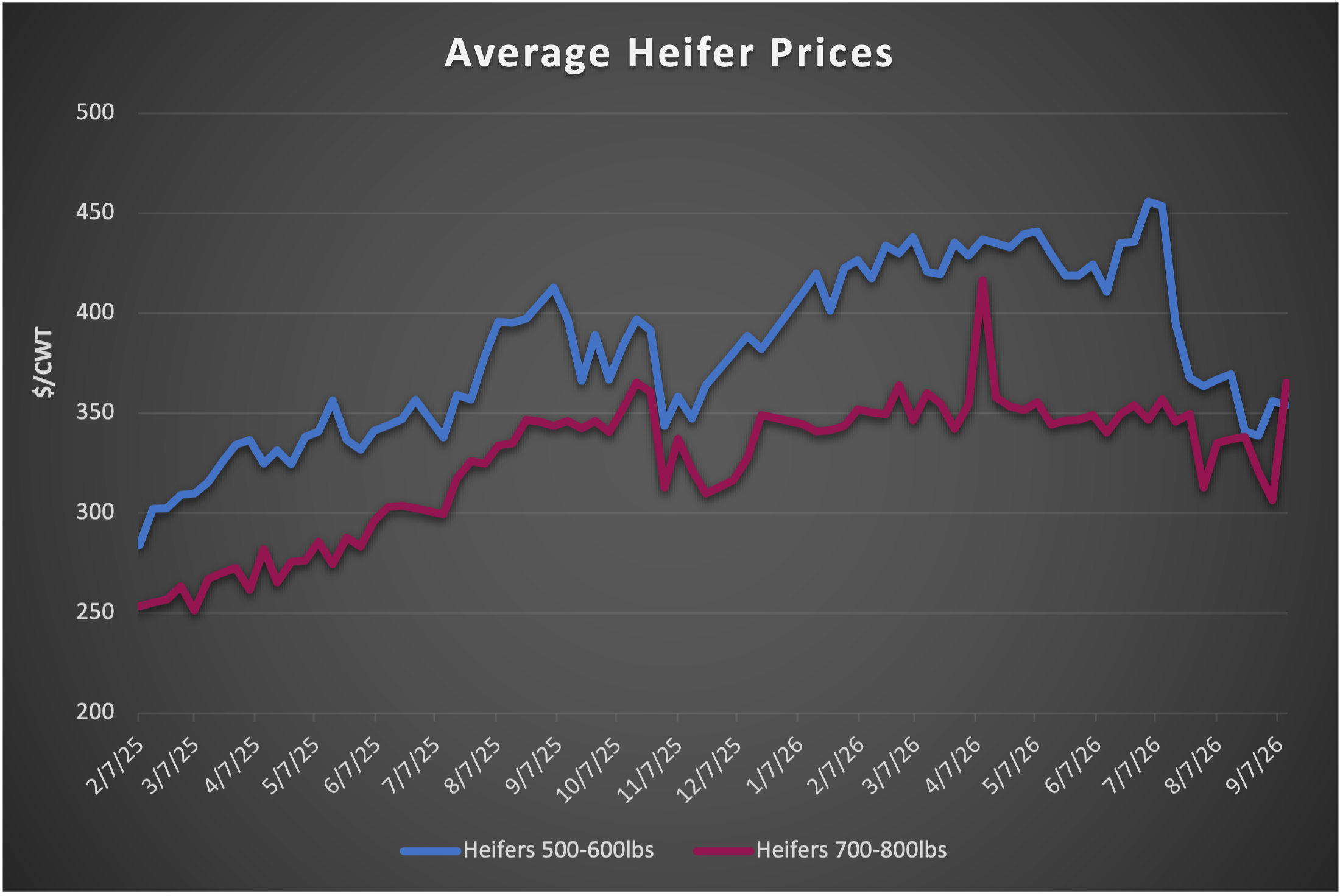
The cattle market is currently experiencing lower prices.
Although prices have softened in the past month, beef cattle market fundamentals remain historically strong.
Over the past month, cattle prices have declined due to higher corn prices, reduced packing activity, seasonal pressures, and uncertainty about beef imports. Even so, cattle supplies remain historically tight, suggesting recent declines are driven more by short-term market factors.
In August, 500 to 600 pound steers averaged about $5.00 per pound at these auctions. Last week, prices for this category were close to $4.00 per pound.
Cattle Auction Prices
The cattle auction price information on the page reflects sales from the previous week and is updated after each weekly report. To provide a larger view of market movements over time, we also release a monthly price-trend chart. The Beef Cattle Price Trends charts help producers track price trends across several classes and weights. Cattle are categorized as steers or heifers in the 500 to 600 lbs and 700 to 800 lbs ranges.
Producers can use prices for different weight categories to estimate the value of gain and compare it to costs such as pasture, feed, health, labor, interest, death loss, and other expenses.
Considering current high cattle prices, it is important to have a price risk management plan in our operation. Just a small negative percentage change in future prices can result in a significant loss for stockers and feeder operators.
We encourage producers to review both the Cattle Auction Price’s charts, updated weekly, and the monthly Beef Cattle Price Trends charts, which offer a longer-term perspective.