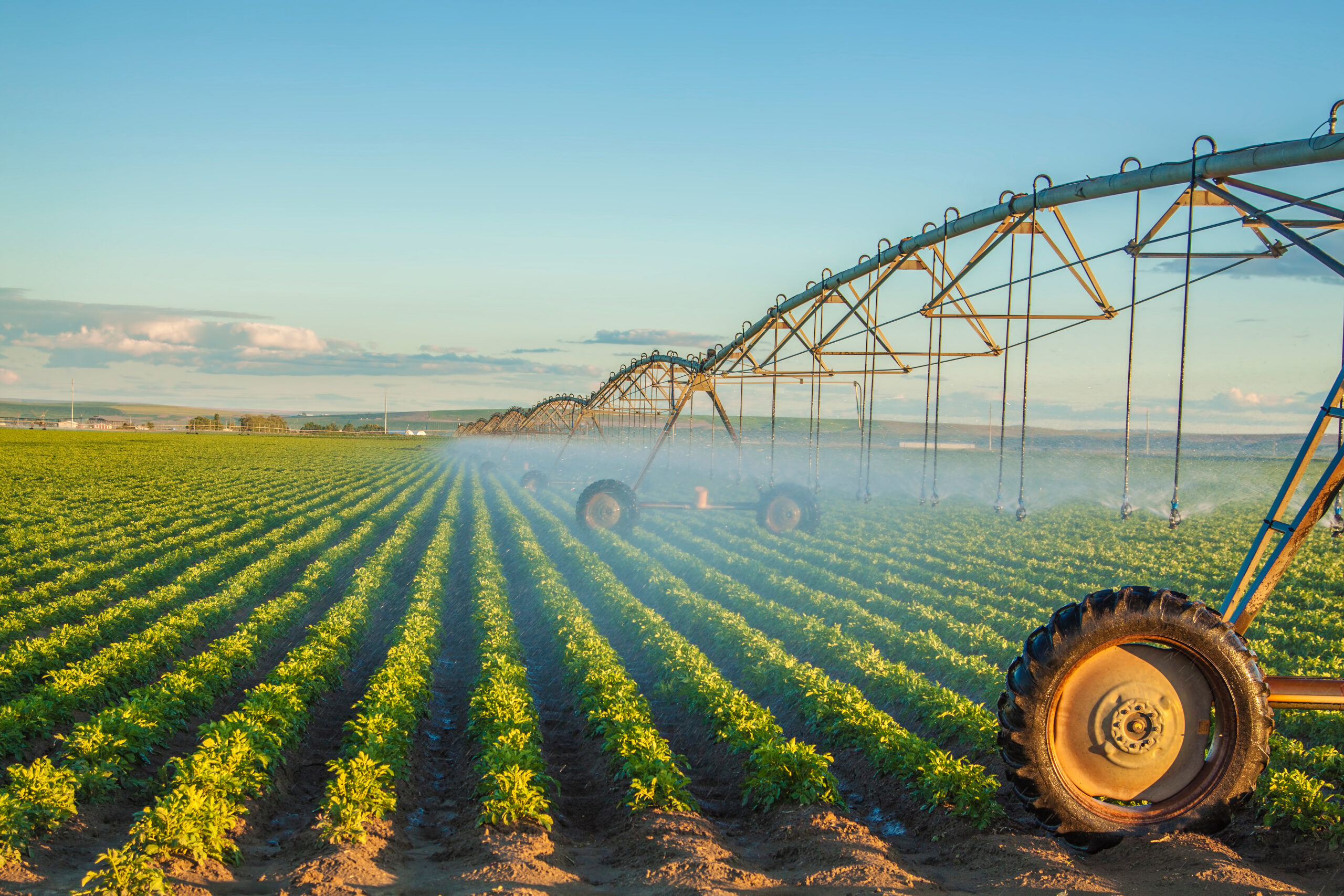
Field irrigated by a pivot sprinkler system
We are nearing the end of the 2026 growing season, so it’s time to ask an important question. When is the right time to turn off irrigation? In this post, we’ll look at some of the factors that go into this decision.
The Economic Decision
Before we consider the factors that go into irrigation management decisions, let’s talk about goals. As an economist, I assume that producers want to maximize their profit from farming. Therefore, I think about management problems in terms of costs versus benefits. If a producer irrigates their crop, how much does it cost, and how much revenue does it generate? Is the revenue greater than the cost? If the answer to the second question is “no,” then adding irrigation to the crop isn’t the profitable choice.
I also think “at the margin,” considering only marginal (additional) costs and benefits. At this point, how much water a farmer has already applied is a sunk cost that cannot be recovered. The question to consider is whether additional irrigation in the future is profitable. Thinking at the margin, I might ask these questions:
- If a farmer continues to irrigate, will they increase production? Is the revenue from the additional production greater than the additional cost of extra irrigation?
- If a farmer stops irrigating now, will they lose production? Are the cost savings greater than the value of the lost production?
Note that the first set of questions applies to someone considering adding irrigation that was not part of their original production plan. The second set of questions applies to someone considering turning off their irrigation earlier than planned.
Factors to Consider
Like most management decisions, there isn’t a one-size-fits-all answer to how to manage irrigation at this point in the season. Instead, every producer needs to consider their specific situation. To accurately evaluate their situation, I suggest producers consider the following five factors:
- Water availability and irrigation system capacity. Do you have water available at this time of year to continue irrigating your crop? If so, can your system adjust the amount of water it applies in response to reduced crop water needs? If you can’t make this adjustment, continuing to apply large amounts of water may be detrimental to both the crop and your net income.
- Crop water demand. Does the crop already have enough water to reach harvest? As plants mature, their water needs decline. Plant-available water in the soil, along with any new rain, may be sufficient to complete the crop. If so, additional irrigation is likely not profitable.
- The weather forecast. Do you expect a cool, rainy fall, or warm, dry weather? Cooler, wetter weather likely means the crop will need less water as it approaches harvest. However, the hotter and drier the fall, the more water the crop is likely to need.
- Plant-available water in the soil. If the crop has received sufficient water from rain and from irrigation over the summer, there may be enough water stored in the soil to meet the crop’s needs going forward. Keep in mind that soil type will influence how much moisture the soil holds.
- Impact on other costs. Will extending irrigation into the fall increase other production costs? Irrigating in the fall may add costs to your operation, particularly for weed and pest control. As you consider the costs and benefits of additional irrigation, be sure to account for these additional costs as well.
Asking these questions will help you make late-season irrigation decisions that protect your operation’s net income and improve your water resource management.