Published by Adam Russell, Texas AgriLife Today
Overton – Spring-born calves will soon be arriving at auction markets, but producers should consider a weaning plan that will help keep calves healthier and happier, according to a Texas A&M AgriLife Extension Service beef cattle specialist in Overton.
Dr. Jason Banta said weaning calves is the right thing to do and doing it correctly sets calves up to perform better for the rest of their lives. Weaning also gives sellers access to special preconditioned sales which may result in higher prices.
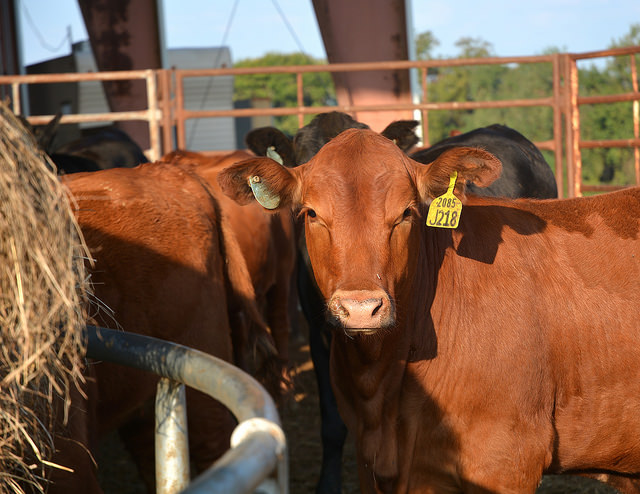
Weaning calves before auction reduces stress and sets up cattle to perform better throughout the rest of their lives. (Texas A&M AgriLife Extension Service photo by Blair Fannin)
Banta said weaning makes the transition easier on the cow and calf, he said.
“Weaning is a stressful event, so it’s better if you can do it at the ranch where the calf was born rather than it going through that process elsewhere,” Banta said.
Stressed calves can shrink 5-15 percent or more when moved straight from pasture to the auction market without weaning, Banta said. As a result, a 500-pound calf could easily weigh 450 pounds or less by the time it reaches the sale.
Separating cows and calves at between 6-8 months old is common. However, Banta recommends calves should be weaned earlier if the cow is below a body condition score of four.
The weaning program should last 45 days before calves are moved and sold, Banta said. He also recommends that on weaning day only the cow and calves are separated. It is better to vaccinate calves a few weeks before weaning or even a week or so after weaning to minimize stress levels.
The location of the weaning process is a top consideration, Banta said.
Banta recommends fenceline weaning — separating cows and calves with a single fence. Ideally, calves should be kept on a pasture of between 5-20 acres, which makes management easier. Fenceline weaning is better because it keeps cows and calves in closer proximity so they can see, hear and smell each other, he said. It’s less stressful on the pair and will reduce bellowing and excess walking.
The chosen pasture should have shade along both sides of the fence, especially for calves, which will walk the fence, Banta said. A good source of water should be close by as well.
Corrals can also be utilized though Banta said corrals allow disease to spread more easily if a sick calf is among the group.
“Putting calves in one pasture and the cows a couple pastures over will likely mean you’ll be rebuilding fences,” he said. “Some cows will go through fences to see their calves.”
Banta said producers should plan ahead for grazing sources for calves.
There are different options for forage to wean the calf, Banta said. Calves can be placed on high-quality pasture without supplemental feeding. But if quality forage is not available, producers should seek dietary recommendations from a beef cattle nutritionist or AgriLife Extension experts.
Cottonseed meal is a good option for calves because it provides good protein, is palatable and is safe if one calf eats more than planned, Banta said. Providing one pound of cottonseed meal per day per head is a good place to start in many operations.
By utilizing a prescribed method of weaning producers can maximize a calf’s potential and subsequently their profits, Banta said.
“It’s better on the calf and in the end can be better for a producer when that calf goes to sale,” he said.