(Courtney Sacco/Texas A&M AgriLife Marketing and Communications)
Are you looking to market your calves in a “program cattle” but unsure if the added costs outweigh the benefits? Today, we will discuss the potential benefits of implementing these programs in your operation and how you can evaluate whether it fits you well.
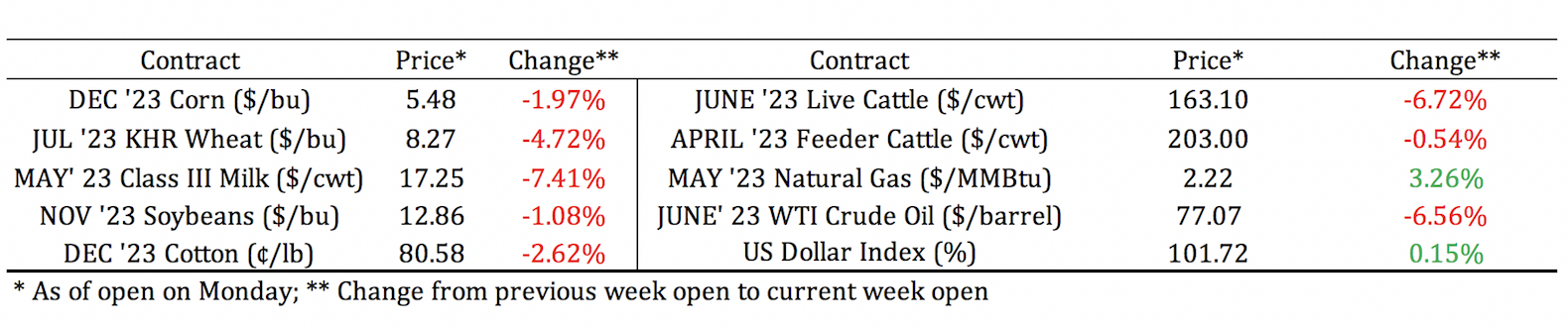
Board Update 4/24/2023
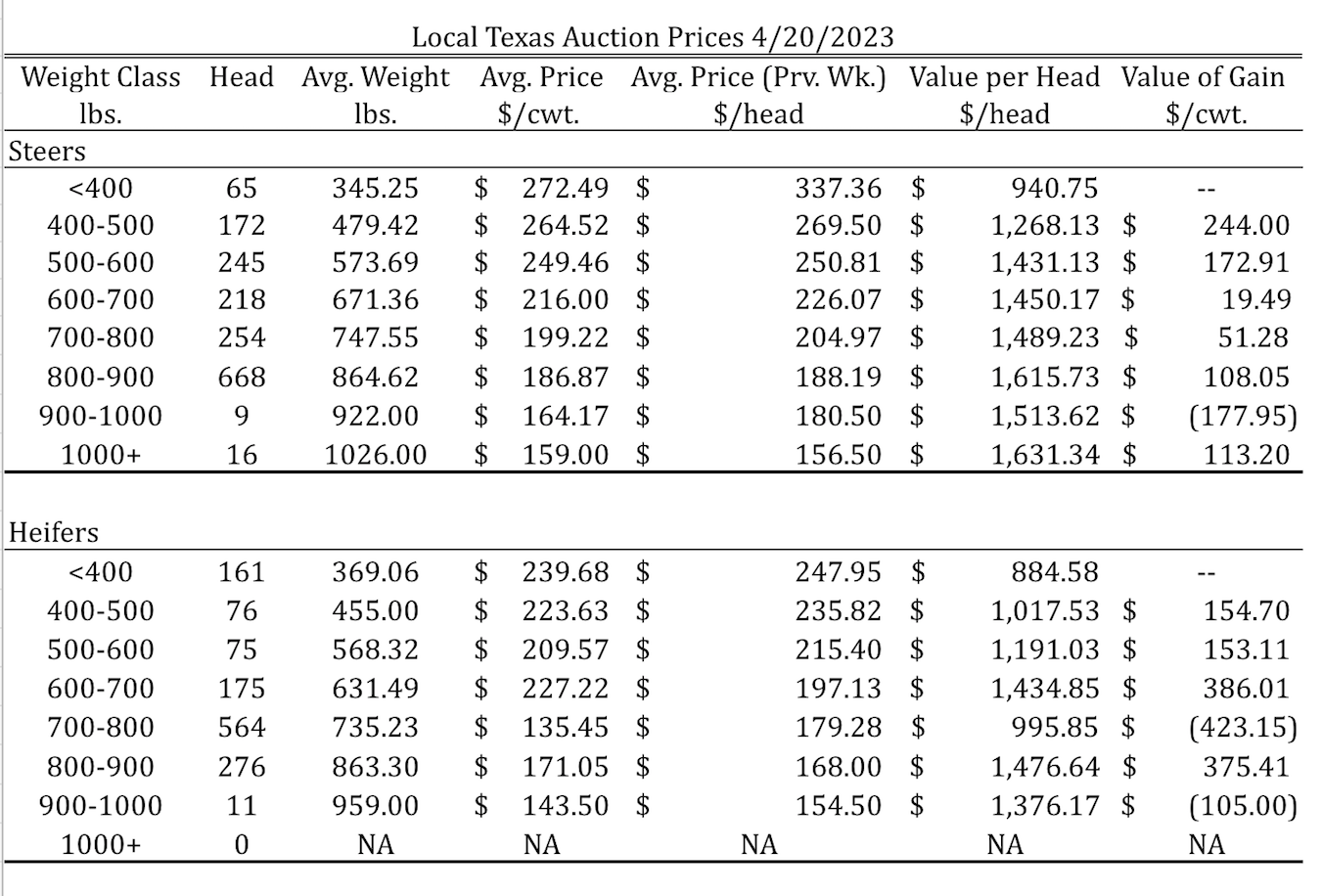
Tulia, Amarillo, Dalhart Average – Cattle Prices by Category 4/20/2023
Dates & Deadlines
4/25-26/2023 – Hemphill County Beef Conference, Canadian
5/4/ 2023 – RWFM Stewardship Webinar Series: Wild Pigs in Texas
6/1/2023 – RWFM Stewardship Webinar Series: Algal Blooms and Management
7/6/2023 – Ranchland Friend or Foe?
Program Cattle Economics – Added Revenue Versus Added Cost
Buyers are searching for preconditioned weaned calves, stockers, and feeders that meet specific market requirements, such as no antibiotics, hormone-free, and natural beef. Implementing a defined production system can increase your chances of meeting these requirements and provide the required quality source of cattle, leading to a potential “price premium” or added value.
We recommend using the Weaned Calf Program Evaluation tool to evaluate if this program is right for you. This tool, created by Dr. Jim McGrann, includes the Program Cattle Economics and Program Cattle Partial Budget Analysis to help you evaluate these programs’ added revenue versus added costs (https://agecoext.tamu.edu/resources/decisionaids/beef/).
Program cattle include weaned calves, feeders, or stocker cattle produced and marketed with special requirements to fit specific markets. The buyers specify the production practices, which usually require third-party verification.
Partial Budget Analysis – Added Revenue Versus Added Costs
Program cattle provide more than one source of added revenue. The most direct source is the potential “price premium” from producing through these specific management practices. Higher net weight, lower marketing costs, and better negotiating opportunities will also impact revenue. Additionally, program cattle allow ranchers to get higher prices for using superior genetics and their record-keeping data to improve genetics and marketing.
However, it’s essential to consider the added costs of participating in a program. You should consider added capital investments, enrollment and verification fees, and annual operating costs. Consulting with a veterinarian and experienced producers is strongly advised to ensure compliance with the program’s requirements and to assess management skills and technology already in place.
Program Cattle Example
Using the Partial Budget Analysis method, we can calculate the added revenue versus added cost changes in the current production and marketing system required to participate in the value-added program. Our example shows a positive Revenue Change of $175/Head for this ranch operation (Table 1).
Table 1. Added Revenue Sources Example.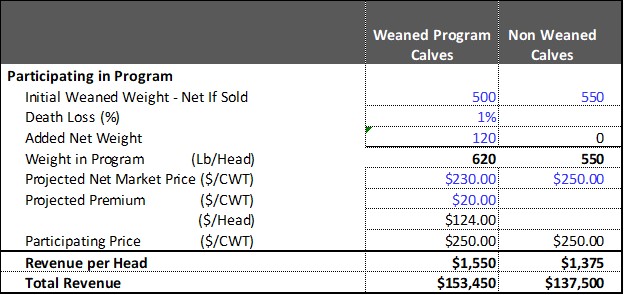
Getting into some of these programs will change our production system and revenue sources, such as not being able to use growth-promoting products. In that case, you should also account for a lower daily gain.
Sources of Added Costs
Added costs can be divided into added capital investments, enrollment and verification fees, and the new system’s annual operating costs. The annual investment costs include the depreciation of the capital investments. The investment level is highly variable on each ranch, its existing facilities, and technology. These are key to measuring how profitable program cattle will be in your operation. In other cases, there is zero added capital investment to get into these new alternatives, which makes them much more attractive (Table 2).
Table 2. Example of Added Costs for Weaned Program Calves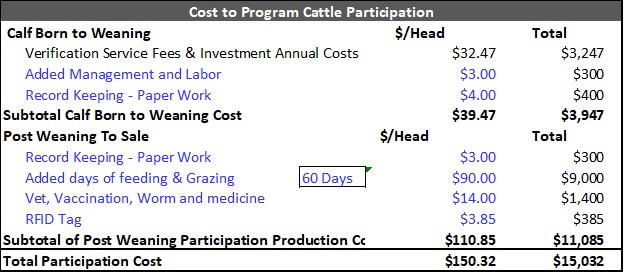
Participating in a program requires more management, labor, and paperwork than non-program cattle. However, it’s often an excellent alternative to increase your net profit. We recommend evaluating each choice to determine if the added value (price premium and total revenue) exceeds the added cost over the current production and marketing system.
Our example shows a positive Net Revenue Change of $9.28/Head for this ranch operation (Table 3). Changes in revenue and costs are different for each ranch depending on its cattle genetics, management skills, and existing facilities already in place.
Table 3. Net Revenue Change Example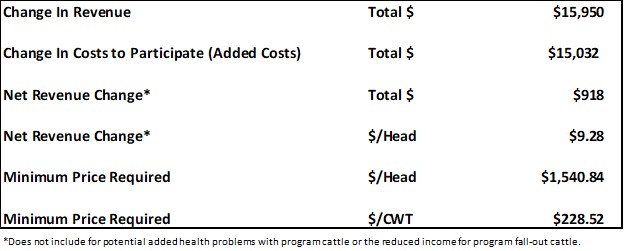
Available programs might be different depending on the location of your ranch. Use the Weaned Calf Program Evaluation tool to evaluate if the program cattle fit you and your operation.