
Field crops in Burleson County on July 30, 2021. (Laura McKenzie/Texas A&M AgriLife Marketing and Communications)
On Monday, June 30, the USDA released its June Acreage Report. In today’s post, we examine the report’s implications for crop production nationwide and in Texas.
2026 Planted Acres
The June Acreage Report is important for two reasons. First, it is the USDA’s first estimate of what producers have planted each year. Second, the June report provides the basis for production estimates in the USDA’s monthly WASDE report. For this reason, it can significantly affect agricultural commodity markets, particularly when the report’s numbers differ from market expectations.
Table 1 summarizes the planted acres for cotton, corn, sorghum, and wheat in the June report for the United States and Texas. Compared with last year, cotton planted acres are up about 6% nationally and about 2% in Texas. In contrast, acres planted to corn, sorghum, and wheat are down 3-6%.
Comparing the June report with the Prospective Plantings Survey shows how producers’ intentions changed during the planting season. Compared with the March report, cotton planted acres increased 2% nationally but decreased 1.7% in Texas. Corn planted acres remained unchanged nationally, but decreased 5.8% in Texas. Sorghum planted acres decreased 2.6% nationally and 17.6% in Texas. Finally, wheat planted acres decreased 2.4% nationally and 3.5% in Texas.
To summarize:
- More cotton was planted in 2026 relative to 2025. Nationally, producers planted more than expected, according to the March survey, but in Texas, they planted less than expected.
- More corn was planted in 2026. Nationally, planted acres are in line with the March survey, but in Texas, they are lower than expected.
- Less sorghum was planted this year, but the amount planted was more than expected. In Texas, the difference from the March expectation is significant.
- Less wheat was planted in 2026 when compared to 2025. The reduction in wheat planted acres is greater than expected based on the March survey results.
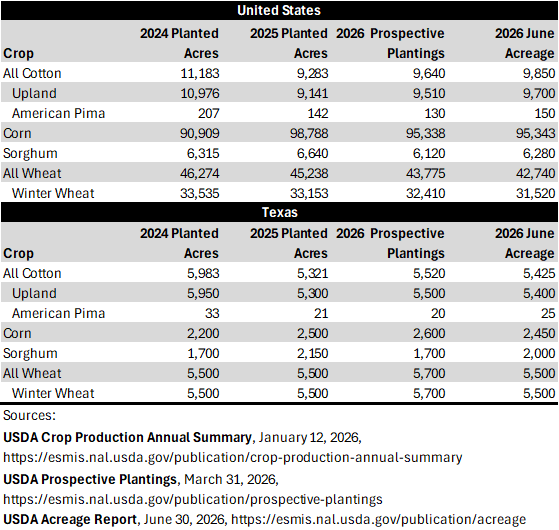
Table 1. Summary of Planted Acres (millions of acres)
Potential Impact on 2026 Crop Production and Supplies
Until now, the USDA has used the March Prospective Plantings Survey numbers to inform its production and supply estimates in the monthly WASDE report. However, on July 10, the USDA released an updated WASDE report based on the June Acreage Report. Table 2 shows how using planted acres from the June report affects the balance sheets for cotton, corn, sorghum, and wheat.
As might be expected, cotton production and supply increase due to more planted acres than expected. In the new WASDE, a 2% increase in planted acres adds 400,000 bales to the production estimate. Since the report makes no changes to its use estimates, ending stocks also increase by 10.81% to 4.1 million bales.
Despite no change in corn-planted acres, the July WASDE reduces its estimate of 2026/27 corn ending stocks. There are two reasons for this. First, the USDA lowered its estimate of beginning stocks for this marketing year. Second, it increased its estimate of corn use. The result of these revisions is a 170 million-bushel reduction in expected ending stocks.
As for wheat and sorghum, the changes to the WASDE are unsurprising. Slightly fewer wheat acres planted reduce expected ending stocks at the end of this marketing year. Slightly more sorghum acres planted increases expected ending stocks.
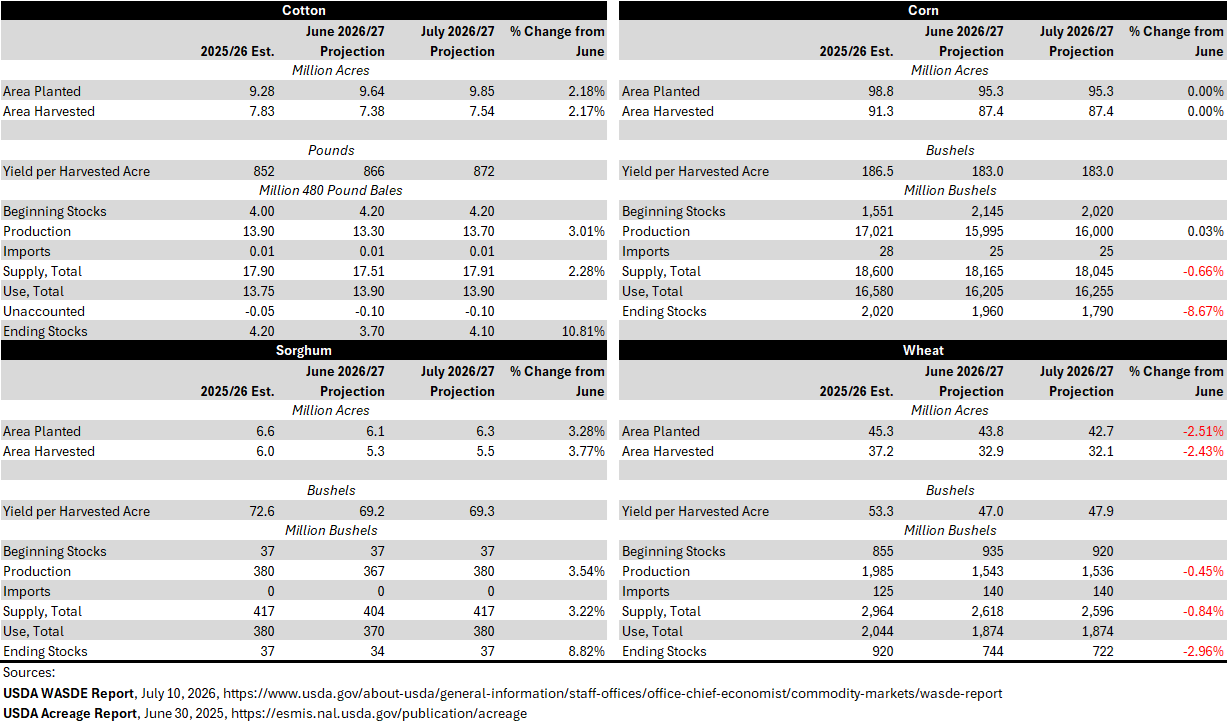
Table 2. Summary of WASDE balance sheets for cotton, corn, sorghum, and wheat
What Happens Next?
What happens next in the cotton and grain markets will likely depend on near- and long-term weather outcomes. Producers in the Southern United States faced significantly drier planting conditions in 2026 than last year. Conditions have improved since then; however, the Texas Panhandle and South Plains, as well as Florida, Georgia, and the Carolinas, remain very dry.
If these conditions persist in the near term, harvested acres and yields for crops planted in these areas may be significantly lower than expected. In the long term, an intense El Niño in the fall could bring heavy rains to the Southern United States. This will complicate harvest in the Southern United States and affect crop quality this year.