Photo by Michael Miller/Texas A&M AgriLife Marketing and Communications
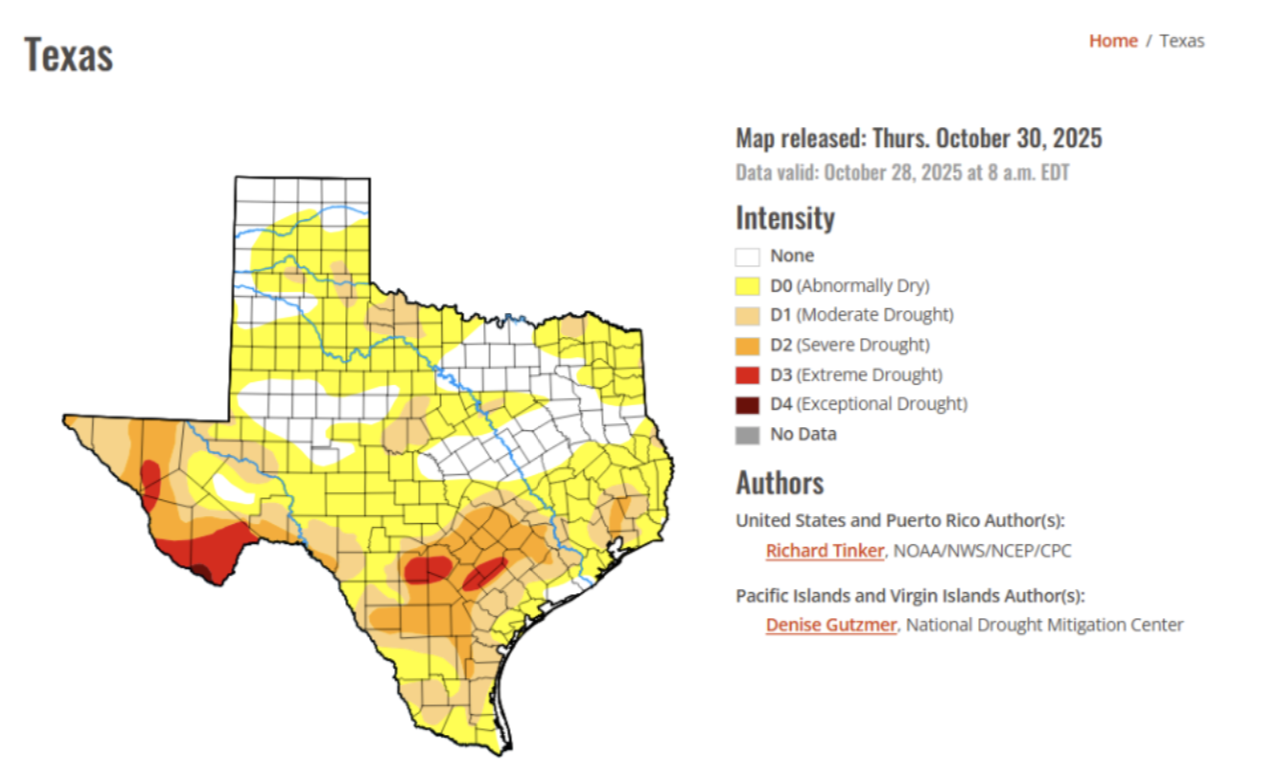
For the past 25 years, a significant portion of Texas has faced drought conditions nearly every year. According to the latest Drought Monitor report of October 30, around 77% of Texas is currently experiencing some level of drought. The USDA provides a tool to assist ranchers during these challenging times.
USDA’s Pasture, Rangeland, and Forage Insurance (PRF), have shown positive net benefits of indemnities over premiums in many cases. But most importantly, it works, it generated significant payments in those years when it was needed most.
Figure 1. Texas Percent Area in U.S. Drought Monitor Categories
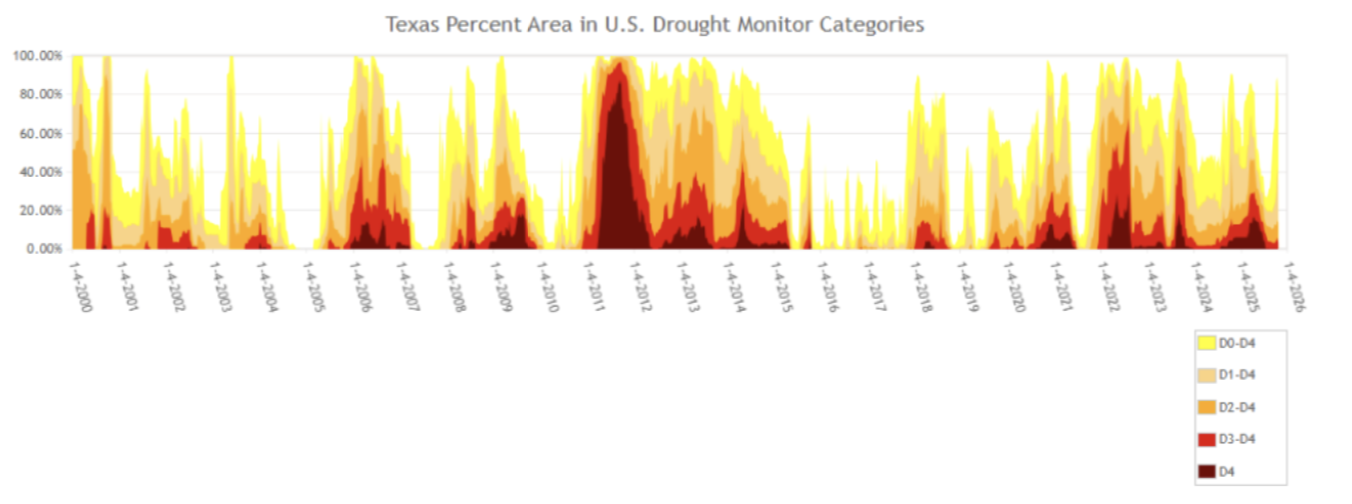
Figure 2: Texas Drought Monitor
Pasture, Rangeland, and Forage Insurance Program Review
The deadline for the USDA’s Pasture, Rangeland, and Forage Pilot Insurance Program (PRF) is December 1. This program, better known as rainfall insurance, was developed to reduce the economic impact of a lack of rainfall. It was designed to provide insurance coverage on grazing pastures, rangeland, and forage acres with or without irrigation.
How does it work?
The program does not directly measure the drought effect or the severity of the drought. It only measures the lack of rainfall compared to an average index for that area. The National Oceanic and Atmospheric Administration (NOAA) developed a rainfall index to determine the lack of precipitation in a specific area or grid. Indemnities are triggered when the actual rainfall is below the average historical rainfall.
PRF Example
Like every year, we will use the USDA support tool (https://prodwebnlb.rma.usda.gov/apps/prf) to help us understand how it works, estimate premium costs, and estimate results since 1948, and show the benefits of this program.
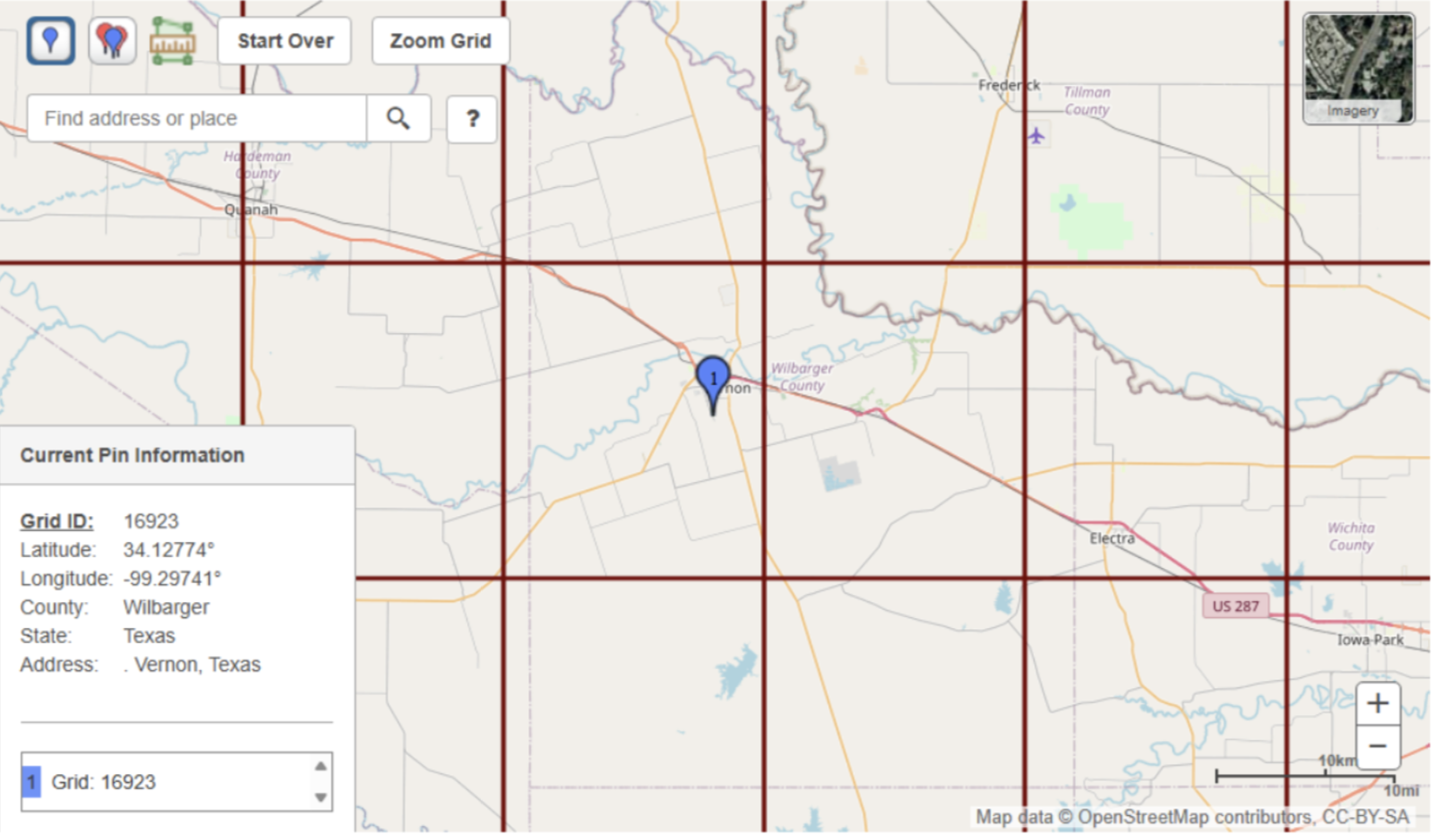
This year, we will use a 1,000-acre ranch (to make it easier) located near Vernon, Texas, as an example (Grid ID: 16923, Image 1).
Image 1. Pasture, Rangeland, Forage Support Tool. (USDA-RMA)
First, after selecting the ranch’s location, we need to choose the intended use of the insured acres (Grazing or Haying), the production systems (irrigation, organic), and the coverage level (70%, 75%, 80%, 85%, 90%) at the Decision Support tool tab. We will use the default coverage level of 90% and a productivity factor of 100%. However, the program will enable you to assign a productive factor to better match your farm productivity in that area.
We also need to select a sample year. Since 2025 has yet to finish, we won’t be able to use it as an example. We will use results from 2024 as the sample year.
Second, we must choose how to allocate the insurance during the year using bi-monthly intervals. There are several strategies that you can discuss with your insurance broker. In this case, we will use one of the most common strategies. We will spread our insurance during the months when forage production is critical. During that period, a loss in forage production will significantly impact production and economic results.
We will distribute the insurance throughout the year using the following percentages: 15% for the Feb-March interval, 15% April-May, 30% June-July, 20% Aug-Sept, and 20% Oct.-Nov. The total percentage selected should add up to 100% (Table 1).
Table 1. Protection Table (USDA-RMA)
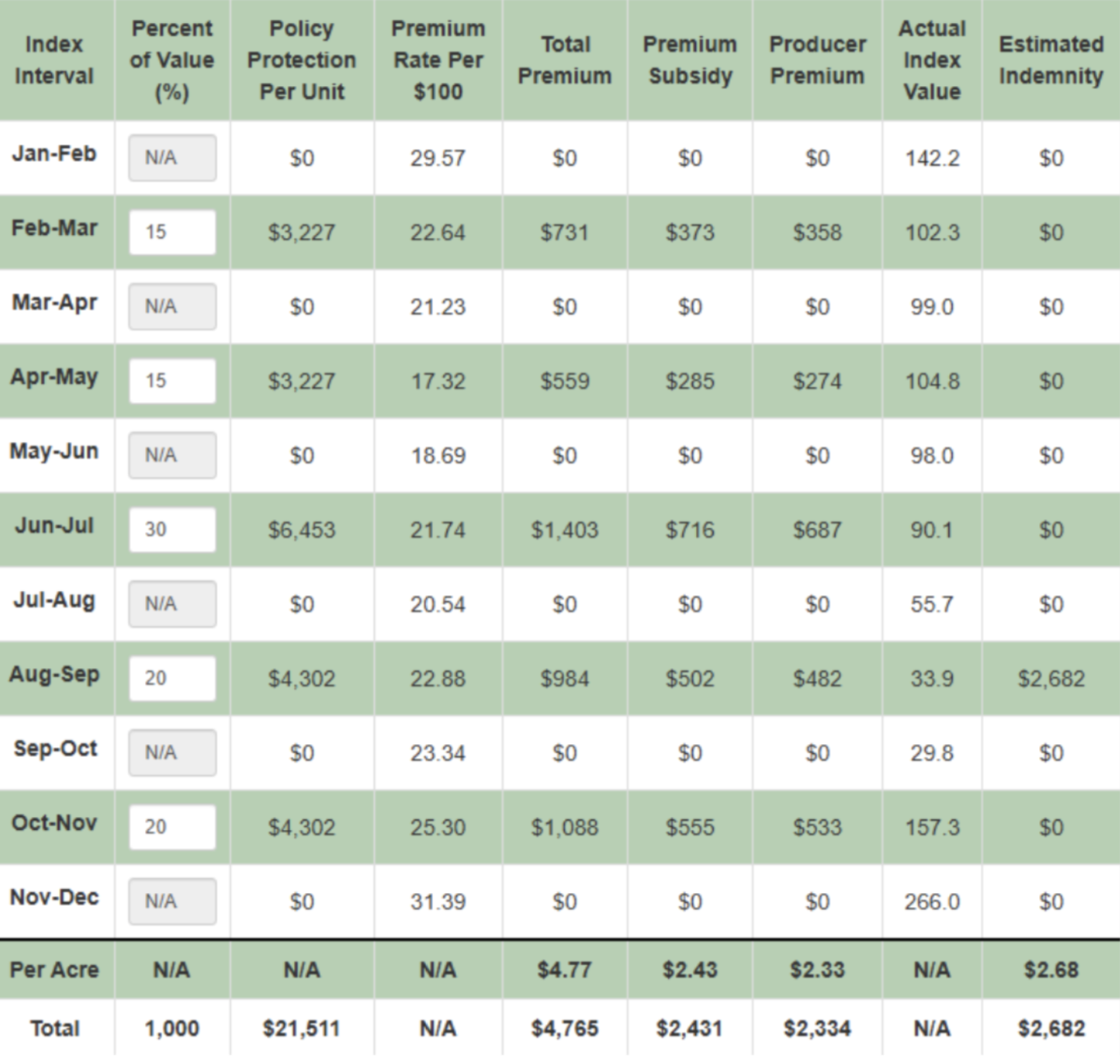
The tool will show the results for the 2024-year sample. The producer premium was $2.33 per acre. The estimated Indemnity payment for 2024 resulted in $2.68/acre, which resulted in a net gain of $0.35/acre. Assuming a stocking rate of 15 acres per cow, the net payment per cow was $5.25.
Historical Estimated Indemnities and Net Results
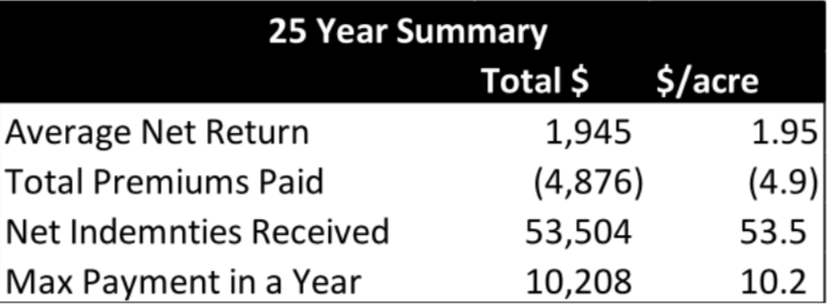
We can use the USDA tool to estimate historical results and check how the insurance would have paid in the past years. For example, results for the last 25 years had an average net payment of $1.95 per acre above premium costs (Table 2). Assuming a stocking rate of 15 acres per cow, the average net indemnity received per head was $29.18/head.
Table 2. Twenty-Five Year Summary
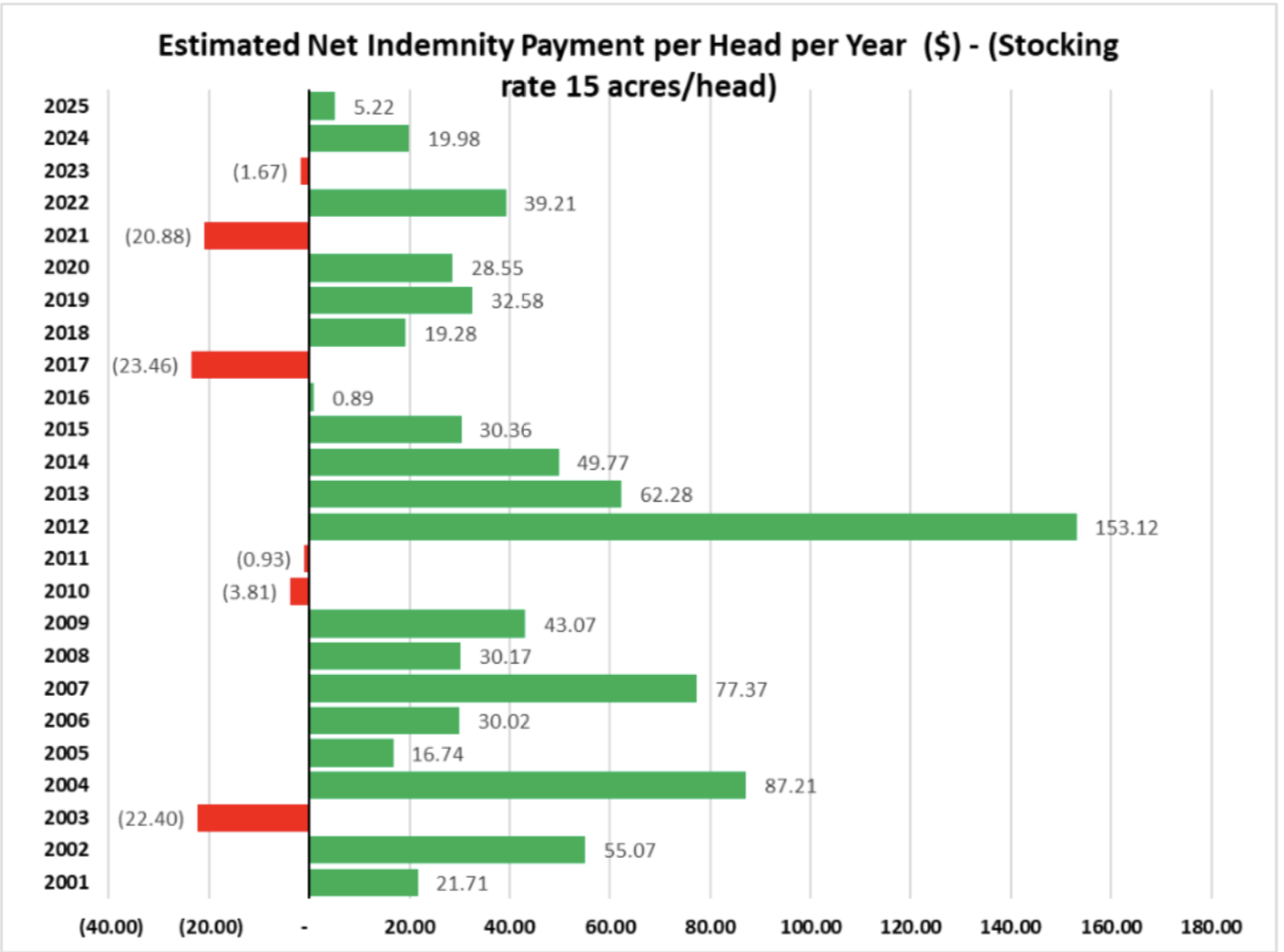
In the past 25 years, there were only 6 years during which indemnities did not fully cover the paid premiums. In this example (Table 3), the producer never had to pay the entire premium. The largest payments were received in the years 2012, 2004, 2007, and 2013. The estimated net payments during these years ranged from $62 to $153 per head.
Table 3. Historical Indemnities and Net-Results per Head
The Pasture, Rangeland, and Forage Pilot Insurance Program (PRF) is a great program to support producers when rainfall is below average. Most importantly, it helps ranchers cover extra and higher feeding costs when precipitation is lower than usual.
For more information on the PRF, consult the USDA Fact Sheet on Pasture, Rangeland, and Forage Insurance Program. If you’re considering purchasing this insurance, you can find a list of approved agents and insurance companies on the USDA website (https://www.rma.usda.gov/tools-reports/agent-locator).