
Cotton on the Texas A&M AgriLife Farm in Snook, Texas on Sept. 9, 2021. (Sam Craft/Texas A&M AgriLife Marketing and Communications)
The 2026 crop and livestock budgets are available on the Texas A&M AgriLife Extension Economics website. In today’s post, we break down the District 1 and District 2 cotton budgets and discuss what they imply about cotton costs and returns this year.
Projected Costs and Returns
Table 1 compares revenue and variable cost per acre in the 2025 and 2026 cotton budgets. In general, we do not expect these values to change significantly this year compared to last year. The District 1 budgets expect 2026 revenue to increase slightly due to higher cottonseed prices. In District 2, revenue decreases slightly due to a lower lint price. In almost all budgets, costs rise slightly due to higher fertilizer and application costs. The one exception is the District 2 dryland crop budget, which assumes no fertilizer is applied. On average, these changes amount to less than a 1% change in revenue and variable costs in 2026.
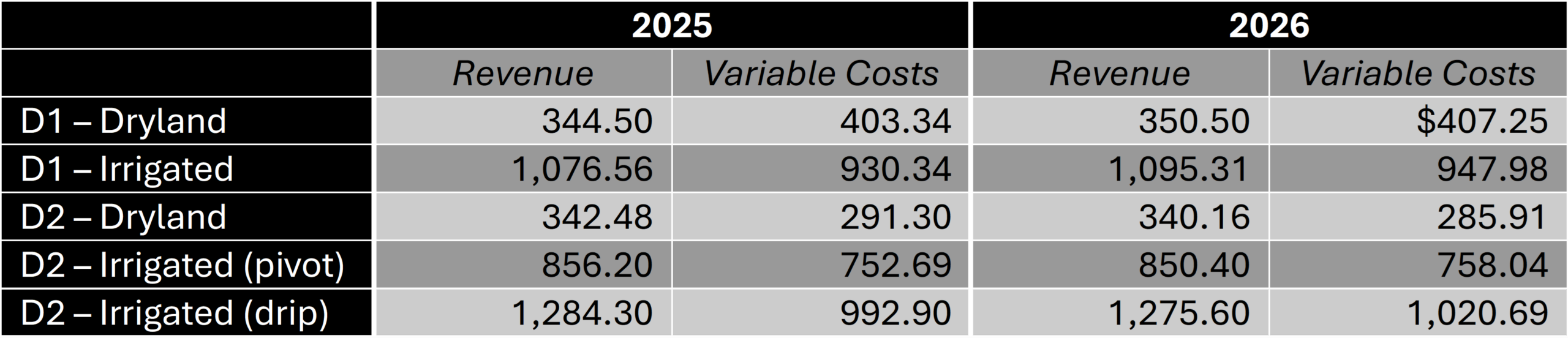
Table 1. Cotton Revenue and Variable Costs ($/acre)
Table 2 compares the expected returns over variable costs and over total costs for 2025 and 2026. The most significant change in 2026 is that the budget for drip-irrigated cotton in District 2 no longer shows a positive return on total costs. It is still the case that returns over variable costs are positive for all but the District 1 dryland cotton budget. Keep in mind the economic rule of thumb to focus on returns above variable costs if you are already invested in cotton production. If an enterprise can cover its variable production costs, producers can use the revenue it earns to pay at least part of their fixed costs.
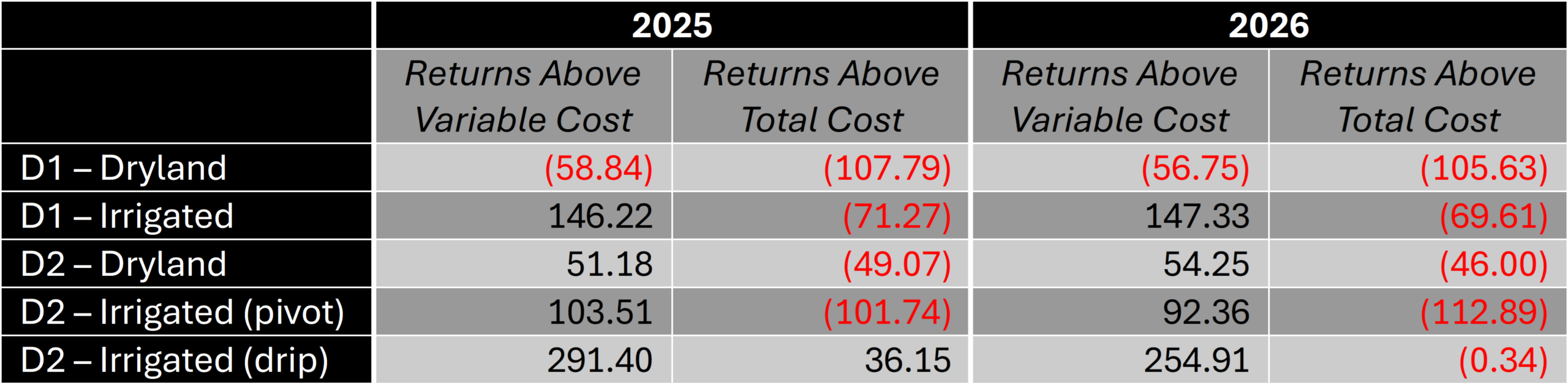
Table 2. Cotton Net Returns ($/acre)
Breakeven Prices
One important value to consider in an enterprise budget is the commodity’s break-even price. This is the price at which you can expect revenue to exactly equal costs, given the budgeted production level. Table 3 lists the break-even prices to cover both the variable and total costs reported in the 2026 budgets.
Using dryland cotton in District 2 as an example, the budgeted yield per acre is 400 pounds of cotton lint. If this yield is achieved, an acre of dryland cotton will break even on its variable costs at $0.54/pound and on its total costs at $0.80/pound. Except for the District 1 dryland budget, the expected price for cotton this year is between the break-even prices for variable and total costs. If cotton yields, cotton prices, and input costs are close to our expectations, producers should have no trouble covering their variable costs. Breaking even on total costs this year will be more difficult.
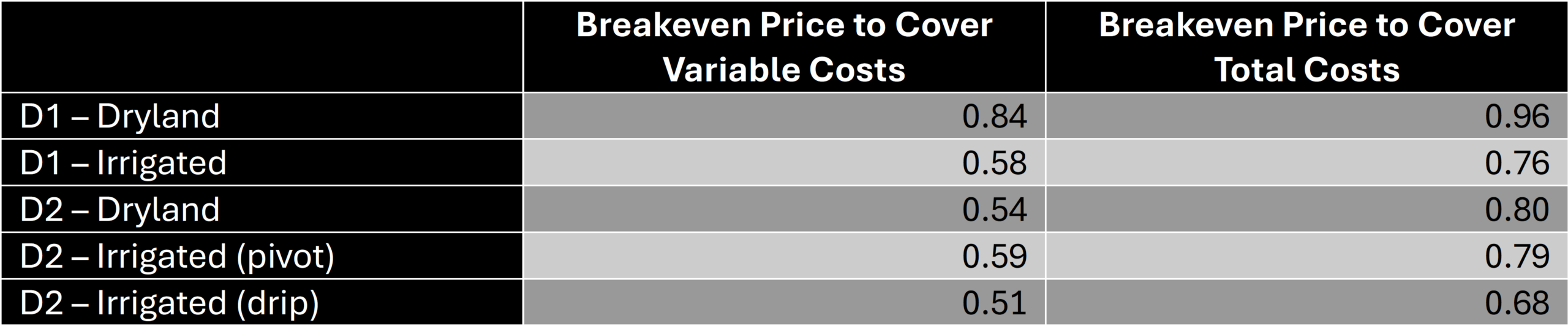
Table 3. Breakeven Prices for Cotton Production ($/lb.)
What if yields and/or prices do not meet our expectations this year? Currently, the Strait of Hormuz is closed to most trade because of the ongoing conflict between Israel and Iran. As a result, fuel prices have increased significantly. In addition, significant amounts of several key fertilizer components are shipped through the Strait of Hormuz. It is unclear what impact the U.S. fuel and fertilizer markets will face, but in the short term, prices are likely to rise and remain high.
Table 4 shows the break-even prices to cover variable and total costs, assuming fuel prices are 50% higher than expected and fertilizer prices are 25% higher than expected. In all but one budget, the breakeven prices increase by $0.03/lb. The lone exception is the District 2 dryland budget, which assumes no fertilizer is applied to the crop.

Table 4. Breakeven Prices for Cotton, Assuming Higher Fuel and Fertilizer Costs ($/lb.)
Final Comments on the Budgets
Keep in mind that the numbers in these budgets are general guidelines for cotton enterprises in their respective districts and will not represent every operation perfectly. To build a budget that better represents your operation, you can use the following options:
- Producers in District 1 can access a Crop Profitability Analyzer, sponsored by Texas Corn Producers, by clicking here.
- District 2 producers access a similar decision tool on the website https://southplainsprofit.tamu.edu/.
- AgriLife Extension Agricultural Economics offers tools to help you build your own budgets on our website.
Keep in mind is that the outlook for both input costs and the 2026 cotton market is not fully formed. In terms of costs, both global trade disruptions and local supply and demand issues could affect fertilizer and chemical prices. In the cotton market, it is hard to know what prices will look like until later in the growing season. There is still plenty of room for both the costs and the returns to cotton production to change. To stay up to date on the latest cotton marketing information, make sure to check out Dr. Robinson’s cotton marketing website. While there, make sure to sign up for his weekly email newsletter as well.