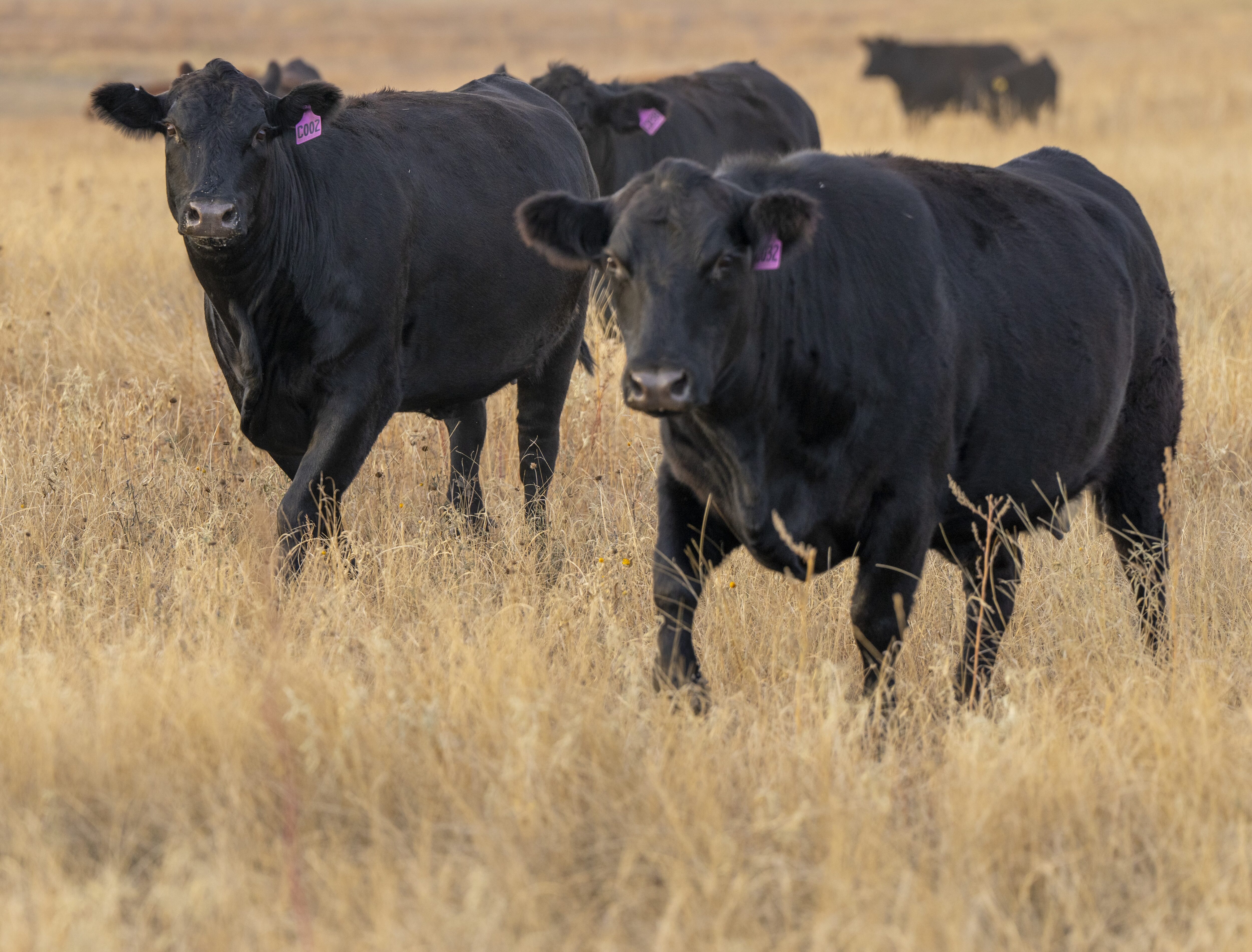
President Trump signed the One Big Beautiful Bill Act (OBBBA) into law on July 4, 2025. The law included changes to two disaster programs administered by the USDA Farm Service Agency: the Livestock Indemnity Program (LIP) and the Livestock Forage Disaster Program (LFP). In this post, we explain the changes to these programs and how those might affect Panhandle livestock producers.
Changes to the Livestock Indemnity Program
The Livestock Indemnity Program (LIP) provides compensation for livestock death loss, as authorized by the Agriculture Improvement Act of 2018 (the 2018 Farm Bill). Eligible conditions for LIP payment include:
- Adverse weather: extremes that are outside the norm for the time of year in which they occur. These include events such as hail, lightning, tornados, winter storms, wildfires, and extreme heat.
- Eligible diseases: those for which there are no available or approved management/vaccination strategies, or diseases that are exacerbated by extreme weather conditions.
- Predation: animal attacks by species protected by Federal law or species that have been reintroduced by the Federal Government (e.g., wolves and avian predators).
LIP payments are based on market values. For eligible weather and disease events, the payment rate is 75% of the market value of the animal the day before the event occurred. OBBBA increased the payment rate for losses due to predation from 75% to 100% of the market value of the animal the day before the event occurred.
In addition to increasing payment rates for livestock losses due to predation, OBBBA establishes that producers may now receive payment (as determined by the Secretary of Agriculture) for losses of unborn livestock occurring on or after January 1, 2024. For those in the Texas Panhandle, this means that producers affected by the devastating Smokehouse Creek Fire in February 2024, may be eligible to receive compensation for losses of unborn livestock.
To be eligible to receive payment through LIP, a livestock owner must have experienced excessive death loss, or injury resulting in reduced price, resulting directly from eligible loss conditions. Your local FSA agent can help determine eligibility and assist you in filing a notice of loss. The final date to file notice of loss for LIP is March 1 following the calendar year in which the loss occurred.
Changes to the Livestock Forage Disaster Program
The Livestock Forage Disaster Program (LFP) provides compensation for grazing losses due to qualifying drought, as determined by the U.S. Drought Monitor (https://droughtmonitor.unl.edu/CurrentMap.aspx). Livestock producers who are prohibited from grazing Federal land due to fire may also be eligible to enroll in LFP. Monthly payments for LFP are based on 60% of the monthly feed cost of eligible livestock or normal carrying capacity of the eligible grazing land, whichever is lower.
OBBBA updates drought eligibility requirements for LFP by reducing the threshold from 8 consecutive weeks of D2-level (severe) drought to 4 consecutive weeks to qualify for one monthly payments, or 7 out of 8 weeks to qualify for two monthly payments. Producers who experienced drought in the early part of the grazing season this year may now be eligible to enroll in LFP under the new requirements.
Eligibility requirements for extreme and exceptional drought conditions remain unchanged:
- D3-level (extreme) drought: Any amount of extreme drought conditions during the normal grazing season is eligible for three monthly payments. Extreme drought lasting for at least four consecutive weeks is eligible to receive four monthly payments.
- D4-level (exceptional) drought: Four weeks of exceptional drought (consecutive or not) is eligible to receive 5 monthly payments.
Your local FSA agent can help determine LFP eligibility and assist you with enrollment. The enrollment deadline for LFP is March 1 following the calendar year in which the loss occurred.
One Thing to Keep in Mind: Sometimes Things Change
The information presented here is based on our best reading of the text of the One Big Beautiful Bill Act. We assume that the USDA will implement the changes that OBBBA makes to the LIP and LFP programs as outlined in the law. However, things can and do change during implementation. Readers should keep this reality in mind as they consider how the OBBBA’s changes to LIP and LFP will affect their operations.