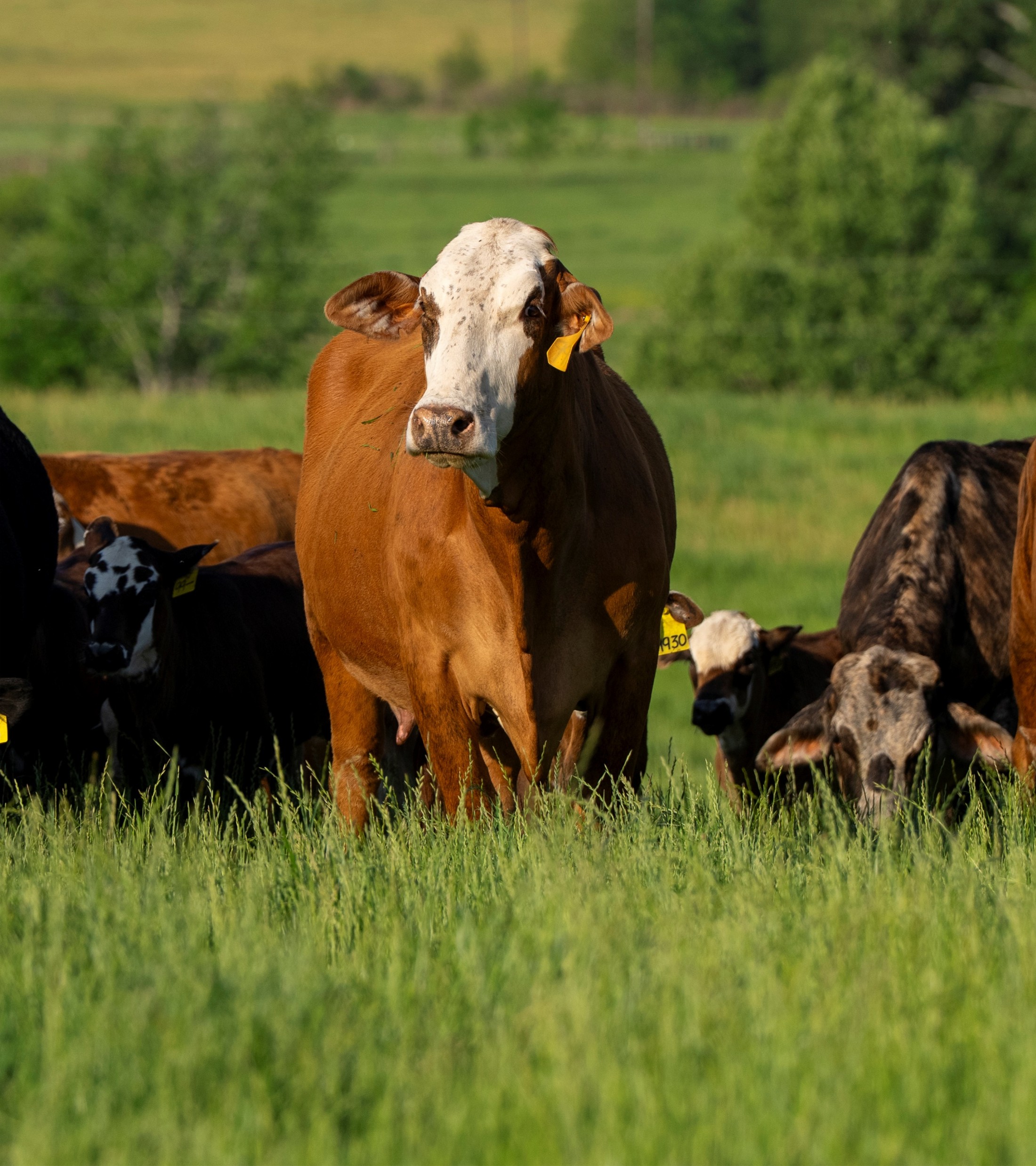
 With cattle prices reaching record highs, it’s more rewarding than ever to be in the cattle business. It’s also more expensive than ever to raise cattle, with estimated annual production costs of nearly $1,100 per head for cow-calf operators. With these kinds of prices, it’s more important than ever to be diligent when making culling and purchasing decisions. Today, in her first article as a new author for the Ag Economics on the Plains Blog, Merri Beth Day, AgriLife Extension Economist for District 1, reviews some considerations for deciding whether to buy replacement heifers.
How Much Can I Afford to Pay for Replacement Heifers These Days?
To make a sound decision when it comes to buying replacements, you really need to answer two questions:
- What is the current market value of this animal?
- What is she actually worth across her productive lifetime?
What is the current market value of this animal?
Answering this question really is as simple as it sounds – what is the current market price for a replacement? USDA Agricultural Marketing Service reports on Texas Cattle Auction prices weekly. While these prices may differ from your local sale barn, it’s a good starting point for determining the market value of replacements. Last week, USDA-AMS reported the average price of heavy bred heifers at just over $4,000 per head.
In addition to checking current market reports, you want to think about some potential reasons this animal is being sold and your reasons for wanting to buy it (late breeder, bad attitude, etc.).
What is she actually worth across her productive lifetime?
This question is a bit more complex and nuanced than figuring out the market value. To determine a replacement’s value across her productive lifetime, you’ll need to make some assumptions about productivity (weaning percentage, weaning weights), annual costs (feed, grazing, breeding, depreciation), and future calf market prices. Selling a calf is your way of recouping the investment you’ve made in this animal, in addition to her cull value.
Figure 1 uses Net Present Value (NPV) to estimate the value of a heavy bred heifer across her productive lifetime. Here, we assume that calves are weaned at 525 lbs., with a weaning percentage of 93% in year 1 and 83% in years 2-8. We assume the annual cost of production is $900, a discount rate of 7%, and a cull value of $1,200. The estimated value of the animal in Figure 1 across her productive lifetime is $3,476.53.

Figure 1
What about raising your own?
To compare purchasing a replacement heifer versus raising your own, consider the accumulation of all expenses from conception of the heifer calf until she becomes a productive female. For example, start with the cost to produce a weaned heifer on your ranch, and then include the cost having her bred positive and having her first calf.
When we’re talking about replacement heifers, keep in mind that they have a job to do – have a calf every single year. The key question to ask yourself when making this decision is: Is she a good investment?
For more information on Texas Weekly Cattle Auction Summary, please visit the USDA-AMS website at https://usda.library.cornell.edu/concern/publications/2b88qc245
For more information on estimating NPV of cows and heifers (Cow Bid Price Excel Spreadsheet), please visit the Texas A&M AgriLife Extension Economics website at https://agecoext.tamu.edu/beef-cattle-decision-aids/
For more information on operating budgets for cow-calf enterprises, please visit the Texas A&M AgriLife Extension Economics website at https://agecoext.tamu.edu/resources/crop-livestock-budgets/