• Skip to primary navigation
  • Skip to main content
  • Texas A&M Forest Service
  • Texas A&M Veterinary Medical Diagnostics Laboratory
  • Texas A&M AgriLife Extension Service
  • Texas A&M AgriLife Research
  • Texas A&M College of Agrculture and Life Sciences
Casola Lab
Gene evolution, convergent evolution, comparative genomics
  • Menu
  • What we do
  • News
  • Research
  • People
  • Selected Publications
  • Courses
    • WFSC/GENE 648 Molecular Evolution
    • ESSM 689 Special Topics in Ecological Genomics
  • Positions
  • Contact

New paper on simulating CNVs and exome sequences

February 21, 2020 by ccasola

Happy to see our paper “SECNVs: A Simulator of Copy Number Variants and Whole-Exome Sequences From Reference Genomes” published in Frontiers in Genetics! A robust CNV simulator for exome data was sorely needed, and we think SECNVs is filling this gap nicely. We included a number of options in this tool that will help customize CNV and exome read simulations to test current and novel algorithms to detect CNVs.

It was a pleasure working with co-authors Yue Xing, Alan Dabney, Xiao Li, Guosong Wang and Clare Gill on this project. Yue Xing, who was a PhD student in the Genetics program when we started this work, deserves a lot of credit for her contribution to this work.

Filed Under: Uncategorized

Nature Feature on de novo genes

October 18, 2019 by ccasola

Super excited to see this very nice feature on de novo genes by Adam Levy in Nature! It was a lot of fun and a privilege to talk to Adam about de novo genes a few months ago. Also, Science published a Feature on microproteins that is relevant to DNGs. Amazing to see the progress that has been made in this field in recent years!


Filed Under: Uncategorized

‘De novo’ or ‘de nono’ genes?

September 27, 2018 by ccasola

Howdy!

Protein-coding genes can evolve from scratch in previously noncoding regions. These so called ‘de novo’ genes have been found in many genomes and are one of most exciting areas in molecular evolution. In fact, there have been several important contributions to the field recently (Pubmed “de novo genes“).

There are many possible strategies to identify de novo genes, for example using comparative genomics or analyzing long noncoding RNA datasets. A popular approach is based on phylostratigraphy, or the age determination of genes based on their distribution on a given phylogeny.

Phylostratigraphy is a powerful approach but has flaws that can lead to underestimating the age of a gene. This is because many genes evolve rapidly bearing undetectable sequence similarity with orthologous copies in other species. To find out how often phylostratigraphy gets the age of de novo genes wrong I reanalized data from 3 studies focused on mouse or mouse and rat de novo genes. After excluding putative de novo genes that are no more annotated, I found that the two studies that relied on phylostratigraphy as the only method to detect de novo genes had >60% of error rate. I called these false positives ‘de nono’ genes.

These results are now published on GBE

Filed Under: Uncategorized

Our work on rapid gene turnover in Pinaceae now online on The Plant Journal!

July 10, 2018 by ccasola

Several authors have found that gymnosperms, including Pinaceae, share a low substitution rate compared to angiosperms. In contrast, we report this paper a remarkable high level of gene turnover (the sum of gene duplication and gene loss events) in Pinaceae. We also show how gene turnover rates can be reliably estimated when gene annotation is still preliminary, as is the case in sequenced Pinaceae genomes. Kudos to former postdoc Tomasz Koralewski for his fundamental contribution to this study!


Filed Under: Uncategorized

Casola’s graduate student awarded a Graduate Fellowship!

September 15, 2017 by ccasola


Many congratulations to Jingjia Li, graduate student in the Casola’s lab, for receiving the three years-long McMillan Ward Memorial Graduate
Fellowship from the Department of Ecosystem Science and Management!

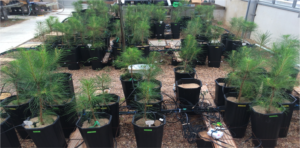
Jingjia will continue her work on gene expression changes in loblolly pine clones showing varying tolerance to drought stress

Filed Under: Uncategorized

Douglas-fir genome published!

August 7, 2017 by ccasola

Our collaborative study on the Douglas-fir genome paper is now published online in G3! Postdoc Tomasz Koralewski and I contributed with the analysis of gene family evolution in DF and other Pinaceae. Lots of interesting results came from this work, for instance: Pinaceae shows a comparable if not higher gene turnover rate than angiosperms (when polyploidization is not taken into account), some genetic networks expanded in DF, including the interesting pathway involved in jasmonate regulation, and most nuclear genes in the plastid ndh complex were lost across Pinaceae.

Filed Under: Uncategorized

The CasolaLab presenting at a Conference, an Annual Meeting and a Congress this summer

August 7, 2017 by ccasola


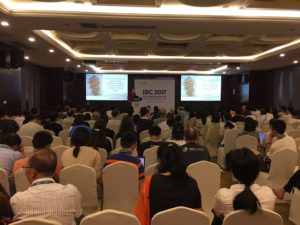
IBC amazing venue                                              Jingjia Li’s poster at IBC

During my talk at IBC


Lots of traveling to great scientific meetings in June and July this year.

In June 19-22 I was in the lovely Melbourne, FL, to present our work on gene turnover rates at the 34th Southern Forest Tree Improvement Conference. It was a great opportunity to learn more about ongoing work in applying genetics and genomics to tree improvement. Also, it never hurts to be at a conference on the beach, although one can’t help but wondering about the impact of miles of resorts on a barrier island, particularly for the nesting activity of sea turtles.

A very difference meeting took place the first week of July in Austin. Postdoc Tomasz Koralweski and I traveled to our state capital to present two posters on convergent evolution in C4 grasses and in marine mammals (!) at the Annual Meeting of the Society of Molecular Biology and Evolution. The SMBE’s is one of my favorite meetings, and this year’s program was certainly not disappointing (program here). I cannot simply summarize the astonish amount of science that I have witnessed those 4 days, nor point to any specific highlight. It was great though to get some feedback about our current research, and to get inspired by some of the talks and posters we have seen.

Finally, at the end of July I traveled to Shenzhen, China, for the XIX International Botanical Congress. Almost 7,000 (!!) scientists convened to the South-eastern Chinese megacity, which was mostly built in the past 30 years across the border with Hong Kong, to discuss about anything botanical. IBC is a unique event, held every six years–the very first IBC was in Paris in 1900, although the conference stems from horticulture and botanical annual meetings that took place the first time in Brussels in 1864! It was quite an honor to give a short talk at IBC, even though it was the last talk of the last day. As usual with talks, it gave me the chance to re-think and improve our work on gene turnover rates in Pinaceae. Now we are wrapping up the paper–hopefully it will see the light later this year.

Jingjia Li, graduate student in the CasolaLab, also attended IBC and presented here work on the transcriptomic analysis of drough-tolerance in loblolly pine!

More info on the IBC can be found in the AoBBlog by Pat Heslop-Harrison and in the very detailed posts on Jeff Ollerton’s Biodiversity Blog (July 2017)


Filed Under: Uncategorized

Our review on retrogenes and other retrocopies is online

June 13, 2017 by ccasola

Esther Betrán and I wrote a review on the molecular mechanisms and evolutionary consequences of a marvelous byproduct of genome infestation by retroelements: gene retroposition. This is a quite long account, yet a surely incomplete one, of the astonishing discoveries made in the past 30+ years on how retrogenes and other retrocopies originate, change and affect genome evolution. And yet, so many questions remains unanswered in this field, or have been explored in depth only in a few model organisms. Luckily, this is  a very active area in evolutionary genomics: at least six more papers on retrogenes were published since the beginning of this year. Our group is also working on retrogenes in conifers, a taxonomic group with a lot of retroelements but no work yet addressing their impact in terms of gene retroposition. I hope to post soon about this project as well!

Casola C, Betrán E “The genomic impact of gene retrocopies: what have we learned from comparative genomics, population genomics and transcriptomic analyses?” Genome Biology and Evolution. 2017 Jun 12


Filed Under: Uncategorized

The lab keeps growing..

August 3, 2016 by ccasola

I am very pleased to welcome two new graduate students in our lab!

Jingjia Li has joined the ESSM graduate program as a Ph.D. student to study the genetic basis of drought resistance in loblolly pine.

Weixi Zhu will work on the pseudogenes evolution in conifers during his Master studies in the MEPS program.

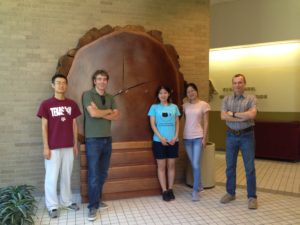
You can see new and old lab recruits standing in awe in front of the magnificent section of a redwood tree born sixteen years before Columbus’ first voyage to the New World

2016-08-03 11.41.52

(photo by Mengmeng Lu)

Filed Under: Uncategorized

Alleles, retropseudogenes and cancer in elephants

May 1, 2016 by claudio.casola

Elephant_Alexandre_Chambon copy

(Photo by Alexandre Chambon)

Elephants have many retrocopies (retropseudogenes) of TP53, a gene notoriously associated with cancer resistance. Elephants also seem to rarely develop cancer (but read this for a different perspective).

When Abbelgen and collaborators published an article in the Journal of American Medical Association last November showing a possible link between TP53 copies and cancer resistance in elephants, well it just seemed to make sense.

Many aspects of their work looked sound and the link may be there, but some things were odd. For examples, the authors insisted on calling these TP53 copies “alleles”, which they are not, and at times referred to them as”retrogenes”, while they should be called retropseudogenes.  So I wrote a comment to JAMA that just got published.

Is it just a matter of naming things right? Well, not in my opinion. You can find the original paper here, my comment here, and the authors response here.  Two more comments on this article were published in JAMA (here and here).
Finally, a manuscript that seems to better explore the evolutionary history of TP53 retrocopies and their possible role in cancer resistance in elephant is available in BioRxiv


Filed Under: Uncategorized

  • « Go to Previous Page
  • Page 1
  • Page 2
  • Page 3
  • Go to Next Page »
  • Compact with Texans
  • Privacy and Security
  • Accessibility Policy
  • State Link Policy
  • Statewide Search
  • Veterans Benefits
  • Military Families
  • Risk, Fraud & Misconduct Hotline
  • Texas Homeland Security
  • Texas Veterans Portal
  • Equal Opportunity
  • Open Records/Public Information
Texas A&M University System Member