• Skip to primary navigation
  • Skip to main content
  • Texas A&M Forest Service
  • Texas A&M Veterinary Medical Diagnostics Laboratory
  • Texas A&M AgriLife Extension Service
  • Texas A&M AgriLife Research
  • Texas A&M College of Agrculture and Life Sciences
Casola Lab
Gene evolution, convergent evolution, comparative genomics
  • Menu
  • What we do
  • News
  • Research
  • People
  • Selected Publications
  • Courses
    • WFSC/GENE 648 Molecular Evolution
    • ESSM 689 Special Topics in Ecological Genomics
  • Positions
  • Contact

Alleles, retropseudogenes and cancer in elephants

May 1, 2016 by claudio.casola

Elephant_Alexandre_Chambon copy

(Photo by Alexandre Chambon)

Elephants have many retrocopies (retropseudogenes) of TP53, a gene notoriously associated with cancer resistance. Elephants also seem to rarely develop cancer (but read this for a different perspective).

When Abbelgen and collaborators published an article in the Journal of American Medical Association last November showing a possible link between TP53 copies and cancer resistance in elephants, well it just seemed to make sense.

Many aspects of their work looked sound and the link may be there, but some things were odd. For examples, the authors insisted on calling these TP53 copies “alleles”, which they are not, and at times referred to them as”retrogenes”, while they should be called retropseudogenes.  So I wrote a comment to JAMA that just got published.

Is it just a matter of naming things right? Well, not in my opinion. You can find the original paper here, my comment here, and the authors response here.  Two more comments on this article were published in JAMA (here and here).
Finally, a manuscript that seems to better explore the evolutionary history of TP53 retrocopies and their possible role in cancer resistance in elephant is available in BioRxiv
 

Filed Under: Uncategorized

Our paper on Dryads is out!

April 1, 2016 by claudio.casola

Our manuscript on one of the oldest known horizontal transfers of transposable elements has been accepted for publication on Genome Biology and Evolution!  By the way, this is also one of the very few cases of DNA transfer from animals to plants and the only known transfer of transposable elements between animals and plants.

Before the sequencing of conifer genomes, Penelope-like elements (PLEs) were supposedly occurring only in animals.  In this article we describe a new group on PLEs, which we named Dryads, found in loblolly pine and other conifers.  Fluorescent in situ hybridization on pine chromosomes, PCR assays and a whole lot of bioinformatics work we have done in the past two years show that Dryads are common in conifers but not other gymnosperms.  All the phylogenies we made also point to PLEs from arthropods as Dryads’ sister group.  This means that Dryads derive from a PLE lineage that was horizontally transferred from a yet unknown arthropod to the common ancestor of conifers ~340 million years ago! This is quite remarkable given that most documented horizontal transfers of transposable elements occurred much more recently.  Who knows what other surprising evolutionary stories are awaiting to be discovered in the enormous genomes of conifer trees.

Congratulations to co-authors Xuan Lin (PhD student in my lab) and Dr. Nurul Faridi (USDA Forest Service cytogeneticist extraordinaire).

Filed Under: Uncategorized

Welcome to Dr. Tomasz Koralewski!

October 20, 2015 by claudio.casola

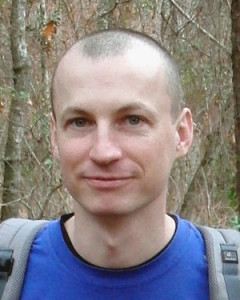
Tomasz has recently joined our lab as a Postdoctoral fellow. He obtained his Ph.D. in  Genetics at TAMU with a dissertation on “Comparative genomic analysis of economic traits related genes in Southern pines”.  Tomasz familiarity with both pine tree genetics and computer programming will be instrumental to our lab goal of achieving a better understanding of the origin and function of conifer genes


Tomasz_Photo

Filed Under: Uncategorized

Seminar on Dryads at Missouri University

October 31, 2014 by claudio.casola

Earlier this week I visited Columbia and the very nice University of Missouri campus for the first time. It’s probably the best time of the year to be in the midwest, as the stunning foliage colors welcome you in the Francis Quadrangle. They also have some real Ginkgo trees up there (see photo)!

I have to thank my colleague and friend Dr. Gavin Conant for the invitation, which gave me the chance to meet with some outstanding faculty from MU (Drs. Chris Pires and Jared Decker) and with Dr. Laura Kubatko from Ohio State University, who was also visiting and gave an impressive lecture on Species Tree Estimation. The seminar on Dryad elements in conifers went pretty well too. There will be a post on the topic following a paper on the topic, hopefully very soon..

ginkgo_MU

Filed Under: Uncategorized

A Summer of Primate Genome Papers

September 11, 2014 by claudio.casola

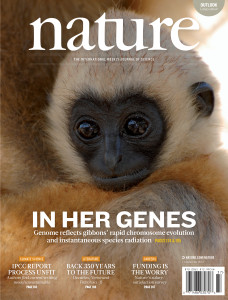
This week Nature features the analysis of the white-checked gibbbon (Nomascus leucygenus) genome led by Lucia Carbone at the Oregon Health & Science University, with a nice picture of the baby gibbon ‘Pepper’ on the cover. Last July the analysis of the common marmoset (Callithrix jacchus) genome has been published in Nature Genetics. I have been involved in both papers looking for gene duplication and gene loss events in these two  new primate genomes. A nice outline of this researches and my specific contribution has appeared on AgriLife today.

Picture credit: Nature

Filed Under: Uncategorized

Welcome to my very first student, Lin Xuan!

September 9, 2014 by claudio.casola

Xuan is a PhD student in the MEPS program. She has joined the lab this summer and has been key in making everything working properly. After helping cleaning up a lot of ‘vintage’ equipment and setting up new instruments, Xuan has begun working on what happens to be the coolest project in the lab by virtue of being the only project involving actual experiments. She is also learning how to program in python, a savvy decision considering that PCRs often don’t work. Except today, but that’s for another post..

Filed Under: Uncategorized

First lab purchase

July 16, 2014 by claudio.casola

Setting up a molecular biology lab is never easy. Luckily, there’s no scarcity of help from colleagues and staff members working in other labs. Things are even smoother when there is a stock room down the street. This morning I bought a few basic items from the Biochemistry stock room, mainly to ‘test the system’ and check out what’s stocked and available right away. Yes, there is no actual reagent yet except agarose, hidden somewhere in the pic; hey, Rome hasn’t been built in a day, has it?!

Filed Under: Uncategorized

The EEB Workshop on Open Source Software was a success!

July 16, 2014 by claudio.casola

The Ecology & Evolutionary program is a fantastic interdisciplinary group at A&M that will officially kick-off as a graduate program very soon (link).

This summer the EEB program offered for the first time the  ‘Open Source for Open Science’ workshop, a free summer workshop featuring an introduction to R, *nix commands, and open source GIS (link). The workshop was a success, with more than 80 (!) participants. I taught the *nix (Unix-based systems, such as Linux) commands session, which was a great teaching experience and an excellent way to expand my *nix commands toolkit.  Special thanks to Rebecca Clark, postdoc in Spencer Behmer lab, and to my wife  Michelle Lawing, also an ESSM faculty (link), for organizing this workshop!


Filed Under: Uncategorized

Presentation in Austin

July 16, 2014 by claudio.casola

Updating lab events can be quite slow.. Last May 16th I gave a talk on Gene Conversion in Eukaryotes at the 2nd Annual Symposium on Big Data in Biology (BDiB) in Austin.

Hans Hofman, director of the UT Center for Computational Biology and Bioinformatics, his student Ryana Harris and other folks at UT did a great job in organizing this one day-long, very lively meeting. Lots of great talks and posters. I surely hope to attend next year BDiB!


Filed Under: Uncategorized

WGFTIP Contact Meeting

May 14, 2014 by claudio.casola

I presented part of my research plan last week at the Western Gulf Forest Tree Improvement Program (WGFTIP; http://texasforestservice.tamu.edu/main/article.aspx?id=1687) Contact Representatives Meeting in Jasper, TX. My seminar was titled: “How Forest Genomics at Texas A&M can Impact the Breeding Program”.

It was a great opportunity to hear about ongoing research in Silviculture, Entomology, Forest Health, Breeding Programs in pine trees and other forest trees, and to meet researchers, operators and industry representatives from most states of the Southeastern U.S.

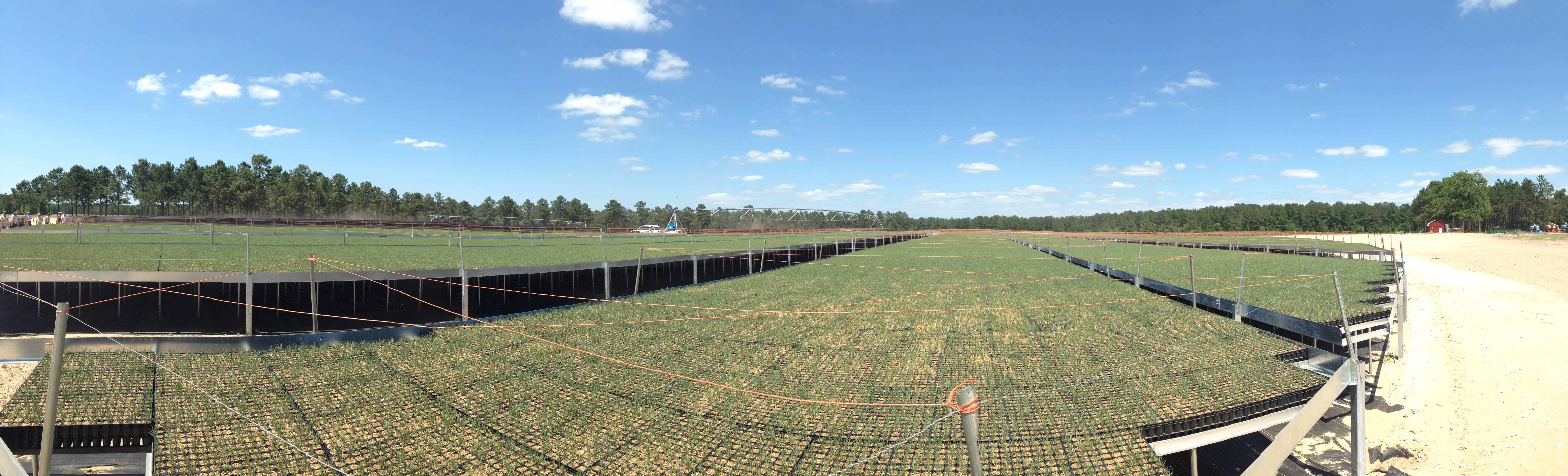
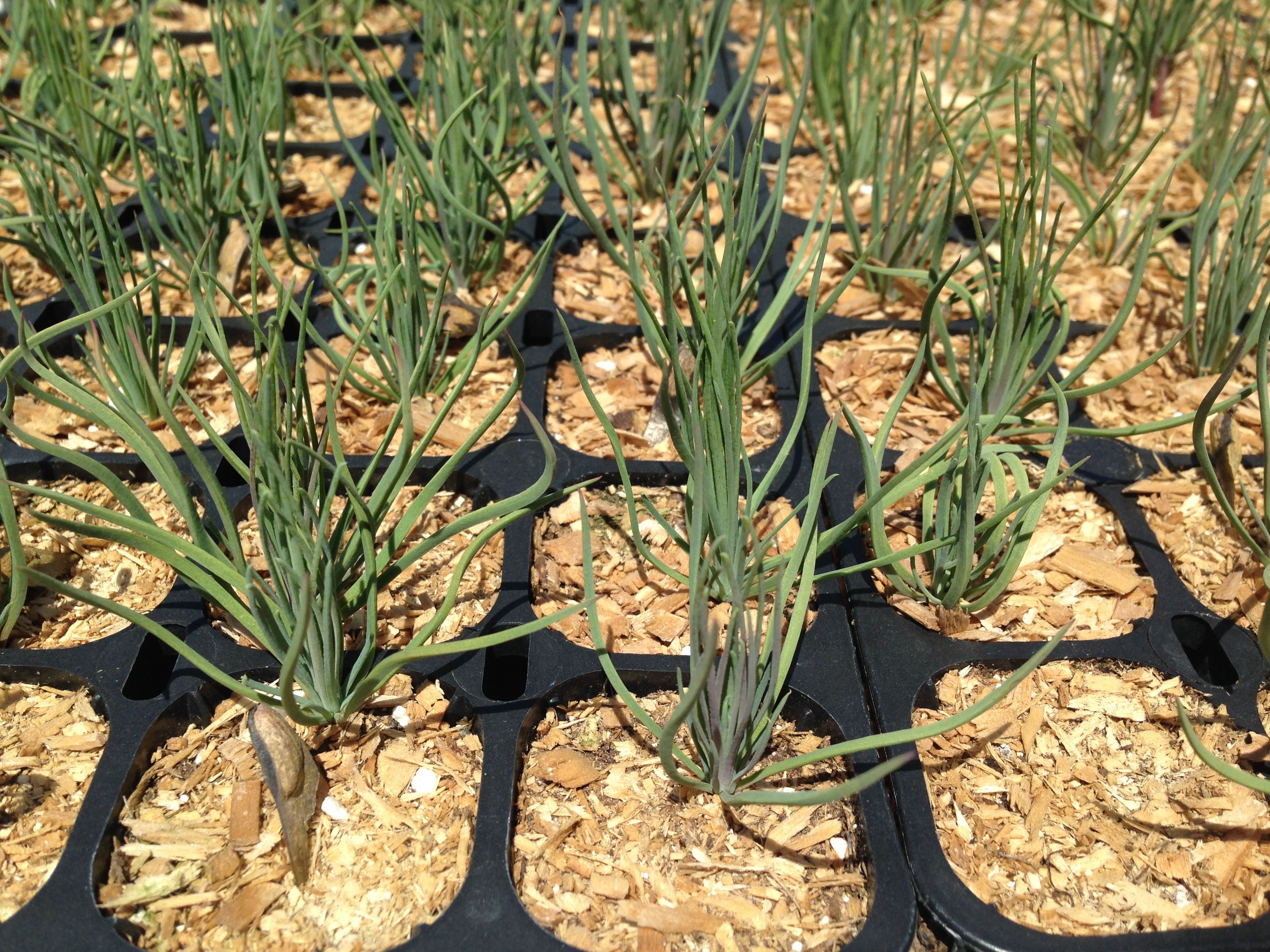
Best of all, we visited the Evans Seed Orchard near Deridder, LA, owned by the International Forest Company (http://www.interforestry.com/), and toured the Container Tree Seedlings facility that produces more than 30 million seedlings every year! Check out the impressive outdoor nursery of loblolly and longleaf pine trees with automatic irrigation in this panoramic view, and the longleaf seedlings in their containers.

Evans_Orchard_pano copy 2

2014-05-06 14.34.01 copy

Filed Under: Uncategorized

  • Page 1
  • Page 2
  • Go to Next Page »
  • Compact with Texans
  • Privacy and Security
  • Accessibility Policy
  • State Link Policy
  • Statewide Search
  • Veterans Benefits
  • Military Families
  • Risk, Fraud & Misconduct Hotline
  • Texas Homeland Security
  • Texas Veterans Portal
  • Equal Opportunity
  • Open Records/Public Information
Texas A&M University System Member