• Skip to primary navigation
  • Skip to main content
  • Skip to primary sidebar
  • Texas A&M Forest Service
  • Texas A&M Veterinary Medical Diagnostics Laboratory
  • Texas A&M AgriLife Extension Service
  • Texas A&M AgriLife Research
  • Texas A&M College of Agrculture and Life Sciences
Sheep And Goats
Sheep And GoatsStaying Up-to-Date on Sheep and Goats
  • Menu
  • Welcome
  • Events
  • Blog

Reid’s Ramblings: February 2019

February 13, 2019 by andyherring

Starting the New Year with a Bang

The pace of life these days seems to be moving too fast. We all seem to have so many different things going on at the same time, without nearly enough down time to stop and appreciate the small things.

The month of January epitomizes this for me. The month starts off with an AgriLife agency conference in College Station, then we have our sheep shearing school in San Angelo and, to wrap things up, there’s the annual American Sheep Industry Association conference in New Orleans. Not to mention that January kicks off the start of stock show season.

At the AgriLife conference, our leadership team explained how we in agriculture are going to see a change in philosophy. It is not enough to produce an abundance of food to feed the world. We must also provide the world with research and education to improve human health. Plus, build stronger connections between consumers and producers. This will shift us from a “feeding the world” to a “nourishing the world” mindset.

Our fourth annual sheep shearing school was held Jan. 12 to 14 at the AgriLife Center in San Angelo. Our goal is to provide the necessary foundation of knowledge to anyone who aspires to shear. The industry needs more qualified shearers and we aspire to help fill this void.
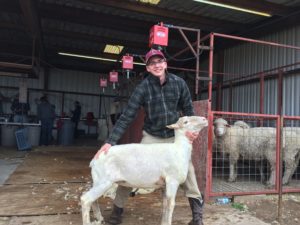
A student of the Texas A&M AgriLife Sheep Shearing School shows off his animal

A student of the Texas A&M AgriLife Sheep Shearing School shows off the skills he has developed.

Although most of the school attendees won’t end up shearing professionally, students tend to enjoy learning about the trade and experiencing the reward of acquiring a new skill. The physical demands of shearing can be intimidating, but it’s a lifestyle that allows a person to aid in the husbandry of livestock, work with their hands and travel all over the world if they so choose. It can also be financially rewarding, whether a person shears full-time or is a weekend warrior. If you know of someone who might find that appealing, encourage them to apply or have them contact us for more details.
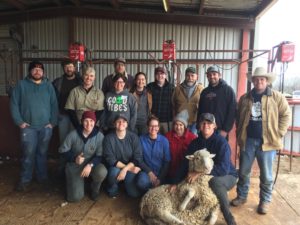
Group of farmers with sheep

By the time you read this, the ASI convention in New Orleans will be over. This convention is the annual meeting place for ASI and many other industry leadership organizations, such as the American Lamb Board, American Goat Federation and the National Sheep Improvement Program.

Texas has some great folks who routinely attend this convention, but there is a need for more Texans to get involved. I highly encourage you to consider attending next year’s event in Scottsdale, Ariz. which will run from Jan. 22-25.

I have attended the convention each year since 2010. During that time, I’ve developed some lifelong friendships and I look forward to reconnecting with my friends and colleagues each year. For a sheep guru, it’s like Christmas comes in January!

Given my January schedule, it’s not surprising that my New Year’s resolution to slow down and enjoy the small things isn’t going very well so far. I hope that you are having better luck with your resolutions!

To provide feedback on this article or request topics for future articles, contact me at reid.redden@ag.tamu.edu or 325-653-4576. For general questions about sheep and goats, contact your local Texas A&M AgriLife Extension Service county office. If they can’t answer your question, they have access to someone who can.
Filed Under: Uncategorized

Reid’s Ram-blings: January 2019

January 8, 2019 by andyherring

BioWorma: What is it?

Hopefully, you and your family had a wonderful Christmas and happy New Year. The reality of a new year is upon us and we wonder where all the time went. With all the new technology that inundates our lives, time seems to be speeding up and it is harder and harder to keep up. As such, my new years resolution is to slow down and enjoy the small things in life.

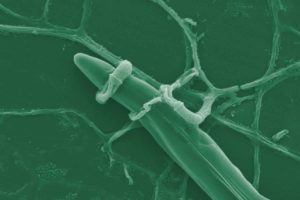
I foresee the newest sheep and goat product in 2019 will be the fungus, Duddingtonia Flagrans. It is a biological control tool for internal parasites that feeds on parasite larva in the fecal pellet. This fungus has been proven to reduce the number of larva that escape the fecal pellet and onto the pasture by 60 to 90 percent for cattle, sheep, goats, and horses. This naturally occurring fungus already exists at some level in your pastures, but animals do not ingest enough on their own for it to be effective.

Duddingtonia Flagrans

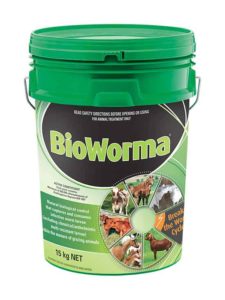
An Australian company, International Animal Health Products, will market the product under the trade name, BioWorma®. The product has been approved for use in most states in the US, including Texas. Distribution of the product in the US has not been completely worked out. It is unclear when the product will make it to a feed store near you. Tell your local feed store about it and ask them to make it a priority. If they have questions, refer them to the websites below or they can contact me.

BioWorma pail

For the fungus to be effective, the product must be fed to livestock daily. It travels through the digestive tract and works in the fecal pellet. It is recommended to feed this to susceptible animals, such as females during late gestation and lactation as well as growing lambs and kids. It is also recommended to use the product just prior to or during the peak parasite season, which is typically, March through June in the majority of sheep and goat producing regions of Texas. It can be fed during other periods of the year and to all classes of livestock; however, it may not be economical to feed it to all livestock, year-round.

THIS PRODUCT WORKS TO PREVENT PARASITES. IT DOES NOT AFFECT THE INTERNAL PARASITES THAT CURRENTLY EXIST IN THE ANIMALS!!!! WORMY ANIMALS NEED TO BE TREATED WITH AN EFFECTIVE DEWORMER.

BioWorma® will be marketed to feed dealers who will add it to supplements and potentially minerals. The fungal spores cannot survive heat and pressure that results from pelleting; therefore, it will not be in breeder cubes or cooked molasses tubs. Livamol® with BioWorma® are trade names for the product that will be sold as a feed additive that ranchers can use to top dress other feeds.

More information about Duddingtonia Flagrans can be found online at: https://www.duddingtonia.com/, https://www.wormx.info/, or https://www.bioworma.com/.

BioWorma® is not likely to be the silver bullet for parasite control. But it does have the potential to be an integral part of Texas sheep and goat producer’s arsenal of parasite control tools.

To provide feedback on this article or request topics for future articles, contact me at reid.redden@ag.tamu.edu or 325-653-4576. For general questions about sheep and goats contact your local Texas A&M AgriLife Extension Service county office. If they can’t answer your question, they have access to someone who can.
Filed Under: Uncategorized

Reid’s Ram-blings: December 2018

December 11, 2018 by andyherring

Winter is Coming, Are You Ready?

As I write this, we are supposed to get our first hard frost. It is mid-November and the late summer and fall moisture has produced a lot of winter forage. Be sure to keep a close eye on what has grown in the pastures.

As was discussed last month, some warm season weeds were produced that can be toxic to sheep and goats. Now, most of these plants have withered or the animals have learned to avoid them, especially if there is abundance of favorable forages.

It appears to be a great year to grow cereal forages crops, such as wheat, oats, and triticale. These are fantastic crops for sheep and goats to grow out fall- and winter-born lambs and kids. Hopefully, the winter (December, January, and February) markets for lambs and kid goats returns to normal highs. It is especially important to provide minerals that are specifically designed for cereal crops. Magnesium deficiency is something we want to watch for in livestock grazing small grains. Providing the animal with a free-choice loose mineral or hay will usually supply enough magnesium to meet the necessary levels in the animal.

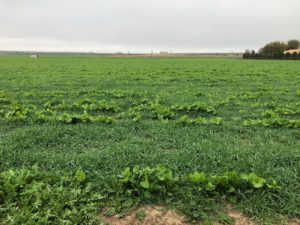
There has been quite a lot of interest in cover crops and diverse winter forages. Below is a photo of triticale and turnips they are growing for winter forage. For years, ranchers in Northern states have used sheep to harvest beet tops, prior to harvesting the sugar beets. Not only could these crops increase forage volume and diversity but the could also improve soil health. If you have experiences with highly productive forage varieties, share them with us. We’d love to hear of your experiences.
forage varieties in a field
For range operations that lamb or kid in the spring, winter can be a slow time of the year. I encourage operations to consider testing for pregnancy status via ultrasound and/or body condition scoring females. These practices have been highlighted on recent FaceBook Live videos that we have been producing weekly. Follow our facebook page: @TAMUSheepandGoats. We’d appreciate your views, shares and comments.

Body condition scoring is a good management practice to gauge nutritional status of livestock. It is best that dams give birth at or above a body condition score of three, sheep and goats typically range from 2 to 4 on a 5-point scale. Those that are thinner will often rear smaller offspring and lower lamb/kid crops. In addition, they will harbor more internal parasites next spring. Now is a good time to sort off these females and provide better pasture or supplementation, so that they are in ideal condition come late gestation. Once animals are in late gestation, it becomes much more difficult to increase their condition. However, it is also important not to overfeed dams that do not need additional condition. Animals in a BCS of 4 or greater can have issues, such as small or larger than normal lambs/kids, pregnancy toxemia, and/or reduced milk production.
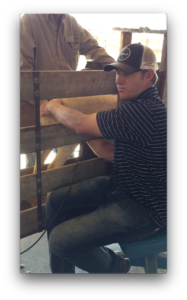
Milking goat through fence

Lamb on ultrasound
Pregnancy ultrasound will allow sorting of open and late lambing/kidding from the main flock/herd. Producers will also be able to get an overall pregnancy rate (number of pregnant ewes/number of ewes exposed) for their flock/herd prior to lambing and allow for identification of those females with twins or triplets. In range lambing operations, these are both challenging to determine, but this information can allow operators to know the breeding effectiveness of their rams, determine less fertile females, and identify more highly fecundous females that may be at risk for a negative energy balance in the coming third trimester. Plus, sorting off these more productive females allows ranchers to retain replacements from more productive flocks and herds. Along, with use of EBVs, this will allow the Texas sheep and goat industry to move towards a 150% lamb/kid crop!!!

Hope you had a great Thanksgiving and wish you all a Merry Christmas!!!

To provide feedback on this article or request topics for future articles, contact me at reid.redden@ag.tamu.edu or 325-653-4576. For general questions about sheep and goats contact your local Texas A&M AgriLife Extension Service county office. If they can’t answer your question, they have access to someone who can.
Filed Under: Uncategorized

Reid’s Ram-blings: November 2018

November 7, 2018 by andyherring

Precipitation, Parasites, and Prussic Acid

As I am writing this article, the temperature dropped 40 degrees overnight and it is raining. The abundance of rain over the last two months has been a welcome change from the dry hot summer. However, ranchers are keenly aware that changes in the weather bring “good” and “bad” alike.

In September, the rains came with warmer weather and there was an explosion of warm season grasses and weeds. The perennial warm season grasses shot up and went to seed in a matter of days. In addition, a wide-variety of weeds sprang up from any bare ground uncovered by grasses. Unfortunately, some of these weeds are toxic to sheep and/or goats.

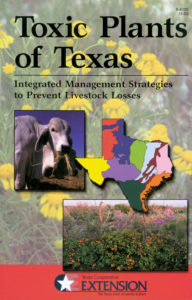
Toxic Plants of Texas Flyer

I received numerous reports from ranchers with concerns of toxic plants. However, with so many new plants available to the animals, it is very difficult to determine which plant is the likely culprit. In most cases, the animals were “naïve” to these plants because they had not seen them before. Texas A&M AgriLife Extension Service has published a book called “Toxic Plants of Texas.” Every rancher should have a copy of this book.

Another lurking issue that occurred from this late summer rains was internal parasites. Typically, internal parasites, specifically Haemonchus Contortus, are an issue in the spring and early summer. Young animals are more susceptible to parasites in the summer/fall because their immune system is not as able to suppress them.

Animals under 1 year of age have a higher nutritional demand for growth and their immune system may not have the sufficient nutrients to function, similar to an adult. Also, these young animals may not have been exposed to a parasite challenge during a dry year, and their immune system is “naïve” to them. It can take weeks for the immune system to fight off a new challenge. In some cases, the parasites get the upper hand and the animals may succumb to the parasites.

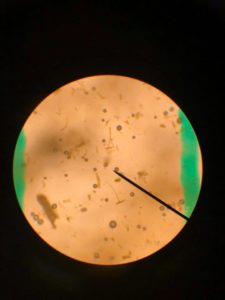
Haemonchus Contortus under Microscope

But this is not always a bad thing. At the research station in San Angelo, we used this parasite challenge to identify the animals that are better able to maintain low fecal egg counts when their flock/herd mates were not. This allows us to make better selection decisions on which animals to keep as replacements. It allows us to enter more data into NSIP (National Sheep Improvement Program) and improve the accuracy of the animals EBVs (estimated breeding values) for parasite resistance.

Fall is also a good time to conduct a fecal egg count reduction test. This is when you deworm animals with different drenches or drench combinations. You should have around 10 animals per treatment and the animals should be of similar age, condition, and production stage. Determine the fecal egg count for every animal at the time of drenching and the again 10-14 days later. Subtract the second fecal count from the first fecal count and divide by the first fecal count. Multiply by 100 and this will be percent effectiveness of the drench in your flock/herd. Effective dewormers should be at least 98% effective. Parasite resistance to drenches are different for every farm/ranch, so it is best to determine it on your own animals. Then, come springtime and parasites return, you will know which drenches to use to get the best parasite control.

If you follow the Texas A&M AgriLife Sheep and Goat Extension Facebook page you can stay up-to-date on projects such as the one mentioned above. We published 3 videos on the different classes of dewormers, shared the protocol to conduct a fecal egg count reduction test, and discussed copper oxide wire particles boluses.

Late summer rains did wonders for hay grazer that was planted to be grazed or harvested for hay. However, be cautious, when grazing this into the fall after a freeze. Prussic acid poisoning can occur. The withered parts of the plant and new growth contain higher concentrations of the toxic compound. After a freeze, it is best to keep animals off of a field until the wilted plants dry. And don’t turn out hungry animals onto a new field. It is best to fill them up on hay prior to turning them onto a new field.

Armyworms marched their way on fields and pastures with the summer rains and warm weather. But now that it has cooled off, both armyworms and internal parasites are going to be less of a problem until next year.

Today, I brought out the wool sweater to stay warm. This reminded me that registration is open for the Texas A&M Sheep Shearing, Wool Classing, and Animal Fiber 101 Schools. These schools are one of the highlights of the year for me.

Shearing School Flyer

We raised wool sheep but I did not grow up shearing sheep or classing wool/mohair. After attending a sheep shearing school in Montana, I developed a great appreciation for the fiber segment of the sheep and goat industry. More information about these schools can be found at: https://agrilife.org/sheepandgoat/.

To provide feedback on this article or request topics for future articles, contact me at reid.redden@ag.tamu.edu or 325-653-4576. For general questions about sheep and goats contact your local Texas A&M AgriLife Extension Service county office. If they can’t answer your question, they have access to someone who can.

Filed Under: Uncategorized

Reid’s Ramblings: October 2018

October 3, 2018 by andyherring

150% Lamb Crop Challenge

There are times in life when someone says something that you remember forever. The quote sticks with you and the person that said it may not even remember or recall the conversation. One of these instances happened to me when I was in high school.

My father and I had just finished working lambs. We weaned an 85 percent lamb crop. I was proud of this set of sheep because we raised show lambs from this group of ewes. I commented to my father “This was a good year and we raised some good show prospects.”

In a disappointed tone, my fathers said, “We can raise an 85% calf crop and do not have to fight predators and parasites. They’ll have to do better than that, if we want to continue to raise sheep after you are done showing lambs.”

This was a punch in the gut for me! I thought the ewes raised award winning lambs; therefore, they “must” be superior animals. But he was absolutely right! Commercial sheep that can consistently raise twins are far more profitable than sheep that consistently raise singles. Raising show lambs requires a completely separate set of selection criteria.

Most years in Texas, the average lamb crop is ~80 percent and the average kid crop is ~100 percent. While predation is a major problem, it is a separate issue and predation shouldn’t always be the “scapegoat” for a poor lamb or kid crop.

Selection of sheep or goats for their ability to raise twins should be a priority but can be a challenge. For most range operations, ranchers don’t know which animals are twins and singles. Plus, other factors influence the chance a dam has a single or twin, such as age of ewe and nutrition. These challenges can be overcome but it requires years of accurate data collection.

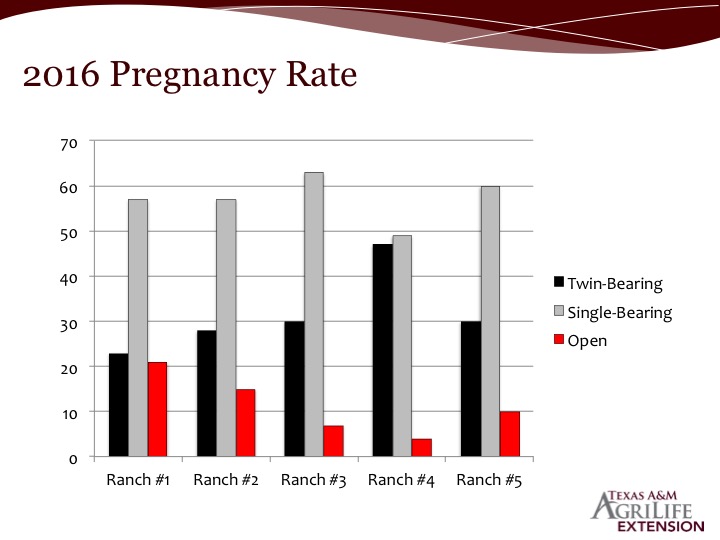
One approach to select for twins on range lambing operations is to pregnancy ultrasound the ewes and sort them into twin and single-baring pastures. Then select for replacements from the twin pasture. We have been working with a group of ranchers as a case study. This project was funded by an American Sheep Industry’s Lets Grow program and is title “The 150% Lamb Crop Challenge.”

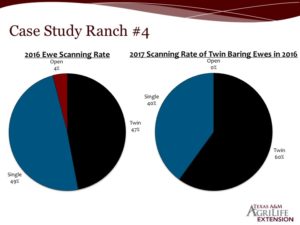
Five different range sheep operations participated in the program representing nearly 3,000 sheep. On average, 30 percent of the ewes were carrying twins the first year. Four of the five ranches scanned in the 25 to 35 percent twins depending on pasture and age of ewes. Ranch #4 was an outlier and nearly half of the ewes were carrying twins. An obvious difference was this ranch selected smaller-framed replacements and emphasized fertility.

Four ranches scanned all the ewes again the following year. The ewes that were twins the prior year were 10 to 20 percent more likely to have twins the following year. For instance, all ewes at Ranch #4 scanned at 47 percent twins the first year. The twin lambing ewes scanned at 60 percent twins the second year.

Case Study Ranch #4 results

At weaning most ranches reported a 20 to 40 percent increase in number of lambs weaned in the twin vs single pastures. However, the ranch with the 50 percent twins scanning also had the highest weaning differential (80%) between twin and single pastures. This was likely due to years of selection for fertility. Variations in weaning rate by year and pasture were thought to have occurred from predation and drought. But, there were serious concerns by the ranchers that their ewes were not properly caring for twins-born compared to single-born lambs.

While, we would have liked to have seen consistently larger lamb crop in the twin ewe pastures. And we wish that ewes who give birth to twins in 1 year, consistently rear twins every year. Nevertheless, the early stages of this project indicate that there is potential for an improved lamb crop using pregnancy scanning.

There are other tools to select for sheep and/or goats that consistently rear twins. Most notably, estimated breeding values (EBVs) are accurate predictors of genetic potential for an improved weaning rate; however, it requires a full sheep generation for rams to sire daughters that are kept back in the flock. Ultrasound works faster and can be used in combination with EBVs to reach a 150% lamb crop faster.

To provide feedback on this article or request topics for future articles, contact me at reid.redden@ag.tamu.edu or 325-653-4576. For general questions about sheep and goats contact your local Texas A&M AgriLife Extension Service county office. If they can’t answer your question, they have access to someone who can.
Filed Under: Uncategorized

Reid’s Ramblings: September 2018

August 31, 2018 by andyherring

Only a few short months ago, the sheep and goat market was strong. On average the market is down $0.50 per pound since April. Consumer demand is continuing to grow for lamb and goat meat. However, demand is not our problem. Supply is our problem!!!

To be more clear, continuous supply of domestic lamb and goat to the market is the problem. Cheaper imported lamb and goat meat is an added issue but this won’t be discussed in this month’s article.

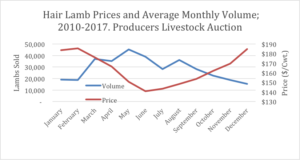
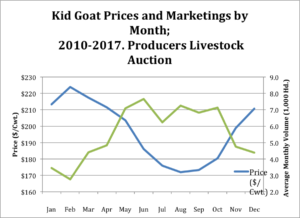
We all hear about specific holidays that impact the sheep and goat market. But the biggest impact on the market is supply. We consistently see strong markets in the winter when supply of light-weight slaughter lambs and goats are low. And we consistently see a reduction in the overall market in the summer when supplies are high.

Below are two figures produced by colleagues of mine at the Texas A&M AgriLife Research and Extension Center in San Angelo that clearly show the negative relationship between supply and demand for lambs and goats.

Hair Lamb Prices and Average Monthly Volume, 2010-2017

Kid Goat Prices and Marketings by Month, 2010-2017

Complete reports can be found at: https://sanangelo.tamu.edu/extension/west-central-agricultural-economics/.

According to USDA, 85 percent of lambs are born in the first 5 months of year. This is the root cause of our supply and demand issues. Sheep and goats are seasonal breeders. They tend to breed in the fall for late winter and spring lambs and kids. Very few lamb and kids are born in the summer months. However, in the spring, some sheep and goats will breed for fall lambs and kids.

On a similar note, I led the development of a white paper titled “Seasonality of the U.S. Lamb Industry.” The report can be found at: https://lambresourcecenter.com. This white paper provides in depth detail about this subject. It is a complicated issue and most all the major factors involved are discussed. But the take home message is “we need more farmers and ranchers to market lambs during atypical times to even out supply.” Both consumer and producer benefit from a stable market.

Texas is positioned very well for aseasonal lamb and kid goat production. Compared to other parts of the nation, we have mild weather and can produce adequate feed resources during the winter. Especially, if ranchers have access to cereal forages and/or native winter grasses and weeds.

For hair sheep and meat goat producers, I recommend to put out the rams/bucks with females the end of March or early April. Not all females will breed out of season, especially, if they are under weight or hae lambed/kidded in the previous 45 days. September and October born lambs/kids are ideal to hit the winter market. Also, there tends to be more feed resources in the fall than the winter. Bucks could be left in with ewes/does through fall or could be removed for 60 days or more to provide a break in lambing.

For wool sheep producers, I recommend putting the rams with the ewes in June for early winter-born lambs. These lambs would then be ready for market in April/May. Wool lambs are well suited for the traditional lamb feeding sector and bring premiums when both lamb feeders and non-traditional buyers are bidding.

It is extremely crucial that non-seasonal lamb or goat producers determine if they can produce or get access to cost effective feed resources during the fall and winter. Without quality feed, sheep and goats will struggle to produce healthy, productive offspring regardless of the season.

To provide feedback on this article or request topics for future articles, contact me at reid.redden@ag.tamu.edu or 325-653-4576. For general questions about sheep and goats contact your local Texas A&M AgriLife Extension Service county office. If they can’t answer your question, they have access to someone who can.
Filed Under: Uncategorized

Reid’s Ramblings: August 2018

August 3, 2018 by andyherring

Overseas and At Home

In today’s society, very few people make a living from farming and ranching. Yet with a growing population, there are more people to feed and clothe. So, how is this possible?

Most our food comes from large operations. Chicken, swine, and dairy cattle farming have evolved into large, highly efficient operations managed on small tracts of land. Most of the feed they use comes from row crop farmers managing large tracts of land. So, few people are involved in the actual production of large amounts of food

In contrast, red meat production has taken a different track. Range and pasture land are the primary source of food for breeding sheep, goats and cattle. These land resources continue to be sub-divided as more people buy smaller tracts of land. For many landowners, livestock production is not a substantial source of income. As such, production efficiency of the livestock is not a priority.

Over the last couple decades, domestic production of lamb, mutton, and goat meat have not kept up with domestic demand. To meet this demand, other countries have imported lamb and goat meat into the US, primarily from Australia and New Zealand. Sheep farmers in Australia and New Zealand make production efficiency a priority. As such, they are able to produce it cheaper than we can.

The good news is American consumers want to support American farmers and ranchers. We just need to provide a consistent, reliable, and affordable product.

In my opinion, there are three areas we need to make a priority to increase production efficiency. First, sheep and goats are much more efficient if they raise twins or triplets rather than a single offspring. Second, internal parasites must be managed for sheep and goats to be healthy and productive. Third, predation must be controlled so varmints don’t steal all the profits.

Goats

Fortunately, Texas A&M AgriLife has two upcoming events in San Angelo that will help most all sheep and goat ranchers improve the production efficiency of their operation. The 45th annual Texas A&M Sheep and Goat Field Day will be August 17th from 8 to 11:30 am at the Texas A&M AgriLife Research and Extension Center. The Texas Sheep and Goat Expo will begin at noon on August 17th and conclude at 3:00 pm on August 18th at the San Angelo Fairgrounds.

There will be dozens of speakers presenting on dozens of different topic areas, two of them are renowned scientists speaking on internal parasite control. Dr. Jim Miller will discuss how to preserve the efficacy of dewormers. Dewormers are rapidly losing their effectiveness and it is paramount to preserve this parasite control tool. He will also talk about Duddingtonia Flagrans, a new method to control parasites by reducing the amount of larva that hatch in the feces and infect the pasture. Dr. Joan Burke will share her insights into new and advanced methods of genetic selection for sheep and goats that are able to resist a parasitic infection. She will also speak on non-drug based treatments for internal parasite control, such as copper oxide wire particles and sericea lespedeza.

At the conclusion of the Expo, there will be a sheep and goat sale. This sale is limited to breeders that use central performance tests or the National Sheep Improvement Program to breed better livestock. There will be rams, bucks, and ewes for sale that are performance tested and have production information that will give buyers confidence the animals will increase the productivity of their flocks/herds.

This will be the 4th year we have hosted the Expo. It is our flagship event for sheep and goat education in the state. It has information pertinent to all aspects of the sheep and goat industry. To register for the Texas Sheep and Goat Expo go to: https://agrilife.org/westresults/event/. Call 325-653-4576 for more information.

Don’t forget to bring your kids or grandkids along so they can participate in the sheep and goat Skill-A-Thon workshop.

To provide feedback on this article or request topics for future articles, contact me at reid.redden@ag.tamu.edu or 325-653-4576. For general questions about sheep and goats contact your local Texas A&M AgriLife Extension Service county office. If they can’t answer your question, they have access to someone who can.

Filed Under: Uncategorized

Reid’s Ramblings: June 2018

June 1, 2018 by andyherring

Supplying a Growing Demand

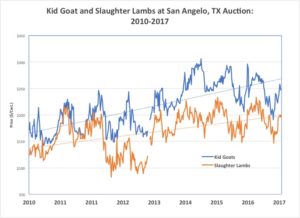
In my lifetime, there have never been better markets for Texas sheep and goat ranchers. Based on prices at Producers Livestock Auction in San Angelo, lightweight slaughter lambs and meat goat kids have roughly doubled in the last 10 years. Plus, wool prices are at historic highs and mohair prices are strong.

Kid Goat and Slaughter Lambs, San Angelo, TX Auction

So, what is driving up the markets? I am not an economist, but to me, it appears to be simple economics. The supplies of lambs and meat goats to market have been decreasing for years, if not decades. Yet, both traditional and nontraditional demand for lamb and goat meat has been increasing over the last decade. Imports of lamb and goat meat have been increasing to keep up with the increase in demand. Worldwide demand is high; so, prices continue to remain strong. The outlook is great! Lets hope something major doesn’t happen to change this.

How do we get the most from a good situation? To me, the answer is simple. RAISE A LARGER LAMB AND KID CROP. According to USDA, Texas typically produces an 80 percent lamb crop and 100 percent kid crop. Sheep and goats are prolific animals and can rear two or more offspring per year. But doing so is much easier said than done.

First and foremost, we must not allow predators to steal our profits. Again, this is easier said than done but with the high value of these animals, it is cost effective to employ a number of predator control tools. As many of you know, I am a big proponent of livestock guardian dogs. A good LGD program can be tough to get started but invaluable once it has been implemented.

In most cases, ranchers need to improve their flock/herd’s genetic potential to produce and wean a larger lamb/kid crop. While, reproduction is a lowly heritable trait, selection for prolificacy is imperative for efficient lamb and goat production. Selection of twin-born lambs and goats is a first step. But it is not very efficient for a couple of reasons. First, the ewe may have given birth to twins but only raised one lamb, which defeats the purpose. Second, the dam is responsible for giving birth and rearing twins, yet half the genetic potential of her offspring come from the sire.

The most efficient method for selection of prolificacy is the use of Estimated Breeding Values (EBVs) through the National Sheep Improvement Program (NSIP). An EBV for number of lambs born or weaned is derived from data on the lamb, ewe lifetime production, and all related offspring compared to flock averages. It is complicated but it works. If you don’t believe me, ask any sheep rancher who has used the program. Unfortunately, you’ll have to call someone from another state because Texas seed stock breeders have not adopted this technology. Included is a graph of breed average EBVs for Katahdins within NSIP who have used this technology. A positive 10 percent EBV relates to a 10 percent increase in weaning rate above average. Any breed can use this technology to make genetic progress.

NSIP Katahdin Genetic Trend: Estimated Breeding Value

We, the Texas A&M AgriLife Extension Service, will host a ram and ewe sale at the conclusion of the Texas Sheep and Goat Expo on August 18. There will be dozens of rams and ewes for sale from breeders using this technology to improve prolificacy, along with other traits such as parasite resistance, growth rate, wool production, etc.

The next step to higher lamb/kid crops is to ensure the flock/herd has adequate feed resources to reach their full genetic potential. Ewes/does rearing twins have a 10-20 percent higher nutritional requirement on an annual basis than those producing singles. Most of this added nutritional demand occurs during the last month of gestation and first two months of lactation. Therefore, targeted supplementation for three months of the year can have a substantial return on investment.

The easiest method to determine if supplementation is needed is to use body condition scores. For sheep and goats, the scoring system is from 1 to 5. With 1 being very thin and 5 being very obese. Ideally, animals should be a body condition of 2.5 to 3.5 depending on season of production. One month prior to breeding season, the body condition score of the flock/herd should be determined. If females are less than 3.0, then supplement one pound of grain or pelleted feed every two to three days for 30 days. It may be advantageous to separate thinner ewes into a separate pasture. Females should remain in a body condition score of 3.0 to 3.5 through gestation, if not continue supplementation. Females that give birth at or below 2.5 body condition score will require additional care, especially those with multiple births. After lambing/kidding, females can lose up to 1 body condition score through lactation without problems, which typically equates to about 15 pounds of body weight. Supplementation of ewes and lambs may be necessary if ewes are losing too much weight.

At the end of the year, be sure to determine what was the lamb and kid crop for each pasture and each management group. Did you reach your short or long-term goal for lamb or kid crop? If not, how do you plan to reach that goal next year?

I coordinated the development of 12 best practices factsheets to help sheep farmers and ranchers improve their lamb crops. These factsheets can be found at: https://lambresourcecenter.com/production-resources/best-practice-resources/. I encourage you to read these factsheets and try to implement one or more of these best practices that you are currently not doing.

I realize many of you still have a lamb or kid crop out in the pasture, but now is the time to start planning for the 2019 lamb/kid crop. Best of luck!!!

To provide feedback on this article or request topics for future articles, contact me at reid.redden@ag.tamu.edu or 325-653-4576. For general questions about sheep and goats contact your local Texas A&M AgriLife Extension Service county office. If they can’t answer your question, they have access to someone who can.
Filed Under: Uncategorized

Reid’s Ramblings: May 2018

May 3, 2018 by andyherring

Texas A&M Ultrasound Certification Workshop

Like many youth, I showed market lambs as my 4H and FFA projects. We raised most of the lambs that we showed and bought a few, mostly breeds that we did not raise. My older siblings paved the way, which allowed for me to be fairly successful. This experience developed a passion for the sheep industry that sticks with me today.

My parents own a small meat packing plant, so I had the good fortune of seeing carcasses on a regular basis. Naturally, we selected lambs based on their cutability or amount of lean cuts that we predicted a live animal would yield on the rail, with an emphasis on high-value cuts.

During the 1990s, the time that I showed lambs, there was a trend for long, tall, and lean lambs. We always joked “You can’t eat the air underneath them!” or “Hard as rock! Who wants to eat a rock?” Times have definitely changed because winning show lambs are much different than they were 20 years ago.

When we visually look at a lamb and handle them, we can estimate how fat they are and how muscular they are. But it is only an estimation and often we may disagree which lamb has more muscle. Trust me, my family rarely agreed on which lamb was better! But for a commercial operation in the business of selling meat, it is much better to have a definitive way to quantify this.

Ultrasonography is a fairly powerful tool that can help address this topic. But first we must determine what we want to measure.

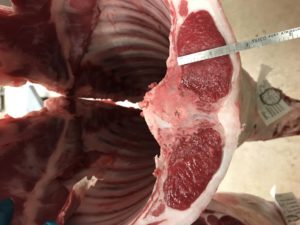
The most valuable parts of a lamb carcass are the rack and loin. Combined these two primals represent almost half the value of the entire lamb carcass. And one muscle makes up most of the lean meat in both of these primal cuts, the longissimus dorsi. For the purpose of this article, I’ll refer to it as the loin muscle. Obviously, increasing the size of the loin muscle can have a major impact on the value of a lamb carcass.

Ultrasound can accurately predict loin area and depth of a live lamb. Most often, this is measured between the 12th and 13th at the junction between the rack and loin on a lamb. This measurement should be taken on a lamb around the time the lamb would normally go to market. However, most of the time, we are testing breeding animals not going to slaughter but instead are retained for breeding purposes.

Veal sample

Ultrasound can also accurately predict the amount of fat that has accumulated over the loin eye muscle. The amount of fat at this location is used to predict the amount of fat that will need to be trimmed off the carcass. Some fat is needed to ensure the animal will result in high quality lamb but too much fat is unwanted. Fat deposition on a lamb is primarily influenced by diet; however, some lambs put on fat sooner than others. Both loin muscle depth and back fat depth are moderate to highly heritable traits. Therefore, selection can have a fairly rapid impact on future generations.

Sheep ranchers who wish to increase the value of the lamb carcasses they produce should buy or retain rams that have larger than average loin muscles. Or at least cull rams in the bottom 25 percent of their contemporary group. And if they wish to raise lambs to larger weights prior to slaughter without becoming too fat, they should select for breeding animals that are leaner than other. But fat deposition is positively correlated with reproduction; therefore, overly lean animals can have a negative impact on the lamb crop.

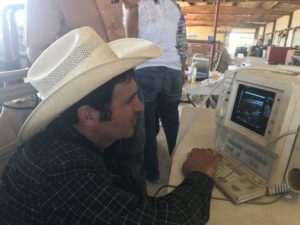
In April, we hosted a workshop that trained nine technicians to collect loin muscle area, loin muscle depth, and fat depth via ultrasound. This workshop was hosted at the Texas A&M AgriLife Research and Extension Center in San Angelo. Christopher Schauer, director of North Dakota State University’s Hettinger Research and Extension Center, was the lead instructor. He is the ultrasound committee chairman for the National Sheep Improvement Program. This workshop was partially funded by a grant through the National Sheep Industry Improvement Center.

Researcher checking ultrasound

Participants were trained on how to properly collect this data on day 1 and tested on their ability to accurately collect the data on day 2. Participants have standards that they must pass to be certified to collect data for the National Sheep Improvement Program. A list of certified technicians is available at https://nsip.org.

To best use the data, breeders should submit loin and fat depth measurements into the National Sheep Improvement Program, which converts the raw data into estimated breeding values (EBVs). These EBVs account for non-genetic factors that influence loin and fat depth measurement. Therefore, they are much more reliable than raw data. For instance, 80 percent of loin muscle depth can be predicted based on animal body weight. Therefore, loin muscle depth must be adjusted for live body weight to accurately predict carcass cutability.

To provide feedback on this article or request topics for future articles, contact me at reid.redden@ag.tamu.edu or 325-653-4576. For general questions about sheep and goats contact your local county Texas A&M AgriLife Extension office. If they can’t answer your question, they have access to someone who can.
Filed Under: Uncategorized

Reid’s Ramblings: April 2018

April 9, 2018 by andyherring

Common Issues with Livestock Guardian Dogs

Last month, I wrote about my early experiences with livestock guardian dogs. It may have sounded a bit like a fairly tale story. Oddly enough, our first dogs were named Prince and Cinderella. To be fair, owning livestock guardian dogs also comes with issues that must be dealt with.

For a livestock guardian dog program to be successful, a person must commit to the process of making it work. In this article, I’ll discuss the common issues ranchers deal with when using livestock guardian dogs and methods to overcome these issues.

Guard Dogs at Redden Ranch

Guard Dogs at Redden Ranch. Photo by Hattie Barham 2011


KEEP THEM ON THE RANCH. Many of the problems ranchers have with livestock guardian dogs arise when the dogs leave the ranch. For instance, they may go onto the neighbor and be accused of harassing livestock or wildlife, among other things. The dogs may be pushing predators further away, trying to guard the neighbor’s livestock or seeking food or a mate. When dogs leave the ranch, they often end up a public road and could be hit by a vehicle or picked up as a lost dog.

There are a few things to try to prevent wandering from occurring. First, bond the livestock guardian dogs to animals within the flock/herd they are meant to protect. This will reduce the likelihood the dog will look for other stock to protect. Second, ensure the dog has access to quality dog food, so it is not seeking another food source. Third, neuter male dogs so they are not lured away by a female in heat. And last of all, never reward a dog for leaving the ranch with food or affection. When caught off premise they should be verbally scolded and returned to their pasture. Some people suggest kenneling the dogs for a few days as a source of punishment.
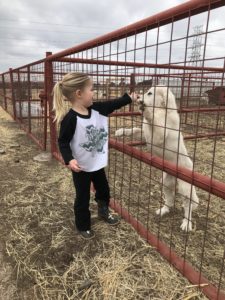
Livestock dog playing with girl through pen wall
CORRECT ROUGH BEHAVIOR WITH LIVESTOCK. Often, young dogs will be too rough with livestock, particularly the young and the weak. They will chase them, chew on their ears and tails, and knock them down. The dogs can kill livestock if this continues for too long. Most often, they are playing with them as they would play with each other. But, sheep and goats can’t retaliate as another dog would retaliate. And if the livestock are small or weak they cannot get away from the dogs.

We do not recommend using small or weak animals in bonding pens, so this behavior does not occur when the dogs are not supervised. But we do want the young dogs to be exposed to newborns when the dogs are 2 to 6 months-of-age. Under supervision, introduce a young dog that is being bonded to new livestock. If the dog, exhibits chasing behavior stop the behavior by verbally scolding the dog. Continue to expose the dog to new animals, until they no longer chase. Also, we like to expose young dogs to ewes or does with newborn animals, who are just a few days old. When the dogs get too rough with the newborns, their mothers will butt the dogs and discipline them for this behavior. If the dams don’t stop the behavior, the handler should stop it. We don’t like bonded dogs to be in the pens with dams that are giving birth, until we are confident the dogs are not going to be too rough with young animals. Most all livestock guardian dogs will eat afterbirth and newborns that are born dead or die shortly after birth. If left unattended, we don’t know if the dog ate a dead lamb or the dog killed a newborn lamb.

Guard Dogs at Redden Ranch, by Hattie Barham

Guard Dogs at Redden Ranch. Photo by Hattie Barham 2011

DON’T RAISE A WILD DOG. Many dog breeders recommend very limited human contact or no human contact at all to ensure the livestock guardian dogs stay with the flock/herd. This is a mistake and not the reason dogs leave the flock. Without human contact or only negative interactions with humans, livestock guardian dogs will become fearful of people and become too wild to be caught. They may be an effective livestock guardian dog but the ranchers lack the ability to manage them. The dogs cannot be treated for health issues or may not be able to be relocated to a new ranch or pasture. In some cases, wild dogs will evade people to the point they will hide out and folks are unable to determine where the dogs are. This is particularly a problem in large pastures that are densely covered with brush. If a wild dog leaves the ranch it is even more of a problem to get them home.

As a point of consideration, these dogs were bred for thousands of years in herded operations and are accustomed to guarding livestock and being around a shepherd. However, in most cases, Texas ranchers need these dogs to work unsupervised.

I believe livestock guardian dogs should be bonded to livestock and socialized with humans. Ideally, livestock guardian dogs will stay with the livestock but as soon as a person enters a pasture and approaches the flock, the livestock guardian dogs will come and great them. This starts with socializing the dogs with people during the bonding phase. To keep these dogs from becoming too wild, it helps to feed livestock guardian dogs a treat when checking livestock, but only when the dogs are present with the flock/herd. Some ranchers use canned dog food, dog treats, or leftovers. But don’t reward a dog for leaving their stock and seeking food or affection from people.

Predation is the number 1 issue for the range sheep and goat industry in Texas. It costs our industry tens of millions of dollars in lost production. As such, we are committed to helping the ranching community use guardian animals to help prevent predation. Let us know if you have ideas about how we can help the industry with livestock protection animals.

To provide feedback on this article or request topics for future articles, contact me at reid.redden@ag.tamu.edu or 325-653-4576.

Filed Under: Uncategorized

  • « Go to Previous Page
  • Page 1
  • Page 2
  • Page 3
  • Page 4
  • Go to Next Page »

Subscribe

Delivered by FeedBurner

Recent Posts

  • Reid’s Ram-blings: March 2024
  • Reid’s Ram-blings: February 2024
  • Reid’s Ram-blings: January 2024
  • Reid’s Ram-blings: December 2023
  • Reid’s Ram-blings: September 2023
Texas A&M AgriLife Extension Service
Texas A&M University System Member
  • Compact with Texans
  • Privacy and Security
  • Accessibility Policy
  • State Link Policy
  • Statewide Search
  • Veterans Benefits
  • Military Families
  • Risk, Fraud & Misconduct Hotline
  • Texas Homeland Security
  • Texas Veteran's Portal
  • Equal Opportunity
  • Open Records/Public Information