According to the responses you entered, this is likely the pest you are dealing with. To confirm this, use the positive identification section.

Photo by Danielle Ortiz
Scientific Name
Stenodiplosis sorghicola
Biology
Sorghum midges are small red flies that look slightly like mosquitoes. They inject their eggs into developing sorghum heads and can lower yield when populations are large. Inside of the kernels the larvae develop and feed as shown below.
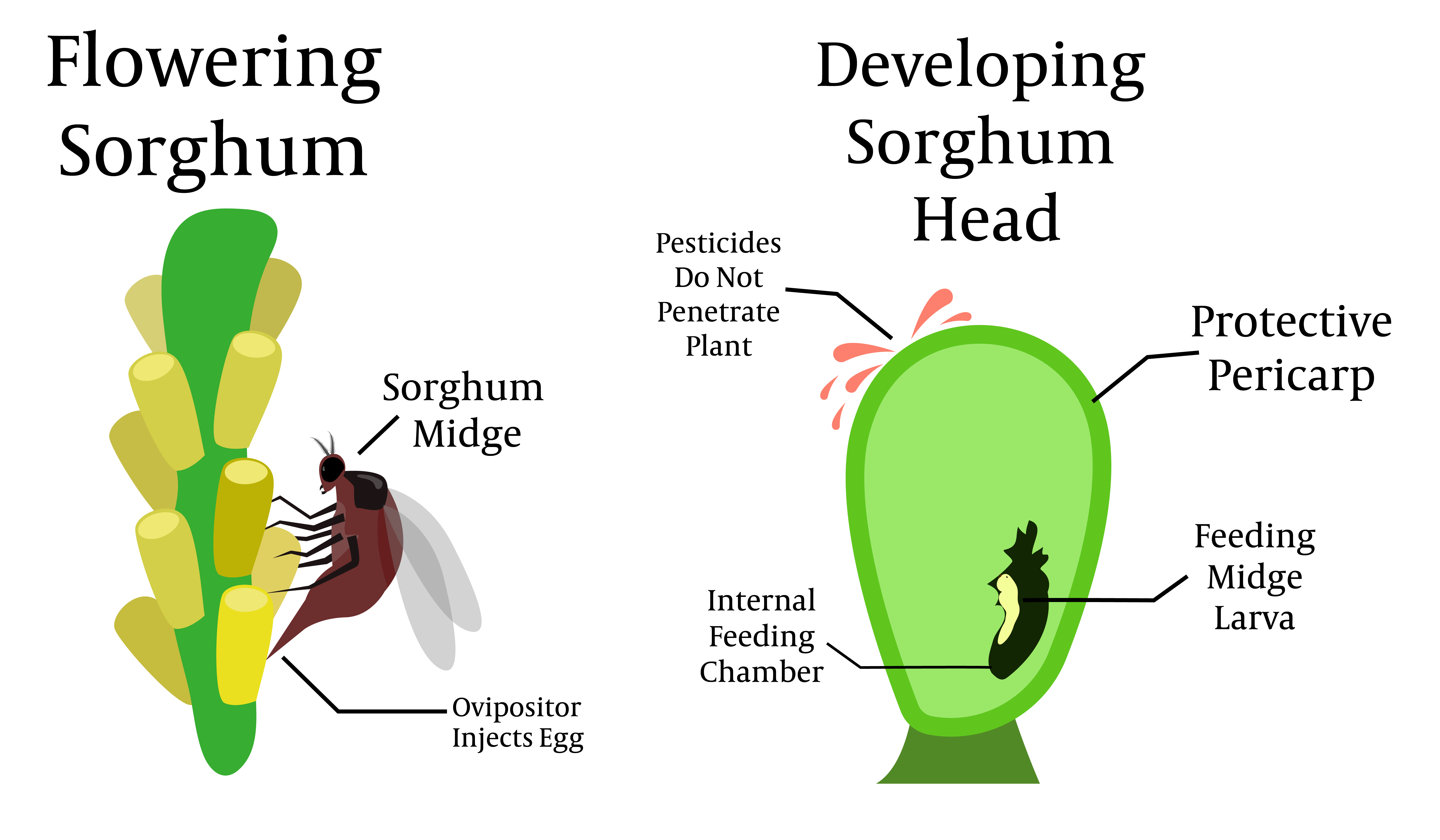
Diagram by Jason Thomas.
Positive Identification
Sorghum midges are most easily identified by their red-orange colored abdomen. They look like small red mosquitoes. Their legs and antennae are brown, but magnification is required to confirm this because of their small size. Their behavior is strongly associated with flowering heads. When present they can be seen laying eggs on flowers.
Other Important Hosts
Johnson grass
Scouting Tips
To scout for sorghum midges, you can watch a flowering head for a bit to detect their presence or use a plastic bag. To use the bag, place it on top of the head and shake bag to scare the midges. They will typically fly to the top for counting.
Although we tried to include the most significant pests related to sorghum our tool cannot help you identify every insect found on sorghum. This tool is built to inform you of the most common and significant pests of sorghum in Texas. If the insect you are dealing with does not match the description above then talk to your extension agent or visit this page to look at all the different important potential pest associated with each part and growth stage of sorghum. For management information of a specific pest talk to your local extension office.