According to your responses the aphid you are dealing with is the yellow sugarcane aphid.
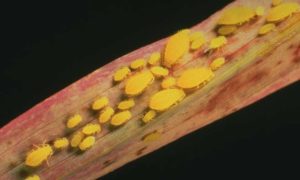
Photo of Yellow Sugarcane Aphids by Greg Cronholm.
Identification Confirmation
Yellow sugarcane aphids have no black spots or parts of their bodies. They are also covered in very fine hairs as seen in the photos. Yellow sugarcane aphids typically have a vibrant yellow body color.
Known Host Plants
Sorghum, Sugarcane, Rice and Johnsongrass (important overwintering site) and other grasses.
Problems and Damage
Yellow sugarcane aphids extract fluids from plants from the underside of leaves. A plant toxin is injected into the leaf during feeding that causes the leaf to turn purple and yellow or die. They are the vectors for various plant diseases. This means even small numbers of these aphids can cause significant damage to sorghum.
Treatment Options
Economic thresholds for yellow sugarcane aphid are vague but, in general, on young sorghum treatment with an insecticide may be justified soon after infestations occur. Larger sorghum will tolerate higher yellow sugarcane aphid populations without suffering economic loss. You should monitor for yellow sugarcane aphids frequently if you are growing a susceptible crop. If an infestation is detected, the usage of a foliar insecticide can control these insects. Resistant hybrids are available for some host plants. Talk to your seed supplier about resistant cultivars that might work for you.
More Images
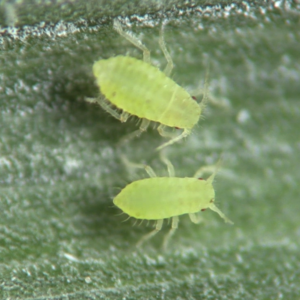
Two yellow sugarcane aphids on a sorghum leaf. Photo by Jason Thomas.