• Skip to primary navigation
  • Skip to main content
  • Texas A&M Forest Service
  • Texas A&M Veterinary Medical Diagnostics Laboratory
  • Texas A&M AgriLife Extension Service
  • Texas A&M AgriLife Research
  • Texas A&M College of Agrculture and Life Sciences
South Texas Field Crop Entomology
South Texas Field Crop EntomologySupplying pest managers with better tools for better yield
  • Menu
  • Home
  • Sorghum
    • Publications / Fact sheets
    • Applied Research / Reports
    • ID / Sampling
    • Presentations
    • Training / Videos
  • Cotton
    • Publications / Fact sheets
    • Applied Research / Reports
    • ID /Sampling
    • Presentations
    • Training / Videos
  • Corn
    • Publication / fact sheets
    • Applied Research / Reports
    • ID / Sampling
    • Presentations
    • Training / Videos
  • Pasture / Hay
    • Publications / Fact sheets
    • Applied Research / Reports
    • ID / Sampling
    • Presentations
    • Training / Videos
  • Newsletters

Common Aphid Identification in Texas Small Grains

Welcome to the Common Aphid Identification in Texas Small Grains Tool. This online tool is meant to help managers identify common aphids in these types of crops. Though this tool was developed for Texas, many of these aphids can be found in other areas too. If you have any questions pertaining to your local area talk to your extension office. Created by Jason Thomas and Dr. Robert Bowling.

Click here to start identifying aphids!

We recommend you read the following tips if this is your first time using this tool.

How to use the tool?

This tool can be used in the field on a mobile device or from the comfort of your home. This tool is meant to help you identify aphids, a type of insect that could be harmful. Aphids are typically about the size of a pinhead so using a hand loupe, a type of small magnifying glass is important.

What is an aphid?
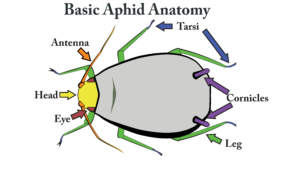
Diagram by Jason Thomas

Aphids like other insects have a set of antennae and six legs. One key feature found in most aphids is the presence of cornicles, two short appendages on the end of their abdomen. The diagram above shows the key parts of aphids. Understanding the anatomy will help in the identification of aphids.
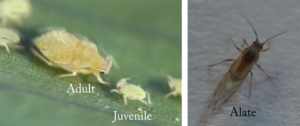
Photo by Jason Thomas

After finding aphids in your crop, look for the adult aphids. Do not use the alate (winged) or juvenile aphids for identification. Using juvenile or alate aphids could lead to a misidentification.

Click here to access the print version.

Texas A&M AgriLife Extension Service
Texas A&M University System Member
  • Compact with Texans
  • Privacy and Security
  • Accessibility Policy
  • State Link Policy
  • Statewide Search
  • Veterans Benefits
  • Military Families
  • Risk, Fraud & Misconduct Hotline
  • Texas Homeland Security
  • Texas Veteran's Portal
  • Equal Opportunity
  • Open Records/Public Information