According to the responses you entered, this is likely the pest you are dealing with. To confirm this, use the positive identification section.
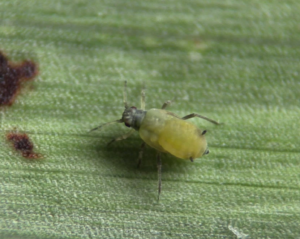
Photo by Jason Thomas
Scientific Name
Rhopalosiphum maidis
Biology
Corn leaf aphids feed by sucking plant fluids out of the leaves. They tend to congregate in whorls. Aphids overwinter in alternate host plants. When temperatures warm, aphids travel by wind to sorghum. These, like other aphids reproduce asexually for the most part and can produce winged or non-winged morphs.
Positive Identification
In sorghum corn leaf aphids are most commonly found in the whorls of developing sorghum. Corn leaf aphids have a dark head, black legs (usually all or most of the legs), black antennae and black cornicles. Their general body color can range from light green to blue.
Other Important Hosts
Sorghum, Wild Grasses, Corn, Wheat, Barley and Oats
Scouting Tips
Look for corn leaf aphids in the whorls of sorghum. Corn leaf aphids cause little to no economic damage. Most sorghum can tolerate a large number of corn leaf aphids and treatment is rarely necessary. It is not known to spread viruses to sorghum. For the most part corn leaf aphids can be beneficial because they are a food source for natural enemies that will protect the plant when other more harmful aphids arrive.
Although we tried to include the most significant pests related to sorghum our tool cannot help you identify every insect found on sorghum. This tool is built to inform you of the most common and significant pests of sorghum in Texas. If the insect you are dealing with does not match the description above then talk to your extension agent or visit this page to look at all the different important potential pest associated with each part and growth stage of sorghum. For management information of a specific pest talk to your local extension office.