According to the responses you entered, this is likely the pest you are dealing with. To confirm this, use the positive identification section.
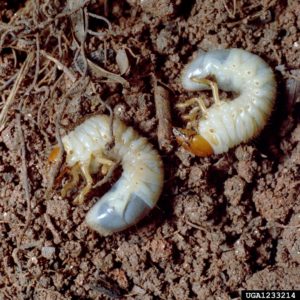
White Grub Larvae. Photo Courtesy of Clemson University – USDA Cooperative Extension.
Scientific Names
Phyllophaga crinita
and other species
Biology
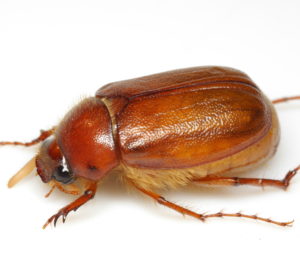
Adult June beetle. Photo by Mike Quinn, TexasEnto.net
White grubs are the larvae of scarab beetles like the one shown above. Larvae are laid in the ground and emerge to feed on root materials of various grasses including sorghum. Larvae live under ground in the soil. When larvae are ready to pupate they do so in the soil and then emerge as adult beetles. Grubs may kill young seedlings by feeding on roots.
Positive Identification
White grubs are characteristically identified by their “C-shaped” body. They are white in color and have dark or light brown heads. Their last segment is usually transparent allowing you to see digestive materials. The size of white grubs can vary greatly depending on the species.
Scouting Tips
It is important to scout for white grubs before planting because once planting has occurred there are no pesticides labeled for white grubs. To scout for these insects examine one square foot of soil in every 5-10 acres by loosening and looking under soil. If more than two white grubs are found per square foot, severe damage could occur to sorghum unless the un-planted field is treated.
Although we tried to include the most significant pests related to sorghum our tool cannot help you identify every insect found on sorghum. This tool is built to inform you of the most common and significant pests of sorghum in Texas. If the insect you are dealing with does not match the description above then talk to your extension agent or visit this page to look at all the different important potential pests of sorghum.
Image Details:
Clemson University – USDA Cooperative Extension Slide Series, Bugwood.org
 licensed under a Creative Commons Attribution 3.0 License.