According to the responses you entered, this is likely the pest you are dealing with. To confirm this, use the positive identification section. There are two species of caterpillars that are headworms or whorlworms in sorghum. If the species described below are feeding on the heads they are called headworms. If they are feeding in the whorl they are called whorlworms. It is important to identify the species in your field to make the right management decision because each species is impacted by different pesticides.
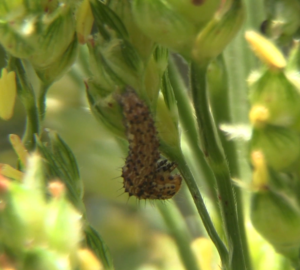
Cotton bollworm (corn earworm) feeding on a sorghum head.
Scientific Names
Helicoverpa zea (aka the corn earworm or cotton bollworm)
and
Spodoptera frugiperda (the fall armyworm)
Biology
Headworms: These are the worms found during on heads damage sorghum by feeding directly on flowering parts and the developing grain, but it is the last two larval instars (growth stages) that cause greatest damage.
Whorlworms: These refer to the worms found in whorls feeding on the leaf material.
Positive Identification
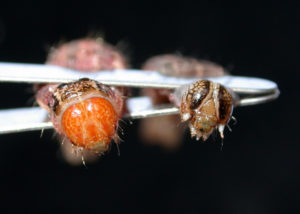
Corn earworm/cotton bollworm (left) and fall armyworm (right). They can be easily distinguished by looking for the “Y” pattern on the head capsule which is found in the Fall Armyworm. Photo by John Obermeyer, Purdue Extension Entomology.
Bollworm: Caterpillars will have a light head capsule and their bodies are covered with small bristles that can be observed with a hand lens.
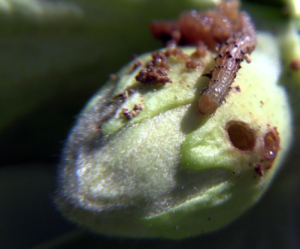
The cotton bollworm feeds on a variety of plants including sorghum and corn.
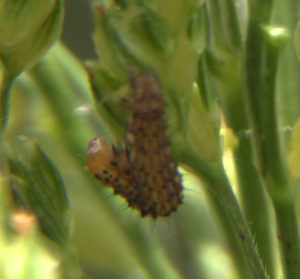
Cotton bollworm (corn ear worm) on sorghum.
Fall Armyworm: Caterpillars have a dark head capsule and a ‘Y’ shaped suture on the front of its head. The fall armyworm also has dorsal lines lengthwise on the body.
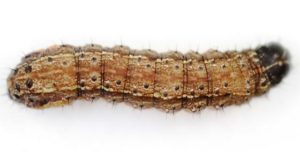
A fall armyworm. Photo by Salvador Vitanza
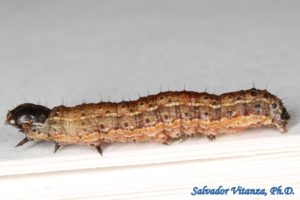
Other Important Hosts
Cotton (bolls), Corn (ears), Sorghum Whorls
Scouting Tips
Headworms: Scouting sorghum for headworms should start shortly after flowering and continue weekly until the hard dough stage. It is suggested that heads be shaken vigorously into a white 5-gallon bucket to dislodge larvae. You can see the technique demonstrated in the graphic below. Headworms can then be counted and identified in the bucket.

Whorlworms: Pull the whorl from the plant and unfold it to look inside. Search for frass which is the larval excrement. If the caterpillars are present you will often see holes in them called “shot holes.” Larvae feeding in this area are somewhat protected from insecticides.
Although we tried to include the most significant pests related to sorghum our tool cannot help you identify every insect found on sorghum. This tool is built to inform you of the most common and significant pests of sorghum in Texas. If the insect you are dealing with does not match the description above then talk to your extension agent or visit this page to look at all the different important potential pest associated with each part and growth stage of sorghum. For management information of a specific pest talk to your local extension office.