According to the responses you entered, this is likely the pest you are dealing with. To confirm this, use the positive identification section.
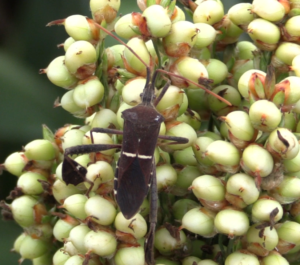
A leaf footed bug adult on a sorghum head. Photo by Jason Thomas.
Scientific Name
Leptoglossus phyllopus
Biology
Leaf footed bugs have sucking piercing mouth parts. They can cause significant losses in sorghum because they feed directly on the developing kernels or other parts of the head. After feeding, the damaged seed is more likely to be affected by fungi or other plant diseases.

Photo by Jason Thomas
Positive Identification
These insects are most easily recognized by their widened hind legs that have a leaf like appearance. They are about 3/4″ in length. A white band is typically present across the front wings.
Other Important Hosts
Many weed species and garden plants like Tomatoes.
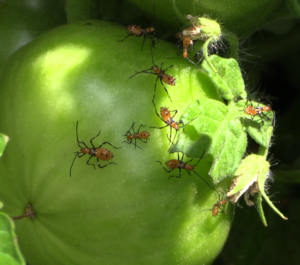
These leaf footed bug nymphs are feeding on a tomato plant. The nymphs look quite different from the adults. Photo by Jason Thomas
Scouting Tips
To scout for these insects beat the heads into a bucket and count the number of bugs present.
Although we tried to include the most significant pests related to sorghum our tool cannot help you identify every insect found on sorghum. This tool is built to inform you of the most common and significant pests of sorghum in Texas. If the insect you are dealing with does not match the description above then talk to your extension agent or visit this page to look at all the different important potential pest associated with each part and growth stage of sorghum. For management information of a specific pest talk to your local extension office.