According to the responses you entered, this is likely the pest you are dealing with. To confirm this, use the positive identification section.
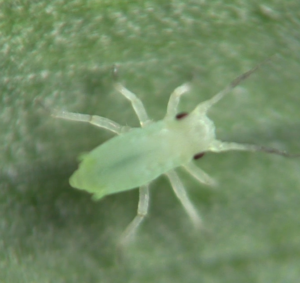
Scientific Name
Schizaphis graminum
Biology
The greenbug feeds like other aphids by sucking plant fluids. They are found typically feeding on the underside of leaves. This, along with other aphids, is known to transmit certain viruses during feeding to wheat, barley, and oats. They also inject toxins into the plants causing localized red discoloration around feeding sites. They can cause economic losses when populations grow.
Positive Identification
The easiest way to confirm that you have found a greenbug is to look for the dark green stripe down the center of the abdomen as shown above. Greenbugs are typically light green in color. They have black tipped feet (tarsi) and black tipped antennae. Their cornicles are not black.
Other Important Hosts
Johnson Grass, Barley, Wheat and Oats
Scouting Tips
To scout for greenbugs, look at the undersides of leaves for the aphids. Honey dew presence may also give clues that aphid populations are nearby. Aphids tend to colonize upper leaves first and then move down the plant.
Although we tried to include the most significant pests related to sorghum our tool cannot help you identify every insect found on sorghum. This tool is built to inform you of the most common and significant pests of sorghum in Texas. If the insect you are dealing with does not match the description above then talk to your extension agent or visit this page to look at all the different important potential pest associated with each part and growth stage of sorghum. For management information of a specific pest talk to your local extension office.