• Skip to primary navigation
  • Skip to main content
  • Skip to primary sidebar
  • Texas A&M Forest Service
  • Texas A&M Veterinary Medical Diagnostics Laboratory
  • Texas A&M AgriLife Extension Service
  • Texas A&M AgriLife Research
  • Texas A&M College of Agrculture and Life Sciences
West Texas Rangelands
West Texas RangelandsWe hope to provide a variety of science-based rangeland information and current research on prescribed fire, wildfires, brush management, and grazing management!
  • Menu
  • Home
  • About & Contact
  • Publications
    • Extension Publications
    • Refereed Journal Articles
    • Program Summaries
  • Events
  • Lunch N’ Learn
  • Infographics
    • Drought
    • Grazing
    • Herbicide
    • Prescribed Fire
    • Rangeland Plants
    • Wildfire
  • Range Resources
    • Published to Pasture
    • Range Concepts
  • Fire Resources
  • Sponsors
  • AgriLife Learn Online Courses

Why I Ranch.

October 25, 2016 by morgan.treadwell

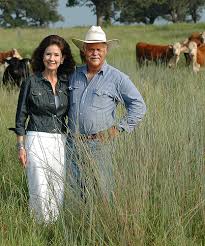
This October we are featuring Mr. James K. Rooter Brite, Jr. from Bowie, Texas.  Rooter is a father, rancher, conservationist, and my friend. The Brite Ranch has been a member of the Texas and Southwestern Cattle Raisers Association (TSCRA) for Rooter’s entire life. He has been a director of the TSCRA since 1999, and has served on their Agriculture and Research and Natural Resources and Environmental committees since 1994. He has served as a director of the Upper-Elm Red Soil and Water Conservation District since 1979. He has served on the Association of Texas Soil and Water Conservation Districts board and on the Texas State Soil and Water Conservation Board. He represents the National Association of Conservation Districts on the National Grazing Lands Conservation Initiative steering committee. Additionally, he serves on the National Cattlemen’s Beef Association, Natural Resource and Environment Committee.
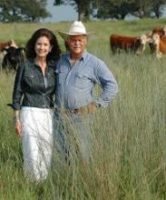
rooter1How did you get your start in ranching? I am a third
generation on this ranch.  I was born and raised on the ranch where my grandfather J.A. Brite purchased in 1929. I took over my dad’s cow herd in the mid-1960s and purchased the ranch from dad in 1974, when I began full-time management of the ranch with my wife, Lynda, and eventually my son, J.K.

How important is agriculture to your family?  Agriculture is about one third of my income.  You have to look at the cumulative value of everything you do on the land. Management decisions you make now will make a difference 30 years from now. It all adds up, whichever direction you go. At an early age I learned the cause and effect of different land management practices. These first-hand lessons I learned from the land stimulated my desire to learn more and be diversified in my management. I apply land management practices that are practical, using common sense. I don’t do things because they are what somebody else thinks might be good. I do things because they work on this land, and that’s what makes the difference.

What makes ranching in West Texas so unique?  The only constant is inconsistency  with the weather and markets. 

Do you feel like there is enough emphasis on agriculture in K-12 education?  There needs to be a much greater attention on ag, but it must be taught by qualified and experienced teachers.

Who did you learn the most from along the way?  By college age, I was intrigued by the land so I enrolled in Texas Christian University’s two-year Ranch Management program. TCU Professor Chip Merrill inspired me to try new things and not be afraid to try something different. I approached the resource management of the ranch using a short-term reactionary response to changing forage, production, and anticipated market condition. My long-term management is of a continuing upward trend in success of native forage. I feel like we can utilize our current management methods and maintain, or in areas of need, improve the productivity of this ranch in an economically and environmentally sustainable manner.
Thank you Rooter!

Filed Under: Brush Management, Grazing Management, Prescribed Burning, Uncategorized, Why I Ranch Tagged With: #grazing #ranchmanagement #brush #grasslands

Meet a County Extension Agent – Michael Palmer Coleman County

September 25, 2016 by morgan.treadwell

Since working with Texas A&M AgriLife Extension Service, I have been in awe of our County Extension Agents.  Most often their hours align with famer’s hours – sunrise to sunset (and if they are between those times, red bull drinks are always in their hands). They love their community, they love agriculture, and they love the people that embody both of those things.  They are the heartbeat of Texas agriculture.  What they do for their job, how they do their job, where they do their job absolutely amazes me.  That said, I wanted to learn more about our County Extension Agents – I wanted to learn why they do this job.

I have started a new blog series called “Meet a County Extension Agent” and I hope you enjoy getting to meet these incredible folks as much as I have.

Our October issue features Michael Palmer, Coleman County Extension Agent.  Mr. Palmer is a one-of-a-kind agent, and in my opinion he just gets it.  He is open-minded, willing to learn, willing to work hard, and makes everybody feel like they are contributing toward a bigger purpose.

Meet Mr. Michael Palmer:

Why did you become a County Extension Agent?  I have always had an interest in agriculture and have been involved in farming and livestock operations with my family since childhood.  I knew I wanted a career in agriculture and the opportunities that Extension offers only enhance the desire to be involved in agriculture.  I like the diversity that being a county Extension agent offers; things are always changing.

What are some concerns specific to agriculture in your county? Coleman County is a diverse county made up of range and pasture, as well as cultivated land.  Agriculture is a key industry here.  Many producers continually conduct brush control, as it is a never-ending issue with undesirable and invasive plants.  Predator control is another issue landowners face; specifically wild hogs.  Coleman County has a large number of sheep and goat producers who, along with the wildlife industry, face challenges with predation caused by coyotes and bobcats. Many farmers are currently facing challenges with low wheat prices and high input costs.  Alternative crops have been looked at but no silver bullet has been found.

What is the most rewarding part of your position? Being able to make a positive difference within the communities where I live and work; and make a difference in the relationships I develop with the people of the counties I have worked in the past 19 years.

What is the weirdest request you have ever received as a CEA and how did you solve it? It would be hard to narrow down to only one request, but I have had several requests over the years that were “odd”.  That’s what I like about being a county Extension agent; you never know what the day holds or what the questions will be.

If you could be anything else, what would you be? I don’t know that I would change what I do because a career as a county Extension agent is more of a lifestyle than a job.  I get to combine the work I do with my hobbies/interests and am always garnering knowledge that I’m able to apply to each.

Thank you Mr. Palmer for all you do!  We are grateful to have you!

Filed Under: 4-H Range Contests, Meet A County Extension Agent, Uncategorized Tagged With: Agriculture, Coleman County, County Extension Agents

  • « Go to Previous Page
  • Page 1
  • Page 2
  • Page 3

Recent Posts

  • Building Fire Capacity Before the Next Burn: New Continuing Fire Training Course Supports Prescribed Fire Practitioners
  • Burning From the Ground Up: How Prescribed Burn Associations Are Expanding Fire Across the Great Plains
  • Juniper Management on Texas Rangelands
  • Making the Most of Every Bite: How Goats and Cattle Complement One Another on Texas Rangelands
  • Texas Working Lands: What Land Fragmentation Means for the Future of Texas Rangelands

Categories

  • 4-H Range Contests
  • Beef Cattle
  • Brush Management
  • Carbon Credits
  • Carbon Markets
  • Conservation
  • Conservation Practices
  • Drought Management
  • El Niño
  • Events
  • Forage
  • Goats
  • Grazing Management
  • La Niña
  • Land
  • Lessons Learned
  • Meet A County Extension Agent
  • Plant ID
  • Podcast
  • Prescribed Burn Associations
  • Prescribed Burning
  • Publications
  • Range Concepts
  • RAP
  • Sheep
  • Society for Range Management
  • Soil
  • Staff
  • Targeted Grazing
  • Uncategorized
  • Water
  • Weather
  • Why I Ranch
  • Wild Pigs
  • Wildfire
  • Wildfires
  • Wind
  • Woody Encroachment
  • Youth Range Workshop

Archives

Texas A&M AgriLife Extension Service
Texas A&M University System Member
  • Compact with Texans
  • Privacy and Security
  • Accessibility Policy
  • State Link Policy
  • Statewide Search
  • Veterans Benefits
  • Military Families
  • Risk, Fraud & Misconduct Hotline
  • Texas Homeland Security
  • Texas Veteran's Portal
  • Equal Opportunity
  • Open Records/Public Information