• Skip to primary navigation
  • Skip to main content
  • Skip to primary sidebar
  • Texas A&M Forest Service
  • Texas A&M Veterinary Medical Diagnostics Laboratory
  • Texas A&M AgriLife Extension Service
  • Texas A&M AgriLife Research
  • Texas A&M College of Agrculture and Life Sciences
Sheep And Goats
Sheep And GoatsStaying Up-to-Date on Sheep and Goats
  • Menu
  • Welcome
  • Events
  • Blog

Reid’s Ram-blings: March 2024

March 15, 2024 by

THANKS FOR YOUR SUPPORT

It has been an honor to author this column for the last 7 years.  I’ve always enjoyed taking time to ponder what to write about each month.  It helped me grow as a person and I hope you all gained some insight or motivation from this column.

This will be my last Reid’s Ram-blings article.  The time has come for me to step away from Texas A&M AgriLife and begin a new chapter in my life.  Change can be hard and scary for us all.  But to paraphrase one of my articles “the worst decision can be no decision at all.”

It has been a tremendous privilege to serve Texas A&M AgriLife Research and Extension over the last 9 years.  This job was a dream of mine from the time that I was a teenager and it exceeded my expectations.  Texas A&M AgriLife has been wonderful agency to work for.  A people focused organization with high quality folks throughout the state.

While, Texas A&M wrote my paycheck, I always felt that the sheep and goat industry was my true boss.  In my opinion, Texas sheep and goat folks are some of the best people to work for and work with to continue the century long tradition of tending to animals and caring for land.  It has been true blessing for me to be part of this industry through my positions.

I’ll be no stranger to the sheep and goat industry and I hope to see you all down the road.

Thanks for all the support and words of encouragement over the years.
 

Filed Under: Uncategorized

Reid’s Ram-blings: February 2024

March 15, 2024 by

Cold Stress in Sheep and Goats

As I write this in mid-January, we have just had a cold snap the last several days without temperatures climbing above freezing.  Most all of the ag news and coffee talk revolves around the weather and what actions are being taken to keep animals healthy and productive.

My perspective of cold weather is slightly different from most Texans, as I completed my PhD in Montana and worked as an Extension Sheep Specialist in North Dakota for 5 years.  The lessons that I learned from living and working in these environments has really shaped how I look cold weather and management of livestock during these weather events.

There are several factors that I consider when making management decisions for sheep and goats during harsh weather events.  The class, age, production stage, and condition of the animals are important to consider.

More importantly, the type of weather event and environment that the animals have access to alters how it will affect them.  Temperatures are important to consider but wind and moisture can drastically change how cold weather will affect the animals.  Wet animals that are exposed to wind are much more susceptible to acute and chronic cold stress.  Natural or man-made shelters from the wind and rain are very beneficial to protecting animals from harsh weather.  Lucky for us, much of the rangelands in West and Central Texas have plenty of brush and trees that animals will use for protection.

Mature animals that are in good body condition with a healthy hair or wool coat can withstand temperatures well below freezing without any acute health conditions.  They will start to use use body resources to maintain body temperature.  As long as quality feed resources are available to them, most ranchers will not see any negative effects on animal health or performance.

Mature animals that are under conditioned, recently shorn, or have high demands for nutrients to support a growing fetus or lactation are at a higher risk of cold stress.  It is important to provide adequate protection from weather events and supplemental feed to keep these animals healthy.

Newborns are at higher risk to cold weather.  First of all, they are born wet from birthing fluids which causes rapid heat loss.  They are born with a different type of fat, called brown fat, that can rapidly be mobilized to maintain body temperature.  But these energy resources can be depleted within a few hours.  Therefore, it is important that they are up and receive colostrum from their mother before they run out of this body reserve.  Colostrum is rich in fat and energy to fuel their ability to stay warm.  If they are unable to do this, they’ll become lethargic from low body temperature and lose the ability or desire to stand or nurse.  In this case immediate action is needed to bring up their body temperature and supply milk or milk replacer, in that order.

Water is the most important nutrient for livestock.  As such, ranchers spend a lot of time during these weather events breaking ice from water troughs.  But is this necessary?  One of the unique aspect of sheep and goats is their ability to survive and thrive with fairly low amounts of water during the winter.  In Texas we are blessed to have green forage year-round, as long as their has been come rain events to support this.  Sheep and goats that are grazing winter weeds, annual grasses or perineal cool season grasses during the winter may not need additional water or only consume water every couple days.

This may explain why ranchers get frustrated with sheep and goats, as they won’t drink water after we brave the cold weather to bust ice out of the troughs.  However, if ranchers are supplementing dry feed such as hay or pellets, these animals may need supplemental water to support normal digestion and hydration.  In these cases, they animals should voluntarily consume water.

In my experience, weather events that are below freezing are not near as detrimental to sheep and goats as many people perceive.  I worry about cold rainy events with temperatures at or slightly above freezing than I do about sub-zero weather events.  Good management prior to these events are more important than the actions that are taken during the event itself.  Keeping animals in the proper body condition, providing access to shelter, access to water (if needed), planning shearing events to avoid exposing freshly shorn animals to cold, wet, and windy conditions, protecting newborns from harsh weather, and adequate nutrition during harsh weather are factors that can allow Texas ranchers to weather most any storm mother nature throws at us.

To provide feedback on this article or request topics for future articles, contact me at reid.redden@ag.tamu.edu or 325-657-7324.  For general questions about sheep and goats, contact your local Texas A&M AgriLife Extension Service county office.  If they can’t answer your question, they have access to someone who can.

Filed Under: Uncategorized

Reid’s Ram-blings: January 2024

January 29, 2024 by

Genetics Research in 2024 and Beyond

As we move into 2024, I am very excited to expand our small ruminant research and outreach efforts.  If you have been a long-time reader of this column or follow our research programs, you’ll know that I have a passion for optimizing the genetic potential of sheep and goats.  Genetics are the foundation of livestock production.  Without a good foundation, many of the goals we may want to achieve may not be attainable.  You’ll also be keenly aware that my desire is to see more quantitative means of genetic selection (data) vs the primary way we have selected sheep and goats, visual appraisal.

Don’t get me wrong, I like to look at well designed animals that are structurally correct, heavily muscled, conform to breed standards, etc.  But much of what we see is influenced by non-genetic factors, such as how much feed the animals receives, how many siblings did it have, etc.  And many of the commercially important traits such as parasite resistance, fitness to environment, and reproductive potential can’t practically be assessed without data and proper handling of the data to allow it to be meaningful.  I’m not suggesting that visual appraisal should be disregarded.  But without data we aren’t going to be able make major improvement in genetic potential of sheep and goats from what has already been done.

In 2024, we have two major efforts that are shifting our genetics research program.  First, we have initiated a 3 year grant project with the American Dorper Sheep Breeders Society to perform a Sire Progeny Test.  Second, we have received funds to develop two Goat Resource Herds that will consist of purebred Spanish and Boer goats.  These two project will not only expand the scope of research that we have been working on but it will also allow for much greater participation by those involved in supplying seedstock in this region.

The Dorper / White Dorper Sire Progeny Test began this spring.  We received 8 rams that were nominated by ADSBS to be included in this effort.  These rams were group sire mated with our Dorper / White Dorper ewe flock that has been extensively phenotyped and genotyped for commercially important traits.  Ewes lambed out this fall and DNA samples were taken from the lambs to determine parentage.  Lambs will be weaned in early 2024 and managed on pasture for 60 to 120 days.  Thereafter, lambs will enter a feedlot for 60 to 90 days and artificially challenged with parasites.  A set of replacement females will be returned to the ewe flock and the rest of the lambs will be taken to harvest.  Performance data collected on the lambs will include; birth and weaning type, growth rate on pasture and on feed, natural and artificially challenged parasite resistance, carcass traits, and eating quality traits.  All of the performance data on the lambs will be tied back to the sires nominated to the study.  In addition, all of the data from the lambs, ewes, and rams will be submitted to the National Sheep Improvement Program.

The Spanish and Boer Goat Resource Herd project will be begin in the summer of 2024.  This effort will be similar to the aforementioned sheep sire test; however, we don’t have ongoing genetic research herds of goats.  Therefore, we will be sourcing purebred females from industry partners to develop the herds along with taking in nominated bucks/billies to breed these females.  This effort will take roughly 3 to 5 years for the data to catch up to the current state of the sheep project, so that the quantitative predictions are accurate and reliable.

In both efforts, this is combination of advancing research tools and demonstration of exisiting quantitiative selection techniques.  The National Sheep Improvement Program has been available to the industry for several decades but the technology has been underutilized in Texas.  This is partly due the lack of awareness of the technology and what the technology can do for sheep and goat breeders.  And the methods that Texas sheep and goat breeders to raise livestock has also prohibited some folks from using the technology.  More recently, molecular testing and electronic data collection/storage has removed these barriers and expanded the number of breeders that can participate.

The current state of quantitative and molecular genetic selection has real-world practical application and should be implemented as soon as possible.  And the speed technological innovation are happening in science shows real promise for research efforts to result in new quantitative and molecular predictions available to sheep breeders in years compared to what would have taken decades in the past.

Hopefully, I haven’t nerded out too much and you are still reading this article.   As I’m sure you are wondering what does this mean as a commercial sheep or goat producers.  This technology will allow you to seek out breeding animals, male or female, that you can put into your flock or herd that will make changes to your bottom line.  For some, this may be animals that require less deworming to stay healthy.  For others, it might mean females that produce 25% higher lamb / kid crops.  For others, it might mean animals that stay healthy and productive without supplemental feed.

I hope you share my excitement about the direction of our research efforts.  If so, we hope that you’ll stay tuned to what we are doing and participate in our field days, where this information will be shared.  Not only are we excited to share our finding but are also eager to hear from the industry as to how we can better design and conduct our programs to meet the needs of the industry.

To provide feedback on this article or request topics for future articles, contact me at reid.redden@ag.tamu.edu or 325-657-7324.  For general questions about sheep and goats, contact your local Texas A&M AgriLife Extension Service county office.  If they can’t answer your question, they have access to someone who can.

Filed Under: Uncategorized

Reid’s Ram-blings: December 2023

January 29, 2024 by

Planning for Success

As I write this article in mid-November,  a slow drizzle is falling in San Angelo and has been for several days.  For much of this region, fall rainfall patterns have returned to “normal”. At least that is how I hear it described… I’m starting to think normal weather is actually pretty dry! Either way, the moisture and lower temperatures have initiated some nice cool-season forage production which really benefit our small ruminants.  This sets us up for a good start to 2024 and beyond, hopefully.

I have been in San Angelo for eight years and it continues to impress upon me how well suited sheep and goats are to this region.  Only, 1 out of 8 years has this county not been in some type of drought status during the course of the year.  Yet, during my entire 8 years, there hasn’t been any major dispersals of sheep and goats from this region.  Which is a testament to how well suited sheep and goats are to survive and thrive in a semi-arid desert.  To be honest, too much rain may bring upon more problems with parasites and low quality forage than normal or below normal conditions. Luckily with proper management we can circumvent these issues and capitalize on the favorable conditions.

As we finish 2023 with good rains, I’m optimistic about the 2024 lamb and kid crop.  No, I’m not predicting above or below average rains in 2024.  But I am confident that sheep and goats do very well on winter annuals and cool season forages, which can carry them through much of the year.  I’ve been fortunate to travel to major sheep countries in the world (Australia, New Zealand, and UK).  One thing that they all have in common is the majority of their native range and improved pastures are dominated by cool-season plants.

To be honest, it bothers me that so many people overlook the value of cool season annuals and grasses.  Yes, the warm season plants are more productive but they also require more water.  Or, at least, they grow when it is so hot that we need heavier rains and/or more freequent rains to support optimal growth.  As these plants grow and mature they also lose some of their  nutritional value, which isn’t as big of deal for beef cattle producers but it is for small ruminants who also tend to find taller grasses less palatable.

You’d probably get better information from a range or forage specialist on this topic than me as I am a bit biased.  My preference is to grow feed for sheep and goats that they will do well on.

I’ve gotten a bit off my topic for this article, which is “planning for success.”  Yes, we hope to finish the year with above average rainfall and grow alot of feed for our aniamls.  We also hope that we see sustainable markets continue in 2024.  But to a large degree both of these are out of our control.  And I always hope that this article leaves you as the reader with something that can be of use on your sheep and/or goat operation.

For most of us December is a slower month at the ranch heading into the new year.  I encourage you to take some time to do some strategic planning for your operation in 2024.  This might require some thought into what went right or wrong this past year.  I’d suggest that you take time to visit with people who can bring new ideas or perspectives to your yearly management plan, such as veterinarians, extension agents, nutritionists, and/or fellow ranchers.  If you choose to do this, which I hope you do, be sure to plan ahead and ask some specific questions.  Here are a few that I think would be important to discuss.

Is my predator management plan appropriate for today and into the future?

Is my parasite prevention plan appropriate for low, moderate, and high risk years?

Is my nutritional program optimizing performance and a net postiive return on investment?

Is my vaccination and disease prevention plan up to date?

Am I prepared to treat diseases that are common in sheep and goats now that antibiotics are no longer available without a prescription?

Am I ready for electronic tags and software to track animal health, herd performance, grazing management, and/or economics?

Asking ourselves these tough questions about our management is always a good idea, but its alo important to realize that we should be doing this regardless of if the weather is in our favor. In reality, if we cant capitalize on a “good year” (knock on wood about 2024), we certainly won’t turn a profit in a bad year when the margin for error is a lot narrower. Cheers to your 2024 and keep up the holiday rain dances, they seem to be working for now!

To provide feedback on this article or request topics for future articles, contact me at reid.redden@ag.tamu.edu or 325-657-7324.  For general questions about sheep and goats, contact your local Texas A&M AgriLife Extension Service county office.  If they can’t answer your question, they have access to someone who can.

Filed Under: Uncategorized

Reid’s Ram-blings: September 2023

September 11, 2023 by

What is Your Time Worth?

Most long-time sheep and goat ranching families have a deep rooted passion for livestock and the land that supports them. Rarely, does anyone stop and think, “How much money am I gonna make by driving around the ranch to check livestock, water, and fencelines?” But, we all know that if we don’t keep a close eye on our ranching operations it can be disasterous.

Lets be honest and acknowledge that sheep and goat ranching isn’t a highly profitable enterprise compared to other professions that require skilled labor, hard work, and large capital investment. Most people who ranch, aren’t in it for the money. They love what they do and it provides a quality of life that rivals any other profession. But this doesn’t mean that we shouldn’t try and improve efficiencies in how we manage our sheep and goat operations.

One management changes to decrease effort and increase return on land, labor, and capital isn’t likely to revolutionize the ranch overnight. But a few small changes that occur overtime could change the outlook of the operation in the long-term. By that I mean, it may allow some to ranch when they no longer have the time or physical ability to keep doing it the way we have always done it. Or we may also see a desire by the next generation to carry on the tradition, if they see new technology and strategies being implemented that excites them or provides options that allow for ranching to coexist with another profession or extracurricular activities off the ranch.

I’m not claiming to have the answers for each and every operation. Ranchers know their own operations better than anyone else. Rather, this article is trying inspire the ranching community to brainstorm options that are right for them. Some of the technolgy may be available or it may need to be developed.

Remote monitoring: I’d be willing to bet that pature-based sheep and goat ranchers and hired staff spend the majority of their time checking pastures. Rightfully so, livestock need to be assessed for health, pasture conditions need to be evaluated, and water systems need to be constantly monitored. But, can we reduce the number of times that we do this activity or shorten time spent checking pastures?

GPS trackers on a small percentage of livestock and/or most all guardian dogs is a good way to always know where they are, where they have been, and if they leave their pasture. Cellular game cameras are a good way to constantly check water troughs and tanks, learn about when livestock are watering, and monitor what wildlife are present in these pastures. And I’m very curious to learn if virtual fencing will ever become an economical option for sheep and goat ranchers. If so, this would be a real game changer for sheep and goat producers. Nonetheless, segments of this technology are already commercially available and I’d encourage you to look into it.

Precision Nutrition: Feeding and supplementing livestock is most often the largest direct expense to sheep and goat ranching operations, which also takes a lot time and effort. Ranchers know better than anyone that you can’t starve a profit from livestock. But feed costs continue to rise faster than the livestock market and we must learn to be more efficient to sustain a profitable margin.

Many ranchers have chosen to go with self-feeders or cooked tubs to cut down on labor. This can be a good option for some but it is an expensive option and doesn’t always direct the right feed to the right animals. Nutritional demands are greatest in late gestation and lactation, especially for females giving birth to multiple offspring. Mid gestation pregnancy ultrasound and body condition scoring is a good way to sort ewes and nannies into groups based on nutritional needs and allows for better use of feed resources. Ranchers can then prioritize time and resources to under conditioned or twin-baring animals that are most likely benefit from additional feed and spend less time and resources on well conditioned or single-baring animals that don’t need it.

Remote animal weighing systems that capture daily or weekly body weight gains/losses are being developed. Electronic tags, automated scales, and remote data reporting systems have existed for some time but pairing all these together within ranching systems hasn’t been developed and commercialized. This is new system that I think could have tremendous value to sheep and goat ranchers. Not only would this provide data on animal productivity to adjust nutritional strategy but it could also help with monitoring death/predation loss and pairing up dam to offspring.

Much of the aforementioned technology could be operated from our cell phones. Yes, sometimes we wish that we could go back to the good old days and disconnect. But the reality is other sources of protein and fiber both domestically and internationally are going to adopt technology and we must be able to compete with this. I can speak from personal experience that I thoroughly enjoy monitoring my animals on my cell phone. It saves me time and money, plus provide a peace of mind that the water trough is full and livestock are looking good. When I am able to check on things in-person, it is a more enjoyable experience.

In summary, hard work has been and will continue to be a cornerstone of livestock production, especially for sheep and goat ranchers. But I hope this article inspires people to stop and think about working smarter and not just harder. Our time is a valued commodity and we must all try to use it wisely. We are fortunate to live in a time when technology can make our lives easier, if we choose to allow it.

To provide feedback on this article or request topics for future articles, contact me at reid.redden@ag.tamu.edu or 325-657-7324. For general questions about sheep and goats, contact your local Texas A&M AgriLife Extension Service county office. If they can’t answer your question, they have access to someone who can.

Filed Under: Uncategorized

Reid’s Ram-blings: August 2023

August 8, 2023 by

The ball and chain of indecisiveness

A rancher that I deeply respect once told me that the worst decision is no decision at all. This statement stopped me in my tracks. At first I wanted to reject it and rebut that we should always proceed with caution rather than making an impulsive choice, just for the sake of it. But before I put my foot in my mouth, I did some self reflection and realized that he was really telling me that being fearful of making a bad choice and not taking action because of this insecurity is maybe the greatest failure of all. It’s better to pick a path and move on and avoid the temptation to put a choice off until “the time is right”… which I fear is the forbidden fruit our sheep industry has taken a bite from.

We are all creatures of habit and making a decision that is new or different can be a hard thing to do. For me, being slow to commit to a new path forward is a result of my own tendency to overthink and and maybe too much education. High school and much of a BS degree tends to teach us about a “black and white” world. However, graduate school tends to be much more of a “shades of grey” understanding of science. In the context of agriculture, living things are complex and certain actions or decisions about their management can lead to many different outcomes. I have a tendency to try and work through every detail and hem haw around until the ghost of that old rancher appears on my shoulder and yells at me to “just make a choice already!”

It is much easier to stick to what we have done, as we have a better idea of what the outcome will be. However, it is much harder to contemplate what the long-term impact of failing to make a decision to try something new. It’s also easy to fall into the trap of focusing on the negative side once we have made a new decision and proclaiming “I’ll never do that again!” as soon as the slightest drawback is observed. Even I am guilty of getting lost in the nuances and forgetting the bigger picture, which may in fact be a net positive.

Let’s focus this on a genetic selection in small ruminants. In Texas, most sheep and goat raisers are using the same principles of selecting replacement breeding stock as our grandparents, which is relying on our visual appraisal of a well fed animal. Yet, we have known for decades that visual selection will not allow us to make improvements in reproduction, parasite resistance, and envirnomental fitness. And for decades, technology has been available to aid us to select animals that are more productive within commercial conditions.

Failing to make a decision to try a different approach to genetic selection has not only kept our industry from reaching its full potential but it has also allowed other animal proteins and foreign imports to gain a competitive advantage. For instance, New Zealand had a similar 80% lamb crop 30 years ago. And through genetic selection and improved management their national lamb crop has increased roughly 50%. Australia has adopted similar technology and cross-breeding schemes that allow them to capture ~50% of the American lamb market. Chicken, Pork, and to a lesser degree Beef have all improved their production efficiency over the last 3 decades. Not all of this is from genetic selection but genetics are the foundation of animal performance.

We in the research community can be victim to this tendency as well. For instance, the centralized ram test was hosted at Sonora and San Angelo for nearly 70 years. In the early days, it was the best technology available for genetic selection. The test was very effective at improving growth rate and fleece weights, while maintaining low micron, high quality wool. However, the last couple decades of the test, it became apparent that the sheep were getting too big to sustain healthy productive ewes on native rangelands. As a result, it required extra feed to maintain optimal body condition, likely reduced reproductive potential, and increased susceptibility to parasites. This test was cancelled to encourage breeders to use a better genetic testing program that generated estimated breeding values from sheep raised on the ranch. But this decision was about 20 years late. And during those 20 years, much of the finewool sheep industry in Texas was been replaced by smaller, more environmentally fit hair sheep.

My point is not that genetic selection is the primary reason for all of the issues we have in the small ruminant industry. It is much more complicated than that. But it is a good example of how the failure to make a decision to try something new because we are skeptical it will work or assume the effort required will not provide a good return on investment can cripple an industry’s ability to remain competitive.

The brighter side of this is those other industries whom have been quick to adopt technology have made a lot of mistakes which we can learn from and avoid making them ourselves. While, the best time to plant a tree is 20 years ago, the second best time it today. Let’s not continue to be indecisive if we want to grow our industry for ourselves and the next generation. And history has continually shown us that making the easy decision is not always the best one.

To provide feedback on this article or request topics for future articles, contact me at reid.redden@ag.tamu.edu or 325-657-7324. For general questions about sheep and goats, contact your local Texas A&M AgriLife Extension Service county office. If they can’t answer your question, they have access to someone who can.

Filed Under: Uncategorized

Reid’s Ram-blings: July 2023

July 10, 2023 by

Are Small Farms the Future of Ag?

You would have to be living under a rock to not be aware that land fragmentation has and continues to occur in rural America. Many of us want to lament about the good ole days, when farms and ranches were large, families were fully supported by livestock operations, and close neighbors were rare. To be honest, I do too. But we must face reality and learn to adapt to a new environment.

If you are a long time reader, you’ll know that I tend to look at things “half glass full,” so lets look at the potential positive attributes of this trend. Land fragmentation typically will result in more people involved in agriculture. Naturally, small ruminants tend to fit well into these small scale farms and ranches. The recent USDA census indicates that there are more people raising sheep today than there were in the 1950s, when sheep numbers were at their highest. Strength comes in numbers, so this can definitely be a good thing, if we work together.

Before we get too much further in this article, I want to be clear that land fragmentation comes in many shapes and sizes. We can’t really say that small scale farms are less than a set number of acres. In Far West Texas, 1,000 acres may be a small ranch; whereas, East Texas that might be 10 acres. But if I had to put a box on this; I’d say that small scale operations are those that can’t run enough animals to justify the labor involved in management.

I don’t know land fragmentation is necessarily a problem or in some ways a good thing. Sometimes we bemoan about how more nonagriculturalists should better understand ranching and livestock production and what it takes to put food on the table. While I love the tradition of big ranches and having livestock at scale, I also worry that trying really hard to preserve that actually makes more people feel excluded from the agricutlural way of life.

Funny how times change but many of the issues that we face are not too different from our grandparents and great grandparents. An issue that is likely new for American animal agriculture is how do we feed so many people with smaller farms that aren’t highly efficient due to scale? Will we continue to see a trend towards chicken and pork, as these confinement operations can affordably buy feed and scale to meet the demand? And will we continue to rely on imported products to meet domestic demand? Or can we educate small scale sheep and goat operations to become more efficient and make up the difference in production from downsized large scale operations of the past?

Personally, I would like to see the latter of the three questions above. But that would go against historical trends. If one takes a look at the beef industry, it might suggest that it’s pragmatic. Nearly 80% of beef in the US comes from operations with less than 50 head of cattle. Obviously, Americans eat a lot more beef than lamb or goat meat.

So why can the beef industry do this and the sheep and goat industry hasn’t? Cattle are a first choice for many people who have a ranch. It is almost an American tradition to raise cattle if you have land. Second, cattle tend to be less labor intensive to manage. They stay behind fences easier, predation isn’t a major concern, and they don’t succumb to parasites in higher rainfall areas. The reality is, sheep and goats take often take more mangement than cows, and naturally if that mangement and labor is spread across a larger flock it is easier to pencil out. But I think as an industry we really need to lean into the idea that many of the new producers are not rasing small ruminants to make a full living or if they are, it is in an out of the box concept. I am continually excited about the way that grazing sheep and goats for wildfire abatement or weed control has become a booming business. Grazing under solar panels is also a really big opportunity for sheep and goats. Oprations that are direct marketing lamb meat and high quality wool are experiencing success. In all honesty, everywhere I look I see sheep and goat folks redefining what it means to be a “traditional” rancher.

In extension, we are going to continue to help support the needs and problems faced by traditonal and nontraditional small ruminant production. Sure, predation, parasites, range mangement are all major issues for large ranches and will continue to be for the newer, smaller operations, but through different educational approaches and research concepts, I am hopeful we can continue to improve in these areas.

I tend to believe that most of our problems are actually either self-induced or have been an issue for much longer than our lifetime. Creating solutions will take forward thinking individuals, whom have a good understanding of history, and work as a community of animal agriculturalists. I also believe that for some time the sheep industry has tried to make changes to revert back to “how things used to be”. That isn’t a sustainable concept for any industry. Land fragmentation is something that is a reality of modern times and we should all be looking ahead as to how to best include and support large and small scale sheep and goat producers.

To provide feedback on this article or request topics for future articles, contact me at reid.redden@ag.tamu.edu or 325-657-7324. For general questions about sheep and goats, contact your local Texas A&M AgriLife Extension Service county office. If they can’t answer your question, they have access to someone who can.

Filed Under: Uncategorized

Reid’s Ram-blings: May 2023

May 4, 2023 by

Lamb Marking

This edition of Reid’s Ram-blings was composed by Jake Thorne, Texas A&M AgriLife Extension Program Specialist.

My very earliest memory growing up included a few distinct details that I will never forget. The gritty feel of dust in my teeth, the softness of a lambs head against my cheek as I held it on the marking table, the piles of lambs tails (exactly 100 in each) scattered about, and the general joy that everyone older than me seemed to experience. I’ll admit, I was tired, hot, and had just lifted my body weight in lambs a hundred times over. But growing up on a sheep ranch has ways of imprinting on you for the rest of your life. Days spent marking lambs just always seem to surface when I get the nostalgic feeling of the good-old days. While this article is meant less to be a trip down memory lane, I can’t help but lead into it pointing out that the comraderie and sheep work that occurs during annual lamb marking days is something I look forward to every year.

With that said, lamb marking days are indeed “work.” Admittedly, it feels a lot more like work when you are the holder, but nevertheless everyone has a job and each is just as important as the next. With spring lambs hitting the ground, I thought it might be helpful if I go through a bit about what we do at the research station when its time to mark and the reasons behind it. Fully recognizing that there are lots of different ways to go about marking or circumvent marking altogether.

We try and stay to a pretty narrow breeding season, our goal is to have every ewe conceive within the first two cycles after exposure to the ram during breeding season. The primary advantage is that most lambs will be similar in age and can thus be treated as a “contemporary group” and receive their first vaccines all at the same time. We typically try and gather ewes and lambs when the majority are about 30 days old. There are typically a few older and a few younger but we believe that going through the docking and castrating procedures are much easier on younger lambs than those that get to be 45+ days. Not to mention, we really try to have marking done before the end of April when fly season starts, which is a serious threat to a freshly marked lamb. However, there are cons to marking too early too; first, gatherign ewes and lambs can be reckless when you have newborns being mixed together in the pens with the flock. Caution always needs to be exercised when lambs younger than a couple weeks. Regardless of lamb age, penning and working the flock this time of year always needs to be done with as little excitement as possible. Leave the flags and rattle paddles at home and don’t invite your neighbor with the half-broke yearling border collie. Lamb marking is for the A-team only (but always make sure there are plenty of youngsters around too!).

Our vaccination program includes a 2 cc show of clostridium perfringens type C & D plus tetanus. “Overeating” or etertoxemia is the disease we are trying to prepare the lambs immune systems for with this vaccine. Type C often affects lambs ounger than 3 weeks of age, type D affects older lambs and adult stock. It is always a good idea to booster pregannt ewes to allow for some passive antibody tranfer to young lambs so they are protected in early life. Research has shown that vaccinating newborns with C&D has limited effect until about 30 days of life. This vaccine commonly is paired with tetanus toxoid, which is a good idea when you are creating a wound, however small, through the docking/castrating procedure. We deliver this vaccine with a pnuematic CO2-powered gun. Historically we have had trouble with CL in our flocks and so we try and avoid re-using needles. I fully realize this is a practice that occurs though in the “real-world”, despite the associated risks. If nothing else, never stick a dirty needle back in a vaccine bottle to refll a syringe, this is surefire way to spoil your vaccine.

We also “scratch” lambs for soremouth when we mark too. Soremouth vaccine is a live-virus, and is also zoonotic, so caution should be taken if this is your job for the day. In humans, the disease is referred to as “Orf” and can result in painful scabs at an entry wound- typically small cuts on your hands. In sheep, sore mouth literally causes sores on the mouths and can cause reduced milk intake and the subsequent performance problems that come with lowered nutrition. Often the disease clears in a couple weeks, but infected lambs can really be set back by contracting soremouth. Therefore, we actually use a small tool about the size of a pencil with a wire bristle end to “scratch” the inner thigh of the lamb. The soremouth vaccine is a vial of solution that can then be lightly applied to the irritated area. A scab will develop on the inside of the flank of the lamb, but this will not cause the same problems that it would on the mouth. Lambs will develop antibodies for this virus that will keep them protected in most cases for life.

At marking, we always dock tails on our Rambouillet lambs to reduce the incidence of fly strike later on. Following some research that was conducted years ago here at the experiment station, we dock where the caudal folds of skin attach to the tail, which is usually leave about a 1 to 2 inch dock on a young lamb. Much shorter and the lambs is at an increased risk for prolapse, but much longer may also still lead to manure build up in some cases. For our hair lambs, it is more complicated. We actually are in the midst of conducting a trial to compare long tail and docked Dorper sheep. Therefore, we dock the tails on half the lambs and not on the other half. We plan to stick with this protocol for several years and measure lifetime performance. Stay tuned for some reports in the future. Outside of a research setting there is much debate on whether to dock hair sheep. The reality is the tail most likely does not inhibit performance on the lamb or increase its risk of flystrike (no wool, obviously). However, when lambs evenuatlly get their 30 seconds of ring time at the sale barn, does a docked group look more uniform and present the conotation they have been better managed? Matter of perspective, probably. With either our Rambouillets or Dorpers, we use an electric hotdocker that cauterizes blood vessels and limits the amount of blood loss from the wound. Especially in younger lambs, they are not at risk of “bleeding out” from a tail wound, but excessive blood attracts flies, something that shuld be avoided. We also spray every docked tail with wound-kote as a local antispetic and promote healing.

Finally, we prefer to castrate lambs with elastrator bands or with a “all-in-one” tool. When using elastrator bands it is especially important to include the vaccine for tetanus because these cause an increased risk of that diseases due to open wound. Castrating lambs is stressful on the lambs- we always try and make sure this is done on a cool day and once lambs are castrated they are mixed back in with their dams immediately.

Finally, all lambs receive an electronic ear tag for identification. We currently use the the small tags from Shearwell, as they are lightweight and easy on the lambs’ ears. At weaning, we’ll put a second tag in as secondary identification. At marking, we also collect a tissue sample from the ear with a an Allflex Tissue Sampling Unit- which ultimately will be used for parentage determination via DNA. All our lambs are born in the pasture, thus the DNA results allow us to confirm the sire and dam.

In the instance of certain research projects, our lamb makring protocol might change, but for the most part what I have described is the basis of it. A good team of helpers is invaluable, because each of the things I described need to be performed properly for it to be effective. Lamb marking should be an enjoyable experience for all though, akin to branding day for cattle producers. It usually requires lots of hands, but its fun work. Maybe the most important part of hosting a successful lamb marking is to also feed your crew, I will forever associate lamb enchiladas as the perfect meal for this event!

To provide feedback on this article or request topics for future articles, contact me at jake.thorne@ag.tamu.edu or 325-657-7220. For general questions about sheep and goats, contact your local Texas A&M AgriLife Extension Service county office. If they can’t answer your question, they have access to someone who can.

Filed Under: Uncategorized

Reid’s Ram-blings: April 2023

May 4, 2023 by

Effective Drenching Practices

Spring has sprung-ish. For the first time in many moons, the pastures have a bright green lustor, a situation the livestock are busy trying make the best of. It is amazing how the range responds with the seasons changing, even without much rain. Hopefully, the long term forecasts hold true, the heavens open up and we have to dig our pickup out of the mud at least 3 times this year.

However, sheep and goat ranchers also know that moisture in the spring and summer also brings on the dreaded internal parasite Haemonchus contortus, aka the Barbers Poll Worm. This parasite can be deadly, especially to spring-born lambs and kids. Lactating females are also extra susceptible to this parasite as their immune system is weakened by the stress of lambing/kidding and they often lack enough protein in their diet to feed their offspring and fuel a proper immune response to parasites.

Historically, dewormers were quite effective at killing Barbers Pole Worm. Ranchers could deworm the entire flock whenever they were in the pen (shearing, marking, weaning, etc) and manage to keep parasites under control. This strategy is imperfect but it is practical and manageable, and ultimately effective enough to prevent noticeable problems for many years. However, a lack of new products being developed and the buildup of resistance to the same anthelmintics that have been on feedstore shelves for 30 years has created a diminishing level of efficacy. Long story short, the parasites have started to gain the upperhand.

For the purpose of this article, I’ll focus on deworming practices that science has proven to control parasites and slow the rate of resistance development by the worms. Good parasite management is much more than using the right dewormer(s). Understanding the parasite lifecycle, when sheep are most susceptible, genetic selection, and pasture management are all part of the solution. That is more than what I can cover in this article, but I strongly urge all sheep and goat owners to take the time to learn as much as they can on this topic from various online resources. www.wormx.info is one of the best places to get this information, as this website is hosted and managed by a team of leading sheep and goat parasitologists.

The goal of deworming is to kill as many parasites as possible inside the animal. However, every time a dewormer is given, some worms survive, which are the potential foundation of a resistant population. At first, maybe the anthelmintic kills 99% of the worms and there are so few that live that they don’t repopulate very quickly at all. This very small number of resistant worms shed eggs out on a pasture and mix with non-resistant worms that are already out there – essentially we still have a susceptible worm population. But after repeated use with the same anthelmintics, over time 99% turns to 90%, then from 90% to 75% and so on. This may take years, but unfortunately it is a slippery slope. Sheep or goats will still show physical signs of improvement until dewormers are ~50% effective. If 50% of the worms survive drenching, they can pretty easily reinfect pastures and the animals that graze them and the problem will reoccur within just a few short weeks. At that point, the level of resistance in worm populations is very high, which renders a single product ineffective for years if not decades in the future.

In an attempt to keep the efficacy at 99% or better, it is advised that sheep and goats that have moderate to high worm burdens be treated with at least two dewormer products at the same time. Worms that one product doesn’t kill, hopefully get taken out by the other product. Each product should be given at the full dosage rate based on product label. Products should not be blended together but rather given using two separate drench guns. They typically don’t mix into a solution very well and inevitably you’ll give more of one product and too little of the other. The dewormers should also be from separate classes that don’t utilize the same active ingredient. Contact your veterarian for guidance on dewormer products and their chemical class.

Copper oxide wire particle (COWP) boluses are another tool to help increase the effectiveness of dewormers. Research indicates that a 2 gram COWP given at the same time as a dewormer will improve the effectiveness of the dewormer by actually making the worms more susceptible to the anthelmintic. Caution should be taken to limit the number of COWP treatments given to sheep as they can be more sensitive to too much copper. We typically only give COWP to sheep once per year and target the most at risk animals, spring lambing ewes/nannies and freshly weaned lambs/kids. There are several factsheets and educational videos online regarding this topic, but again it is always advised to seek veterinary advice.

In summary, proper animal health is paramount to a sustainable sheep and goat operation. Invest the time to educate yourself on this topic and employ practices such as fecal egg count monitoring or FAMACHA scoring to have the most effective deworming strategy. Internal parasites are the leading health issue for most grass based operations, specifically during wet years. An intergrated parasite management plan that includes a smart deworming strategy is the only way forward to limit resistance and to keep your sheep and goats healthy when confronted with parasites. Don’t let Barbers Pole worm suck the blood from your stock and the profits from your operation every time we get wet weather.

To provide feedback on this article or request topics for future articles, contact me at reid.redden@ag.tamu.edu or 325-657-7324. For general questions about sheep and goats, contact your local Texas A&M AgriLife Extension Service county office. If they can’t answer your question, they have access to someone who can.

Filed Under: Uncategorized

Reid’s Ram-blings: March 2023

March 7, 2023 by jaime.sanford

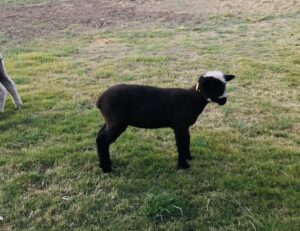
Black Sheep

We have all heard the saying “black sheep of the family”, a tongue-in-cheek statement often made about us outsiders or social outcasts who just seem to go against the grain.   Some would say that we are the folks who can’t seem to get it together, but my fellow black sheep would probably agree that we aren’t too concerned with “getting together” whatever “it” is. Regardless, the origin of this term comes from the odd lamb that is solid black at birth; when all others are solid white.

While it is not as common in Texas, many of the western sheep operations would keep 1 of these black sheep for every 99 white sheep.  Shepherds could then view sheep from a distance.  If there were 500 sheep in that flock, then there should be 5 black sheep within eyesight.  In contrast, if there where less than 5 black sheep, then action needed to be taken to locate the rest of the flock!

I recently listened to a podcast that was shared to me by a friend in the industry.  If you read this column, you know that I’m a fan of podcasts, as they easily fit into driving time.  This particular episode is from a widely subscribed podcast hosted by Joe Rogan, who is a bit of a controversial character in his own right.  His guest was Will Harris who, over the course of 20 years, has built a successful business harvesting and marketing beef, lamb, pork and poultry products direct to consumers and retailers.  This business, White Oak Pastures, employees over 100 people and is the primary employer in a rural Georgia community.

Normally, most people in the agricultural community would think favorably upon any of their peers who are making a living growing food and sustenance for society, especially since we understand all the challenges that come with the territory.  Yet, I’d be willing to bet that a large percent of the agricultural community would be offended and disgruntled with Mr. Harris’s approach and philosophy to farm management.  It doesn’t necessarily fit the mold of “you need to do one or two things very well to be successful” mainstream agriculture.

They market all grass-fed red meat, pasture-raised pork and poultry fed non-GMO diets, among various other products from these animals.  His views on regenerative agriculture farming would probably be scoffed at by most large-scale farmers and ranchers. Even for me, a self proclaimed black sheep (maybe smut-faced would be a better description, actually) and someone who tries to see things through an objective and scientific lens was a little taken aback by his statements. But with that said, if you leave pre-conceived notions at the door and appreciate the level of thought that he has put into honing this abstract business model, its impressive.  I’d classify Mr. Harris as a tried and true black sheep.

If you take time to listen to this podcast or visit their website, which I suggest you do, please don’t assume that I am advocating or contradicting this approach.  American agriculture is a complex system with varying natural resources and challenges.  There is not a single prescription for farming practices that are ideal for each and every farmer within a single county, much less across a state or nation.  But there is definitely a need for constant improvements in farming systems regardless of location.  Note that improvements is a relative word which will mean different things to different people.

What I like most from this podcast is the vision and dedication that Mr. Harris has taken to accomplish his goals and improve his rural community.  Yes, he says some controversial things and some of the things that are real and evident on his farm aren’t relatable to most sheep and goat farms in Texas.  And yes, his success of marketing his product is built on selling a product to customers that don’t want to purchase their proteins from conventional systems.

The reality is, we in agriculture are working for the consumer, and sometimes it can be a challenge to produce for the consumer when you don’t share similar views or their demands are impractical for your operation. I have some doubts if the farming model that White Oak Pastures has built would work in the “mesquite and rock patches” of West Texas, but I fully commend their ability to think outside of the box to make their livelihoods, and the livelihoods of many in their town, a success.

Change is hard for most people!  In my opinion, that is why we have Black Sheep to keep large parts of the herd from getting lost.


To provide feedback on this article or request topics for future articles, contact me at reid.redden@ag.tamu.edu or 325-657-7324.  For general questions about sheep and goats, contact your local Texas A&M AgriLife Extension Service county office.  If they can’t answer your question, they have access to someone who can.


Filed Under: Uncategorized

  • Page 1
  • Page 2
  • Page 3
  • Interim pages omitted …
  • Page 8
  • Go to Next Page »

Subscribe

Enter your email address:

Delivered by FeedBurner

Recent Posts

  • Reid’s Ram-blings: March 2024
  • Reid’s Ram-blings: February 2024
  • Reid’s Ram-blings: January 2024
  • Reid’s Ram-blings: December 2023
  • Reid’s Ram-blings: September 2023
Texas A&M AgriLife Extension Service
Texas A&M University System Member
  • Compact with Texans
  • Privacy and Security
  • Accessibility Policy
  • State Link Policy
  • Statewide Search
  • Veterans Benefits
  • Military Families
  • Risk, Fraud & Misconduct Hotline
  • Texas Homeland Security
  • Texas Veteran's Portal
  • Equal Opportunity
  • Open Records/Public Information