• Skip to primary navigation
  • Skip to main content
  • Skip to primary sidebar
  • Texas A&M Forest Service
  • Texas A&M Veterinary Medical Diagnostics Laboratory
  • Texas A&M AgriLife Extension Service
  • Texas A&M AgriLife Research
  • Texas A&M College of Agrculture and Life Sciences
Sheep And Goats
Sheep And GoatsStaying Up-to-Date on Sheep and Goats
  • Menu
  • Welcome
  • Events
  • Blog

Reid’s Ram-blings: April 2021

April 1, 2021 by myra.marsh

Jordan Moody is the guest author for this month’s column.  She is a PhD candidate working at the Texas A&M AgriLife center under an Extension graduate assistantship.
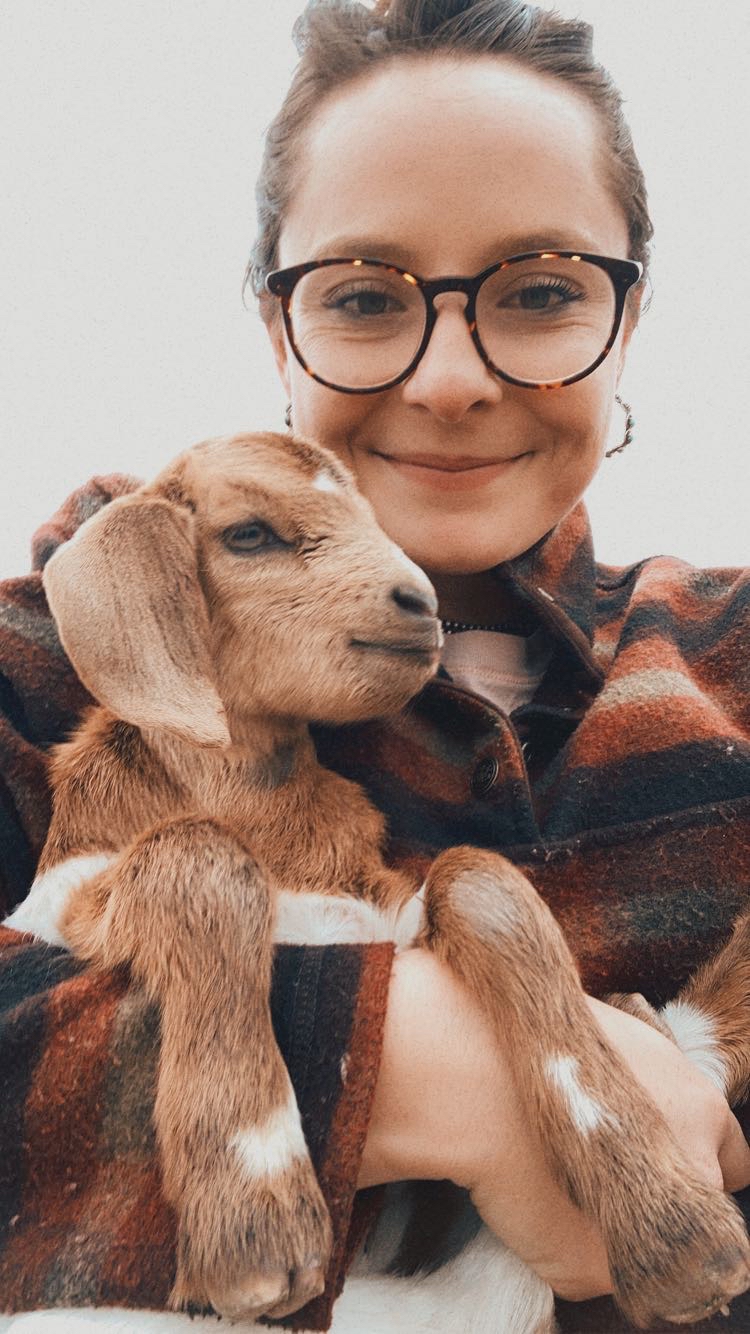
If you read “Reid’s Ram-blings” last month, you probably gained an appreciation for the deep-seated sheep culture that saturates West-Central Texas, and I did too.  As a new San Angelo resident, I can say without a doubt that this is great sheep country. Something that is often overlooked though, is the abundance of multigenerational sheep expertise that the farmers and ranchers of Texas have to offer.

I don’t mean to ignore the goat producers; however, I am new to goat production and so for the purposes of this article, I will be sticking to what I know, and speaking through the lens of the sheep industry.  Regardless, I am looking forward to learning more about the goat industry in Texas during my time here.

I was lucky enough to grow up in the sheep industry, being the 7th generation of sheep ranchers in my family.  We had a flock of Targhee ewes in South-Central Montana, which ignited my passion for the sheep industry at a young age.  In the past several years, I have had the pleasure of living in Upstate New York, Christchurch, New Zealand, and Central Michigan, where I was exposed to countless sheep production systems and various types of sheep producers, from beginning small farmers to large, extensive range producers.  I truly value all the opportunities I have been afforded in my studies, but I believe my best learning has come from candid, sit-down conversations with producers around a supper table.  I have learned invaluable lessons, both about life and about ranching, made life-long friendships, and found mentors that have guided me through my endeavors.  These friendships and lessons are perhaps the most important thing to come out of my formal education thus far.

While I am only just beginning my sheep industry career, it is clear from listening to older generations that the industry has a way of awarding those who commit to being life-long learners.  Some of my most important learning experiences have simply come from saying “yes” to an opportunity to travel somewhere new and change my perspective and see how other folks do it.   I would like to encourage you to consider spending a little bit of time outside of your ranching operation and make it a point to do a little educational field trip, if even just around the state of Texas.  I truly believe that whether you are just starting out, or are several generations deep, there is always something to be learned, and there is no wrong time to learn something new.

I moved to Texas in August of 2020, and since then I have had the pleasure of traveling around Texas with Reid and Jake.  I am grateful for the producers who have welcomed me to their ranches and into their homes and taken time to teach me about their operations and give me various tidbits of advice and knowledge.  I have learned so much about the importance of getting involved in the industry, about taking risks (and when not to), and about the importance of continuing to improve without forgetting that multigenerational knowledge that is the foundation of our industry.  I also have gained a deep appreciation for the neighborly attitude embraced by so many of the Texas producers I have had the privilege to meet so far.

Each place I have lived, I have learned something new.  Not everything that works for Michigan sheep producers will work on the high desert in Montana, and not everything that has proven successful in New Zealand will be practical on the West Texas range.  Even so, I believe that we all have something to learn from each other.  The sheep industry is one that is rich in knowledge and tradition, and I think that is something to be celebrated.

I was, and certainly am still very naïve to the diversity we have in the sheep industry, but traveling to farms and ranches, attending industry conferences such as ASI or The Lamb Summit, or getting involved with producer groups and state associations has broadened my horizons immeasurably.  It is my hope that we, as Texans (either newly minted or life-long) can take full advantage of the networking aspect these national events and organizations have to offer, and truly take time to learn from each other, as there is always value in a change of perspective.

I encourage everyone to embrace and even admire each other’s differences, but never pass up an opportunity for a cup of coffee and conversation with another producer, because you never know what you might learn from each other.

To provide feedback on this article or request topics for future articles, contact me at reid.redden@ag.tamu.edu or 325-657-7324.  For general questions about sheep and goats, contact your local Texas A&M AgriLife Extension Service county office.  If they can’t answer your question, they have access to someone who can.
Filed Under: Uncategorized

Reid’s Ram-blings: March 2021

March 1, 2021 by myra.marsh

A Community of Sheep and Goats

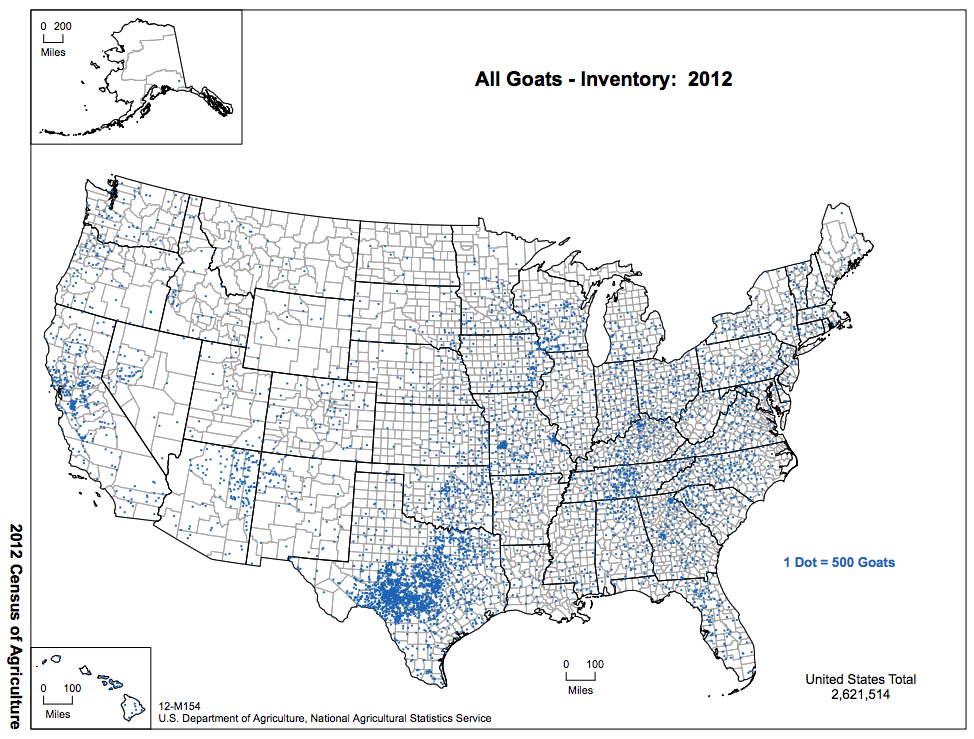
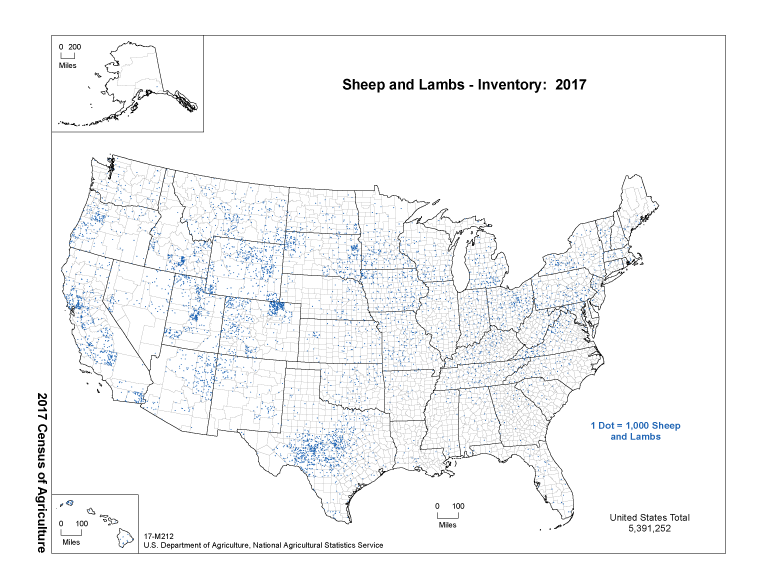
West-Central Texas has been home to one of the largest populations of sheep and goats in the US for over half a century.  Approximately, one fifth and one half of all the sheep and goats in the US are raised in this region of Texas, respectively.

Goat Inventory 2012

Sure, when our great state is mentioned to non-Texans, it often conjures up images of longhorns and oilrigs, and there is no denying their significance to our history. With that said, sheep and goats were very much a part of the foundation of ranching success in this region, and what spawned out of those successes was industry infrastructure that may not be matched by anywhere ese in the United States.

Sheep Inventory 2017

Obviously, this region of Texas is very suitable to raising sheep and goats. Yet, it’s not just the sheep and goat raisers that have built this industry.  The community of allied industries are absolutely essential to sustaining and growing an industry, including auction yards, feed manufacturers, wool warehouses, scouring facilities, shearing crews, and harvesting plants, to name a few.  I have lived in other regions of the US, where allied industries aren’t readily accessible, and it presented serious challenges to operating a sheep and goat enterprise.

This region of the state is home to several livestock auctions that would rank in the top ten for sales volume of sheep and goats, nationally.  These auction markets have tremendous value in determining a free market value for sheep and goats on a weekly basis, especially for the non-traditional trade.

There are dozens of feed manufacturers across this region that provide feedstuffs and nutritional supplements for sheep and goats.  We have pharmaceutical companies that manufacture and distribute animal health products for sheep and goats. Additionally, most of us have a feed store nearby that carry an assortment of common sheep and goat supplies. I find it comical when out-of-state sheep friends come and visit and we have to take a trip to our local feed store to “stock up”.

West-Central Texas is also home to one of two industrial scale wool scouring facilities that remain in the US.  Several of the leading wool brokers reside in and warehouse wool in this region.  In response to the closure of the Yocum-McColl Testing Lab, Texas A&M AgriLife Research is building a commercial lab to test wool core samples to provide a critical domestic service for the wool trade.

Texas has the largest sheep and goat show industries in the nation.  Where most states have only one state fair, Texas has half a dozen major stock shows.  In my opinion, the level of competition at these Texas shows for market lambs, market goats, and breeding stock is unmatched.  These competitive opportunities cultivate a passion for the sheep and goat industries in our next generation, or at least it did for me.

Texas is growing its capacity to harvest, fabricate, and distribute sheep and goat meat products.  Notably, Double J Lamb have reopened what used to be the “Ranchers Lamb” plant in San Angelo.  There have been quite a few small to medium-scale harvest plants built to serve the industry and its customers, as well.

Texas has one of the largest state sheep and goat associations in the nation.  Many leaders in the industry have donated their time to guide this organization and have gone on to lead the national organizations as well.  Sadly, we lost Glen Fisher this last month, who was one of those steadfast leaders.

The major sheep and goat producing counties in the state have passed and funded a state-run check off program to help combat one of the largest obstacles for Texas producers: predation!  Wildlife Services has a big presence in the state to help with predation, and Texas A&M AgriLife has one of the largest LGD research and education programs in the nation.

As a sheep and goat enthusiast, it makes me proud to call this region of the state home. I feel confident that this region leads the nation in allied industries related to sheep and goat production and will continue to do so in the future.  Not to mention, we are very fortunate to have agricultural professionals in the region with a good understanding of sheep and goats, including veterinarians, bankers and insurance agencies.

I don’t mean to be boastful, but rather appreciative.  As the saying goes “It takes a community to raise a child”, I believe that it also takes a community of allied industry to sustain the sheep and goat ranching way of life.

To provide feedback on this article or request topics for future articles, contact me at reid.redden@ag.tamu.edu or 325-657-7324.  For general questions about sheep and goats, contact your local Texas A&M AgriLife Extension Service county office.  If they can’t answer your question, they have access to someone who can.
Filed Under: Uncategorized

  • « Go to Previous Page
  • Page 1
  • Page 2

Subscribe

Enter your email address:

Delivered by FeedBurner

Recent Posts

  • Reid’s Ram-blings: March 2024
  • Reid’s Ram-blings: February 2024
  • Reid’s Ram-blings: January 2024
  • Reid’s Ram-blings: December 2023
  • Reid’s Ram-blings: September 2023
Texas A&M AgriLife Extension Service
Texas A&M University System Member
  • Compact with Texans
  • Privacy and Security
  • Accessibility Policy
  • State Link Policy
  • Statewide Search
  • Veterans Benefits
  • Military Families
  • Risk, Fraud & Misconduct Hotline
  • Texas Homeland Security
  • Texas Veteran's Portal
  • Equal Opportunity
  • Open Records/Public Information